
Building a robust data governance framework: Best practices
18 March 2024 | 8 mins read | Data Governance
by Jessica, Tech writer

The ability of an organization to manage and utilize its data effectively can set it apart from its competitors.
The foundation of this capability rests on a robust data governance framework. Such a framework ensures that data is consistent, trustworthy, and used effectively across the organization.
While most recognize its importance, building and implementing an effective data governance framework can be challenging.
TL;DR summary
Organizations that harness data effectively gain a decisive competitive edge—and strong data governance is the foundation that makes this possible.
Data governance ensures data is accurate, consistent, secure, and aligned with business goals, supported by clear policies, defined roles, and shared standards.
Top best practices: start small, engage stakeholders, prioritize transparency, iterate continuously, and use technology to automate and enhance governance efforts.
What is a data governance framework?
Data governance refers to the overall management of the availability, integrity, usability, and security of data in an enterprise.
A solid data governance framework ensures that there are clear guidelines, responsibilities, and practices concerning the handling of data.
This not only guarantees that data is handled with care but also ensures that it serves the organization’s strategic objectives.
Key components of an effective data governance framework
To comprehend the intricacies of data governance, one must first grasp its core components:
- Policies & procedures: At the heart of any data governance initiative are the policies and procedures that dictate how data should be handled. These policies encompass everything from data quality standards to guidelines on data usage.
- Roles & responsibilities: Clearly defined roles within the framework ensure that there are individuals or teams responsible for different aspects of data governance. This can range from data stewards, who ensure data quality and consistency, to data owners, who are ultimately accountable for data assets.
- Data catalog: A data catalog serves as a centralized repository that offers a consolidated view of enterprise data. It provides details about the source, usage, and lineage of data, playing a pivotal role in ensuring transparency and trust.
- Data quality metrics & monitoring: Ensuring high data quality is essential. Establishing clear metrics to measure data quality and tools to monitor and report these metrics can help maintain the integrity of the data.
- Data security protocols: Protecting data from breaches, theft, and unauthorized access is paramount. A strong data governance framework encompasses measures like encryption, access controls, and regular security audits.
- Data lineage tools: Understanding the journey of data from its origin to its consumption is crucial for ensuring its authenticity and reliability. Tools that track and visualize data lineage provide insights into how data is sourced, processed, and used.
- Training & education: A framework is only as effective as the people who operate within it. Regular training ensures that all stakeholders are aware of the policies, tools, and best practices related to data governance.
Why data governance matters more than ever
AI can only be as strong as the data that powers it—and that means organizations need information that’s trustworthy, well-documented, and free from hidden bias. When data is inconsistent or lacks critical context, analysts struggle to extract meaningful insights.
Without clarity on where sensitive data lives or how it flows across systems, compliance teams can’t confidently manage risk.
Effective data governance delivers:
- A scalable framework that supports sustainable growth
- Built-in safeguards to meet regulatory expectations
- A shared language that aligns teams across the business
- End-to-end visibility into data quality, lineage, and usage
- The assurance needed to trust dashboards, decisions, and AI outcomes
Governance isn’t just about control—it’s the foundation that enables reliable innovation.
The top 5 best practices for building a data governance framework
Creating a data governance framework is not a one-size-fits-all endeavor.
The 3 KPIs for driving real data governance value
KPIs only matter if you track them.
Move from governance in theory to governance that delivers.
Download the free guideHowever, some best practices have proven effective across various industries and organizations:
- Start small & scale gradually: Instead of trying to govern all data from the outset, start with critical datasets. Once governance practices are established and refined for these datasets, scale up gradually.
- Involve all stakeholders: Data governance is a collective responsibility. Engage stakeholders from different departments to view data needs, challenges, and usage patterns comprehensively.
- Prioritize transparency: Transparent governance processes, decisions, and policies will foster trust and encourage adherence to the established guidelines.
- Iterate & refine: The data landscape is ever-evolving. Regularly review and update the governance framework to address new challenges and incorporate emerging best practices.
- Leverage technology: Use technological tools, such as a metadata management tool, to automate and enhance various governance tasks. These tools can aid in monitoring data quality, tracking data lineage, and ensuring data security.
Overcoming common challenges in data governance
While the importance of data governance is clear, implementing a robust framework is not without challenges:
- Cultural resistance: Data governance often requires a shift in organizational culture. Overcoming resistance and ensuring buy-in from all stakeholders is crucial.
- Complex data landscapes: With data spread across various sources, systems, and formats, creating a unified governance structure can be challenging.
- Balancing accessibility & security: Ensuring data is accessible to those who need it while also maintaining security can be a delicate balance to strike.
Addressing these challenges requires a combination of clear communication, stakeholder engagement, and leveraging the right tools and technologies.
Designing data & AI products that deliver business value
To truly derive value from AI, it’s not enough to just have the technology.
- Clear strategy
- Reasonable rules for managing data
- Focus on building useful data products

Expanding the horizons of data governance frameworks
Data ethics & compliance
In the age of stringent data privacy regulations, adhering to ethical standards and ensuring compliance is essential.
A mature data governance framework should incorporate guidelines that ensure data is used in compliance with regulations like GDPR or CCPA and follows ethical considerations, ensuring fairness, transparency, and respect for individual rights.
Integration with business strategy
For data governance to be truly effective, it should align closely with the broader business strategy.
This ensures that the data being governed directly supports the organization’s objectives, driving value and ensuring that data efforts are in line with business goals.
Stakeholder feedback
An inclusive data governance framework should provide avenues for user feedback.
Whether it is through regular surveys, feedback portals, or open forums, capturing insights from those who interact with the data can offer valuable perspectives to refine and enhance governance processes.
Proactive data quality improvement
Beyond just monitoring data quality, a proactive approach involves constantly looking for ways to improve it.
This can mean adopting newer technologies, refining data collection processes, or even redefining quality metrics to better suit evolving organizational needs.
Establishing a data governance council
Many organizations establish a data governance council to ensure that data governance remains a top priority and receives the necessary attention and resources.
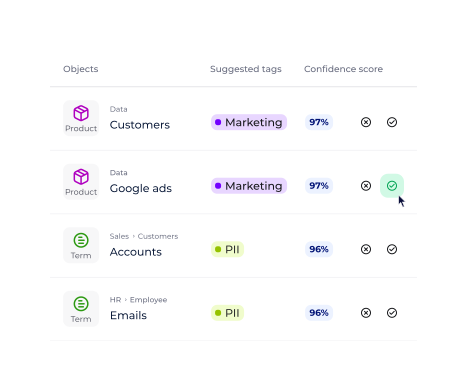
Blink, your AI Copilot
Ask questions. Get answers. Drive action.
Blink helps every user explore, understand, and use data in their daily work. No tickets, no filters, no delays. Ask anything in your native language and get trusted, contextual answers and recommendations.
Meet Blink!This council, which comprises members from various departments and levels, is responsible for setting the direction, establishing priorities, and overseeing the execution of data governance initiatives.
DataGalaxy for building a modern data governance framework
Choosing the right platform can make or break your data governance framework.
DataGalaxy is designed for organizations that need a solution that scales with their data, empowers collaboration, and supports AI-driven initiatives—all without adding complexity.
A framework built for business value
DataGalaxy transforms governance from a compliance task into a value-driving capability. Connecting metadata, lineage, quality indicators, and business context, it helps teams build a data governance framework that directly supports strategic goals and measurable outcomes.
Collaboration at the core
A governance framework only works when everyone participates. DataGalaxy’s intuitive, business-friendly interface makes it easy for data owners, stewards, and analysts to contribute, align, and stay accountable.
Dynamic metadata for full transparency
Real-time metadata synchronization gives teams instant visibility into lineage, definitions, ownership, and quality—critical elements of any strong data governance framework.
Fits seamlessly into your data stack
DataGalaxy integrates with your existing tools, ensuring governance is embedded into everyday workflows rather than isolated in a silo.
AI-ready governance
From transparent lineage to contextual metadata, DataGalaxy gives organizations everything they need to support responsible, explainable AI—an essential component of any modern data governance framework.
Powered by Blink, your AI copilot
Blink allows users to ask questions in natural language and receive trusted, contextual answers—making your governance framework accessible to everyone, not just data experts.
If you’re building or maturing a data governance framework, DataGalaxy offers the flexibility, visibility, and usability modern teams need to unlock real data value.
The path forward in data governance frameworks
As organizations continue to recognize data as a critical asset, the emphasis on effective data governance will only grow.
A robust data governance framework not only ensures data integrity and security but also paves the way for data-driven insights and decision-making.
By understanding its key components, adhering to best practices, and addressing challenges head-on, organizations can harness the full potential of their data assets.
FAQ
- Do I need a data catalog?
-
If your teams are struggling to find data, understand its meaning, or trust its source — then yes. A data catalog helps you centralize, document, and connect data assets across your ecosystem. It’s the foundation of any data-driven organization.
👉 Want to go deeper? Check out:
https://www.datagalaxy.com/en/blog/what-is-a-data-catalog/ - How does a data catalog work?
-
It connects to your data sources and tools, ingests metadata automatically, and creates a centralized, searchable inventory of your assets. Advanced catalogs like DataGalaxy also provide lineage, collaboration, and governance capabilities.
👉 Want to go deeper? Check out:
https://www.datagalaxy.com/en/blog/utilizing-the-semantic-layer/ - How does a data catalog help with AI risk management?
-
A modern data catalog helps identify and track sensitive data, document lineage, and ensure data quality — all of which reduce AI-related risks. It also improves traceability across AI pipelines and enables proactive monitoring.
- How do you improve data quality?
-
Improving data quality starts with clear standards for accuracy, completeness, consistency, and timeliness. It involves profiling, fixing anomalies, and setting up controls to prevent future issues. Ongoing collaboration across teams ensures reliable data at scale.
- How does a data catalog integrate with my existing tools?
-
Modern catalogs integrate with your full data ecosystem — from Snowflake to Power BI. DataGalaxy includes prebuilt connectors, APIs, and automation tools that make syncing metadata seamless and scalable.
👉 See supported integrations
Key takeaways
- Modern governance is expanding to include data ethics, alignment with business strategy, proactive quality improvement, and cross-functional leadership through a dedicated governance council.
- Ultimately, a strong data governance framework protects data integrity, supports compliance, and fuels innovation—empowering organizations to fully leverage their data and accelerate value creation.
About the author

With a passion for turning data complexity into clarity, Jessica Sandifer is an experienced content manager who crafts stories that resonate across technical and business audiences. At DataGalaxy, she creates content and product marketing messages that demystify data governance and make AI-readiness actionable.
Related posts