Data is more than a byproduct of operations. It is now the currency of competitiveness and a catalyst for innovation.
The challenge, however, is not in collecting data but in cultivating the data maturity to manage, interpret, and transform it into actionable intelligence.
A data maturity model is a strategic framework to assess an organization’s current capabilities, highlight critical gaps, and chart a deliberate path toward data excellence. Rather than being a static benchmark, it acts as a compass to direct businesses from fragmented data practices to a state where information fuels agility, foresight, and measurable value creation.
This is precisely where DataGalaxy empowers organizations: by providing the connected data knowledge environment that turns maturity models into reality and data into a true strategic asset.
What is a data maturity model?
Think of it like this: A data maturity model is like a roadmap for organizations to understand and improve their data management practices.
It helps them assess where they stand in handling data and what steps they need to take to reach their data management goals.
In simpler terms, consider it a fitness journey for your data.
Just as you might start with basic exercises and gradually work your way up to more intense workouts, a data maturity model guides businesses from basic data management to advanced, data-driven decision-making.
Operationalizing CDEs
Do you know how to make critical data elements (CDEs) work for your teams?
Get your go-to guide to identifying and governing critical
data elements to accelerate data value.
But why is it important? In today’s data-driven world, organizations generate vast amounts of data constantly. With a structured approach to managing and leveraging this data, they can avoid getting lost in the digital sea.
The evolution of data management practices
To understand the significance of a data maturity model, let’s take a brief journey through the evolution of data management practices.
In the early days, businesses relied on manual record-keeping, using ledgers and files. Data was scattered, and there needed to be more consistency in managing it. This was the era of data chaos.
As technology advanced, databases and spreadsheets came into play. Businesses started collecting more data, but it was still largely siloed, with different departments managing their data independently. This stage could be likened to the data “teenage years” – a bit unruly, but starting to take shape.
Fast forward to today, where we find ourselves in the era of data maturity. Organizations are waking up to the immense potential of their data. They are adopting sophisticated tools and practices, from cloud-native platforms like the Snowflake data platform to AI-powered analytics, to harness the power of data analytics, machine learning, and artificial intelligence.
Defining a data maturity model
So, what exactly is a data maturity model? It’s a framework that evaluates an organization’s data management capabilities and guides them toward improvement.
It typically consists of several stages or levels, each representing a different data management maturity level.
At the lower levels, organizations are focused on basic data collection and storage. As they progress through the model, they develop more advanced capabilities, such as data integration, quality assurance, and advanced analytics.
Ultimately, the goal is to reach a state where data is a strategic asset, driving informed decision-making across the organization.
Key elements of a data maturity model
The essential elements of any solid data maturity model are as follows:
Data integration
Data integration brings together data from various sources.
It ensures that data flows seamlessly across the organization, reducing silos and enhancing accessibility.
Data analytics
Analytics brings the actual value of data maturity: This component uses advanced tools and techniques to extract insights and make data-driven decisions.
Data culture
A data culture involves building a data-oriented environment within the organization.
It includes training employees to understand and use data effectively and fostering a mindset that values data as a strategic asset.
Data strategy
Having a data strategy is essential.
It sets the direction for an organization’s data initiatives by outlining goals, priorities, and the roadmap for achieving data maturity.
Data measurement
Measuring your data is crucial for improvement.
Data measurement involves defining key performance indicators (KPIs) to track progress and ensure continuous improvement.
Designing data & AI products that deliver business value
To truly derive value from AI, it’s not enough to just have the technology.
- Clear strategy
- Reasonable rules for managing data
- Focus on building useful data products

The importance of assessing data maturity
Getting an idea of your organization’s data maturity is essential for the following reasons:
Identifying gaps
Finding gaps in your data can help pinpoint weaknesses in your data management practices, allowing you to address them strategically.
Setting priorities
Only some components of a data maturity model are equally important for some organizations.
Reviews help you determine which areas need immediate attention, allowing you to allocate resources wisely.
Measuring progress
With assessment, it’s easier to track improvements accurately. Regular inspections clearly show how far you’ve come and what needs to be done.
Supporting decision-making
Data maturity reviews provide insights that inform strategic decisions, helping organizations allocate resources, set goals, and make data-related investments wisely.
Benefits of using a data maturity model
Now that you understand the components and the importance of assessing data maturity, let’s explore the benefits of adopting a data maturity model, as highlighted by DataGalaxy.
Improved data management
Having a data maturity model provides a structured approach to managing data, helping organizations establish best practices and standards, ultimately leading to better data management.
Decision-making
With high-quality data and advanced analytics, organizations can make more informed decisions. This can result in increased competitiveness and innovation.
Cost reduction
Efficient data management can save costs by eliminating data redundancies and improving data quality, reducing operational expenses.
Compliance & risk management are vital in today’s data landscape
Data governance, a crucial component of data maturity, ensures compliance with data regulations. It also mitigates data security risks, protecting the organization’s reputation.
Unlock your data potential with DataGalaxy
Are you ready to revolutionize your data management practices and foster a data-driven culture within your organization?
Look no further than DataGalaxy!
As the industry’s trailblazer, DataGalaxy offers a connected value governance platform complete with the structure to manage your data and AI initiatives as a living portfolio
With DataGalaxy, you can effortlessly manage your data knowledge you need through a comprehensive data catalog. Organize, access, and make sense of your data like never before, ensuring your data is always at your fingertips.
But that’s not all! DataGalaxy also empowers you to share your data knowledge seamlessly through its advanced metadata management tool.
Collaborate with your team, improve data quality, and accelerate your data culture initiatives.
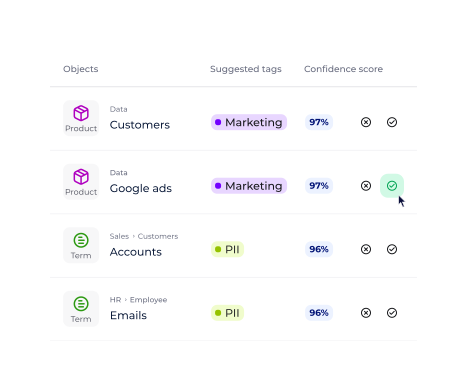
Blink, your AI Copilot
Ask questions. Get answers. Drive action.
Blink helps every user explore, understand, and use data in their daily work. No tickets, no filters, no delays. Ask anything in your native language and get trusted, contextual answers and recommendations.
Take advantage of the opportunity to enhance your data maturity model and confidently make data-driven decisions.
Join the DataGalaxy community today and experience the transformation firsthand! Your data’s potential is waiting to be unlocked.
Data maturity models for reshaping your data culture
Reaching higher levels of data maturity isn’t just about adopting new tools or processes — it’s about reshaping how an organization thinks about, governs, and activates its data.
A well-defined data maturity model provides the structure to move from reactive data management to a proactive, insight-driven strategy.
By continuously assessing progress, closing gaps, and nurturing a data-centric culture, businesses can unlock transformative value from their information.
With DataGalaxy, organizations gain not only the framework to measure maturity but also the practical tools to accelerate it — ensuring data becomes a lasting source of innovation, resilience, and competitive advantage.
FAQ
-
How does a data catalog work?
-
It connects to your data sources and tools, ingests metadata automatically, and creates a centralized, searchable inventory of your assets. Advanced catalogs like DataGalaxy also provide lineage, collaboration, and governance capabilities.
? Want to go deeper? Check out:
https://www.datagalaxy.com/en/blog/utilizing-the-semantic-layer/ -
How is a data catalog different from a data glossary?
-
A business glossary defines terms and ensures shared understanding. A data catalog documents the technical assets (tables, fields, reports) and connects them to the glossary. Both are essential — and should be linked.
? Want to go deeper? Check out:
https://www.datagalaxy.com/en/blog/data-catalog-vs-glossary-dictionary -
What is data governance and why does it matter?
-
Data governance is the framework of roles, processes, and standards that ensures data is accurate, secure, and used responsibly. It matters because poor governance leads to mistrust, inefficiencies, compliance risks, and failed data or AI initiatives.
? Want to go deeper? Check out:
https://www.datagalaxy.com/en/blog/what-is-data-governance/ -
How is value governance different than data governance?
-
Value governance focuses on maximizing business outcomes from data initiatives, ensuring investments align with strategic goals and deliver ROI. Data governance, on the other hand, centers on managing data quality, security, and compliance. While data governance builds trusted data foundations, value governance ensures those efforts translate into measurable business impact.
-
How does DataGalaxy create value for the business?
-
By turning data into a searchable, shared knowledge base, DataGalaxy helps teams spend less time chasing answers — and more time delivering impact. It improves data discoverability, reduces duplication, and accelerates decision-making. And with built-in governance, you reduce risk while increasing trust in every report, model, and initiative.
At a glance
- A data maturity model is a strategic framework that guides organizations from fragmented practices to advanced, data-driven decision-making by assessing gaps and setting a roadmap for improvement.
- Key elements include governance, quality, integration, analytics, culture, strategy, and measurement—together ensuring data is reliable, compliant, and aligned to business goals.
- With DataGalaxy’s connected governance platform, organizations can operationalize maturity models, foster collaboration, and transform data into a sustainable driver of innovation and competitive advantage.