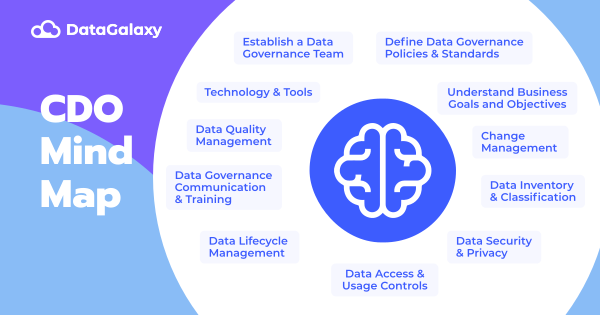
Welcome to Mind Map: A DataGalaxy blog series where we’ll deep dive into creating an effective, secure, and high-quality data governance framework for data experts, project coordinators, and data decision-makers.
In this step-by-step blog series, we’ll discuss the key pieces needed to build an effective data governance framework, whether you’re just getting started or looking to update your current plan.
Collaboration & change management
Chief Data Officers (CDOs) are crucial in creating and implementing an organizational data governance strategy. This strategy involves managing data as a valuable corporate asset. Collaboration and change management are essential aspects of this role because data governance is naturally cross-functional.
Data governance is not the sole responsibility of a single department or team – It requires collaboration and engagement from various departments across the organization, including finance, marketing, operations, legal, and more. Data professionals and CDOs must foster collaboration to ensure that data governance initiatives align with the business objectives and are supported by all relevant stakeholders.
This blog post will discuss the role a CDO can play in change management, collaboration, and communication within an organization, especially when it comes to implementing data-driven initiatives and fostering a data-driven culture.
Leadership & vision
CDOs should provide clear leadership and a compelling vision for the organization’s data-driven transformation. This involves articulating the value of data, setting strategic goals, and illustrating how data-driven decision-making can positively impact the organization’s objectives.
Setting the direction: Data leaders should provide a clear vision for data governance within the organization – They need to articulate the strategic importance of data, outlining how it aligns with the overall business objectives and mission. This vision provides a sense of purpose and direction, guiding data governance efforts toward a common goal.
Creating a data-centric culture: Leadership is essential for instilling a data-centric culture within the organization. The CDO needs to lead by example, demonstrating a commitment to data-driven decision-making and promoting the value of data as a corporate asset. This cultural shift is critical for ensuring that data governance practices are adopted and followed throughout the organization.
Stakeholder engagement
Engage with key stakeholders across departments to understand their needs, challenges, and expectations. Gaining executive sponsorshipis a critical aspect of creating an organizational data governance strategy for several reasons:
Resource allocation: Data governance initiatives often require significant resources, including budget, personnel, and technology investments. Without the support of top executives, it can be challenging to secure the necessary resources for data governance projects. Executive sponsorship helps ensure that CDOs have access to the resources required to implement and sustain effective data governance.
Overcoming organizational barriers: Data governance initiatives frequently encounter resistance or skepticism within an organization, and executive sponsorship can help overcome these barriers. When senior leaders advocate for data governance, their influence can help break down silos, gain cooperation from various departments, and address resistance to change.
Communication & education
Data leaders need to develop a communication strategy to raise awareness about the importance of dataand its potential benefits. Effective communication strategies help to build awareness, understanding, and commitment to data governance, address resistance, improve data literacy, define roles, clarify policies and procedures, facilitate change management, demonstrate success, align with business goals, and sustain engagement with data governance efforts throughout the organization.
Clarifying the purpose: Data governance can be a complex topic, and some employees may not fully understand its purpose or benefits. Effective communication is essential to explain why data governance is important and how it aligns with the organization’s goals. Clear, concise, and accessible communication helps create a shared understanding and commitment to data governance.
Creating awareness: Many individuals in the organization may not be aware of the existence or significance of data governance initiatives. CDOs must communicate the initiative’s existence, objectives, and benefits to all relevant stakeholders. Raising awareness ensures that employees understand data governance’s role in the organization.
Change management
Developing a comprehensive change management plan that outlines the steps, milestones, and resources required for the successful implementation of data-driven initiatives is vital for data leaders wishing to implement their data governance strategy successfully. By focusing on change management, the CDO can increase the likelihood of successful data governance implementation and long-term sustainability.
Resistance to change: Implementing data governance often introduces new processes, policies, and responsibilities, and employees and departments may be resistant to these changes as they can disrupt established routines and require additional effort. Change management strategies are often needed to address and mitigate this resistance.
Cultural transformation
Working to instill a data-driven culture within the organization involves fostering a mindset where data is seen as a valuable asset, encouraging curiosity and experimentation, and recognizing and rewarding data-driven behaviors.
Data governance often requires a cultural shift in the organization, where data is treated as a valuable asset, and there’s a commitment to data quality, security, and compliance. Change management helps guide this cultural transformation, ensuring that employees understand the new data-centric mindset and the benefits it brings. A cultural shift can help promote:
Utilizing data as a strategic asset: A cultural shift emphasizes treating data as a strategic asset rather than a byproduct of operations. This mindset change is essential for recognizing the value of data in decision-making, innovation, and overall business strategy.
Data responsibility: Establishing a data-centric culture encourages employees to take responsibility for the quality, accuracy, and security of the data they handle. This cultural shift instills a sense of ownership and accountability throughout the organization, fostering a collective effort to maintain high data standards.
Metrics & measurement
Establish key performance indicators (KPIs) to track the progress and impact of data-driven initiatives. Focusing on achieving KPIs is essential for CDOs when creating an organizational data governance strategy: It demonstrates value, aligns with business objectives, secures executive support, and promotes employee accountability. Data professionals should remember to regularly report on these metrics to demonstrate the value being generated and to refine strategies as needed.
Measuring success: KPIs provide quantifiable metrics to measure the success of data governance initiatives and offer a clear way to assess whether the organization is achieving its goals in terms of data quality, security, compliance, and overall effectiveness.
Demonstrating value: By achieving KPIs, CDOs can demonstrate the value of data governance to stakeholders and the broader organization. Successful outcomes such as improved data accuracy, reduced data errors, and enhanced decision-making can showcase the tangible benefits of investing in data governance.
Cross-functional teams
Creating cross-functional teamsthat include members from various departments to collaborate on data projects encourages diverse perspectives and ensures alignment with the organization’s goals. Cross-functional teams enable:
A diverse range of expertise
A comprehensive understanding of departmental needs
Stakeholder engagement
Collaboration
A holistic approach
Consensus building
Effective data stewardship
Support for change management
Adaptability to business needs
Efficient problem-solving
Additionally, this collaborative approach enhances the success and sustainability of data governance initiatives across the organization!
Adaptive leadership
In the context of data governance, data leaders play a crucial role in establishing and maintaining an effective framework to manage an organization’s data assets. Adaptive leadership is a leadership style that emphasizes the ability to navigate and lead in complex and changing environments.
CDOs should remain open to feedback and be willing to adapt strategies based on changing circumstances or new insights.
Here’s why a CDO should focus on adaptive leadership when creating a data governance framework:
Changing data landscape: The data landscape is dynamic and constantly evolving with new technologies, sources, and types of data emerging. An adaptive leader is more likely to anticipate and respond effectively to these changes, ensuring that the data governance framework remains relevant and robust.
Technological advances: The field of data management is heavily influenced by technological advancements. Adaptive leadership helps CDOs stay informed about new technologies and understand their implications for data governance. This enables the CDO to integrate innovative solutions into the framework to enhance data quality, security, and accessibility.
Sustained engagement
Change management is an ongoing process: CDOs should remain engaged and continue to communicate thevalue of data-driven decision-making, adapting strategies as the organization evolves. Sustained engagement often involves continuous collaboration, communication, and adaptation to changes within the organization and the external environment.
This approach contributes to the development of a data-centric culture and allows the organization to effectively navigate the complexities of managing and leveraging its data assets over the long term.
Cross-functional collaboration: Data governance involves multiple departments and stakeholders within an organization. Sustained engagement ensures ongoing collaboration between these different groups, and by fostering a collaborative environment, CDOs can integrate diverse perspectives, align priorities, and ensure that the data governance framework meets the needs of various business units.
Communication & education: Effective communication is essential for the successful implementation of a data governance framework. Sustained engagement allows the CDO to continuously communicate the importance of data governance, its benefits, and the role each stakeholder plays in its success.
Celebrating successes
It’s important to celebrate and share successes achieved through data-driven initiatives: Recognize and showcase individuals and teams that have effectively embraced data-driven approaches and have contributed to positive outcomes.
Celebrating successes is essential for building a positive data governance culture within an organization – It not only recognizes and motivates individuals and teams but also reinforces the value of data governance, builds confidence, promotes learning, and enhances overall engagement. By highlighting achievements, data leaders contribute to the long-term success and sustainability of the data governance framework.
Continuous learning & improvement
Staying updated on industry trends, best practices, and emerging technologies ensures that change management strategies remain relevant and effective over time.
Continuous improvement is a proactive approach that allows CDOs to refine and enhance the data governance framework over time. It ensures the framework’s adaptability, addresses challenges, aligns with business goals, and fosters a culture of ongoing excellence in data management. This iterative process is key to the success and longevity of a robust data governance initiative.
By focusing on these aspects, a CDO can effectively drive change management efforts and help the organization transition towards a more data-driven and innovative culture.
About the author: Jessica Sandifer
Tech writer
With a passion for turning data complexity into clarity, Jessica Sandifer is an experienced content manager who crafts stories that resonate across technical and business audiences. At DataGalaxy, she creates content and product marketing messages that demystify data governance and make AI-readiness actionable.
Jira is everywhere in modern data teams. It powers agile delivery, manages backlogs, tracks bugs, and structures project execution. Many organizations also use it to manage data governance tasks, data quality issues, access requests, and analytics initiatives. But here is the problem: Jira is a task management platform. That is where DataGalaxy Portfolio changes the […]
Many organizations rely on Alation as their central data catalog. It promises discovery, collaboration, and visibility into datasets. But here is the reality: a catalog alone does not create governance maturity. It does not structure domains. It does not align initiatives with strategy. And it does not prove business value. That is where DataGalaxy Portfolio […]
Many enterprises rely on ServiceNow to manage workflows across IT, risk, compliance, and operations. It is the engine behind tickets, approvals, controls, and enterprise processes. But when it comes to structuring enterprise data governance, ServiceNow was never designed to define domains, align ownership, or connect data initiatives to business value. It executes processes. It does […]
Environmental, social, and governance (ESG) principles, a set of criteria for evaluating a company’s operations and broader societal impact, are ever-continuing to grow in importance for consumers, investors, and stakeholders.
Environmental, social, and governance (ESG) considerations have transitioned from optional corporate responsibility measures to elements of strategic decision-making and regulatory compliance. As a result, Chief Data Officers and Chief Sustainability Officers must lead their organizations to create and implement effective ESG compliance strategies.
Environmental, social, and governance (ESG) compliance has morphed from a voluntary, self-reporting checklist of corporate responsibility into an increasingly regulated business activity. As a result, sustainable business models have become a strategic imperative driven by the expectations of investors, consumers, and society.