More than ever, organizations rely on data stewardship for accurate, accessible, and well-managed data to drive innovation, improve decision-making, and maintain a competitive edge. Data stewardship is essential for maintaining the quality, accessibility, and usability of data within an organization.
Whether you’re navigating the complexities of data governance or seeking to optimize your data strategy, understanding data stewardship is key to harnessing the power of data for business success.
This blog post discusses a data steward’s core principles and responsibilities, emphasizing their critical role in preserving data integrity and enabling data-driven decision-making.
Principles of data stewardship
Data stewardship is the collection of practices that ensure an organization’s data is accessible, usable, safe, and trusted. Data stewardship involves taking care of data, including knowing where it is, ensuring it is trustworthy, safeguarding data lineage, enforcing the rules about how data can be used, and promoting its value.
Data stewardship can be implemented in every phase of the data life cycle, including:
- Data creation
- Data processing
- Data storage
- Data usage
- Data archiving
- and data destruction
By combining business acumen with technical skills, data stewardship ensures all departments have access to reliable data daily. Therefore, data stewards oversee specific activities such as data collection, cataloging, and inventorying that enable users to find and extract value from data sets.
The following are the top four most pressing responsibilities for an employee tasked with data stewardship:
Offering a universal business glossary
An essential component of data stewardship is ensuring that knowledge is accessible to all stakeholders. One effective way to achieve this is by providing a universal business glossary: A centralized data collection of widely used data terms and definitions within the organization.
By making the business glossary available to everyone in the organization, data stewards promote a shared understanding of terminology across the company.
This reduces confusion and enhances communication between teams and departments. Additionally, the business glossary is a reliable reference for data-related discussions, ensuring consistent use of terms and fostering alignment across all stakeholders.
Designing data & AI products that deliver business value
To truly derive value from AI, it’s not enough to just have the technology.
Data professionals today also need a clear strategy, reasonable rules for managing data, and a focus on building useful data products.
Read the free white paper
Data stewardship ensures consistent and correct data glossary definitions, updates terms to reflect evolving business needs, and fosters cross-department collaboration to create a shared language.
It promotes the glossary’s use, embeds it into governance processes, and resolves conflicts over terminology, ensuring it remains a trusted resource.
Data stewardship transforms the glossary into a dynamic tool that enhances communication, decision-making, and organizational alignment by reducing ambiguity, improving data quality, and supporting scalability.
Recognizing & reconciling different perspectives
Data stewardship is vital for managing varying interpretations of data definitions across departments.
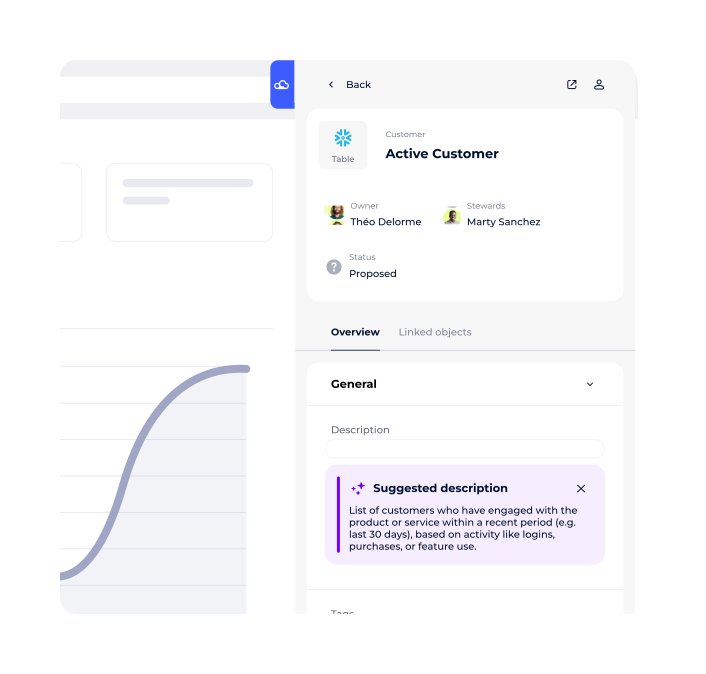
For instance, a term like “Customer” might mean different things to different teams, creating inconsistencies. Data stewardship plays a key role in reconciling these differences to promote accuracy and consistency in data management.
Through active stakeholder engagement, data stewardship aligns definitions by fostering collaboration, communication, and understanding across the organization.
It bridges gaps in perspectives and ensures a unified approach to data. Additionally, data stewardship facilitates discussions to resolve conflicts or disagreements about data definitions, ensuring consensus and a shared framework for effective data governance.
Ensuring data accessibility
A key objective of data stewardship is to ensure data accessibility. Data stewards strive to make data readily available to authorized users while maintaining strict security and privacy standards.
They work closely with IT teams to develop data access policies, manage user permissions, and implement governance frameworks that safeguard sensitive information.
Additionally, data stewardship emphasizes maintaining data quality and integrity by ensuring consistency across systems and addressing obstacles to accessibility.
It aims to break down data silos and enable seamless integration, empowering various departments and teams to access and analyze the data critical to their operations efficiently.
Perspective recognition for data understanding
Beyond ensuring accessibility, data stewardship emphasizes the importance of context and perspective in understanding data. It acknowledges that stakeholders may have diverse interpretations and unique requirements for data analysis.
Data stewards gather valuable insights into these differing perspectives and needs by collaborating with various teams and departments.
Smart browser extensions
Our browser extension doesn’t just supply knowledge – It also gives users an easy way to capture knowledge and share it with their team members.
Download the extension
This understanding enables data stewards to present data insights and reports in ways that resonate with each audience. They act as intermediaries, translating technical concepts into actionable, business-relevant information, ensuring that stakeholders can easily grasp and utilize the data for informed decision-making.
Data stewardship real-world examples
Healthcare
Data stewardship ensures patient records are accurate, up-to-date, and securely stored.
Data stewards then implement privacy safeguards to protect sensitive medical data and provide patients with secure access to their health information.
Financial services
Data stewardship maintains the accuracy of customer account information and transaction histories.
Data stewards implement robust security measures to protect financial data and provide customers with tools for financial insights.
Retail and e-commerce
Data stewards manage customer profiles and purchase history data.
Data stewardship helps ensure product information is consistent across systems and safeguards customer payment information.
Education
Data stewards manage student records, academic performance data, and institutional research information.
They ensure data privacy compliance and facilitate data-driven decision-making in educational policy and practice.
How do you ensure long-term data stewardship success?
Data stewardship empowers organizations to make informed decisions and stay competitive in a fast-paced digital landscape by ensuring data is accurate, accessible, and secure.
Additionally, data stewards help ensure effective data governance through their data stewardship, from maintaining data quality and fostering a shared understanding through business glossaries to reconciling diverse perspectives and addressing real-world challenges.
Organizations can unlock the full potential of their data by embracing the principles and practices of data stewardship. This can help transform it into a powerful asset that drives innovation, collaboration, and long-term success.
FAQ
-
How does DataGalaxy help with regulatory compliance?
–
-
The platform includes role-based access (RBAC), SSO, audit trails, and admin control over every object and user permission.
-
Is your data managed like a real product?
–
-
You wouldn’t ship a product without version control, owners, or feedback loops — so why do it with data?
Modern teams treat data as a product: owned, documented, discoverable, and continuously improved.
DataGalaxy supports full lifecycle management for data products — from ownership and discoverability to usage tracking and evolution.
– Define and document your data products with rich metadata
– Assign owners, version history, and quality indicators
– Link business goals to data usage and drive real product thinking
Facing this challenge? Explore the solution
Want to see it live? Book a tailored demo
-
What are the four pillars of data governance?
–
-
Most data governance frameworks are built on four key pillars:
1. **People** – the roles and responsibilities that manage, use, and steward data
2. **Processes** – the standards, workflows, and controls to ensure quality and compliance
3. **Policies** – the rules and guidelines for secure, ethical, and compliant data usage
4. **Technology** – the tools and platforms (like DataGalaxy!) that operationalize governance
Together, these pillars ensure data is discoverable, trusted, and ready for advanced use cases like AI and regulatory reporting.
? Want to go deeper? Check out:
https://www.datagalaxy.com/en/blog/choosing-the-right-data-governance-tool/
-
What are the key principles of AI governance?
–
-
Key principles of AI governance include transparency, accountability, fairness, privacy, and security. These principles guide ethical AI development and use, ensuring models are explainable, unbiased, and compliant with regulations. Embedding these pillars strengthens trust, reduces risk, and supports sustainable, value-driven AI strategies aligned with organizational goals and global standards.
-
What are the key principles of effective value governance?
–
-
Value governance is important because it ensures data and digital initiatives drive measurable business outcomes. It aligns projects with strategic goals, optimizes resource allocation, and maximizes ROI. By prioritizing value delivery, organizations reduce waste, improve accountability, and accelerate transformation—making value governance essential for sustainable growth and competitive advantage in the data-driven era.
With a passion for turning data complexity into clarity, Jessica Sandifer is an experienced content manager who crafts stories that resonate across technical and business audiences. At DataGalaxy, she creates content and product marketing messages that demystify data governance and make AI-readiness actionable.