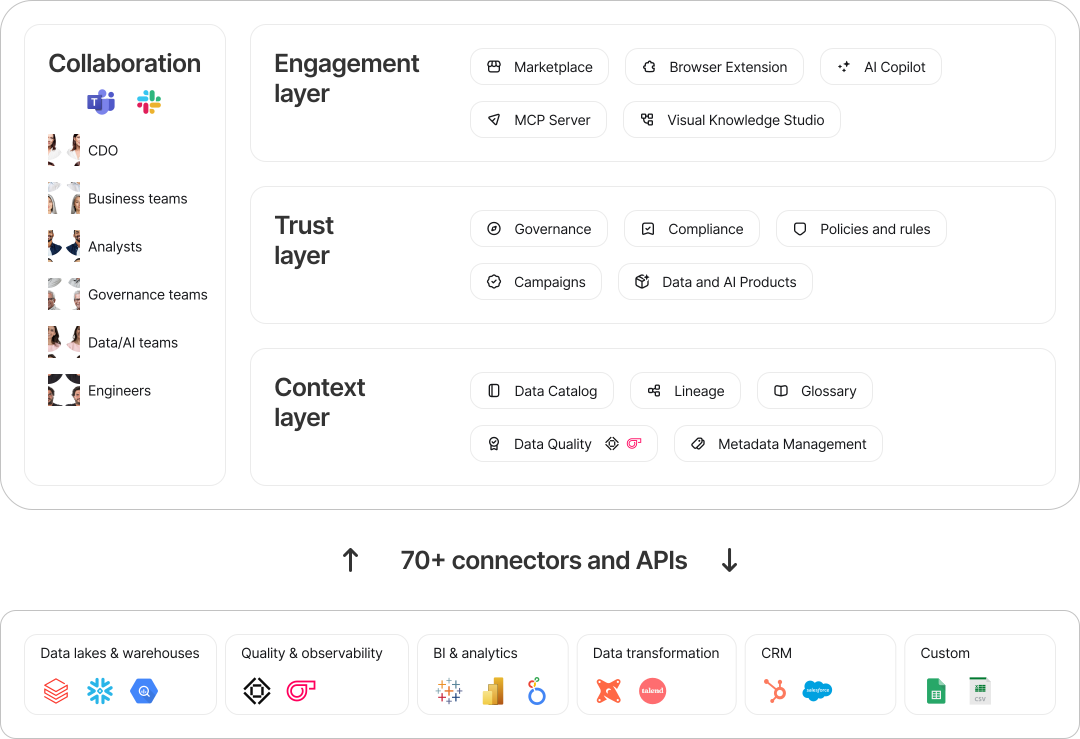
Build a centralized, collaborative inventory of data assets enriched with ownership, definitions, lineage, and trust indicators.
Build trust and context through a collaborative Catalog
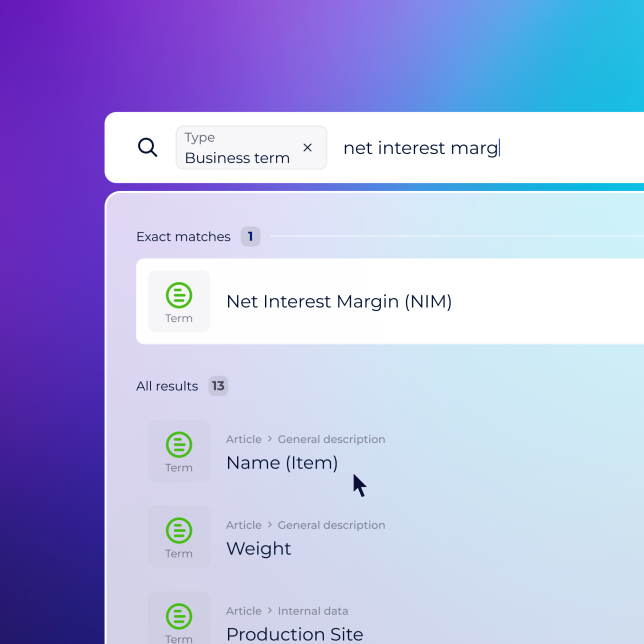
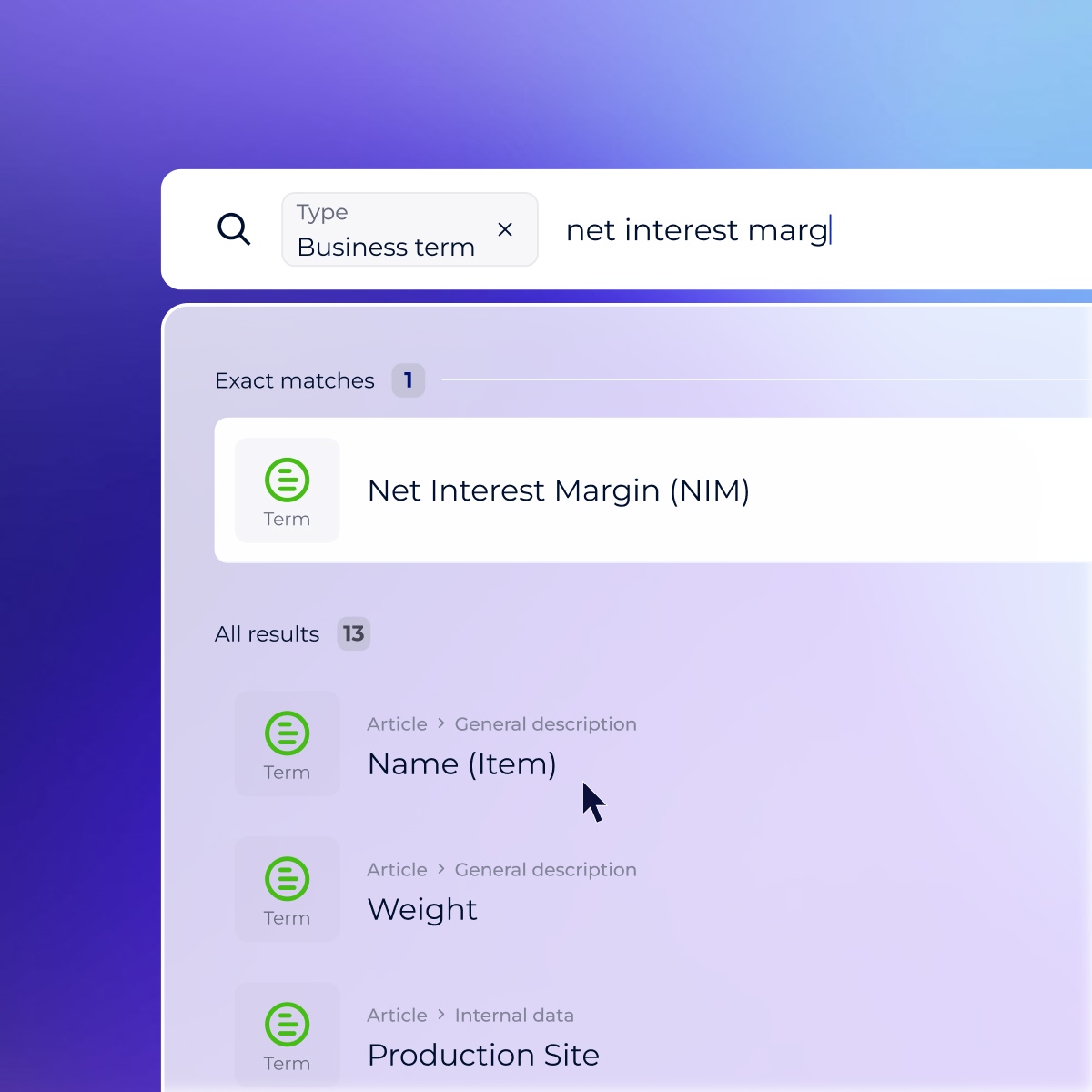
Break the silos and discover data 10x faster with an easy to use metadata foundation






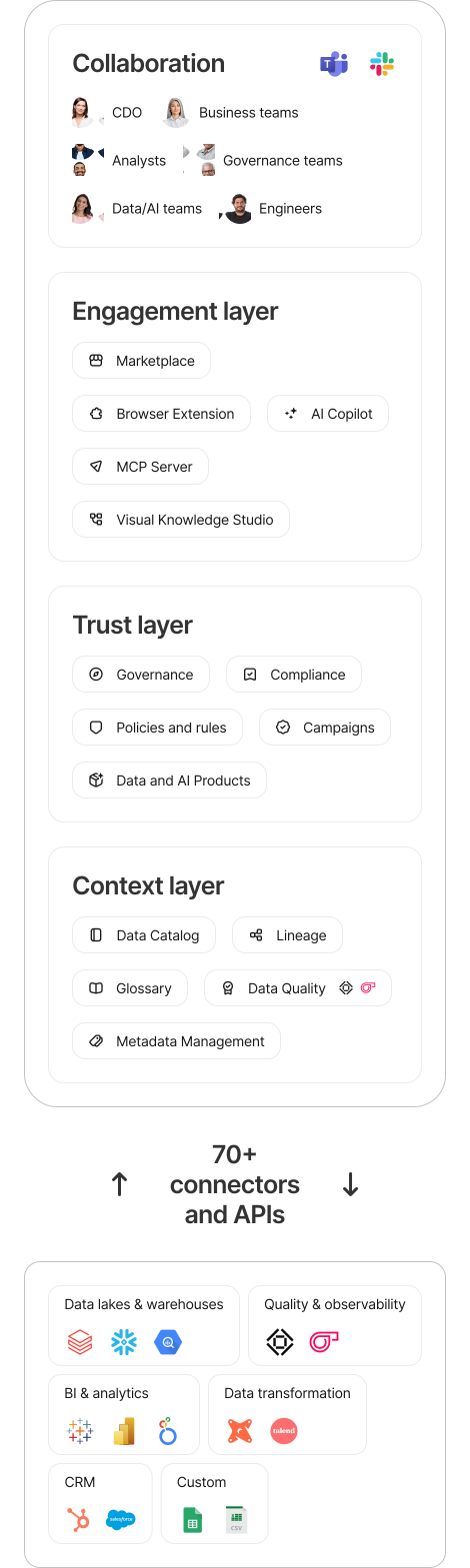
Activate context, trust, collaboration and engagement across your data ecosystem
DataGalaxy Catalog
By automatically mapping metadata, lineage, and ownership, you build a semantic layer that keeps information consistent, connected, and always up to date. This layer becomes a shared language across teams and systems, helping people and AI collaborate on trusted, contextualized data.
A single source of truth to solve your critical data issues
AI-Ready data
Build AI initiatives on trusted, documented, and business aligned data.
Regulatory compliance
Ensure audit ready compliance with full lineage, ownership, and data traceability.
Impact analysis
Anticipate risks by visualizing downstream data dependencies before changes occur.
Data Discoverability
Help teams quickly find, understand, and trust the right data.
Deep dive into DataGalaxy Catalog capabilities
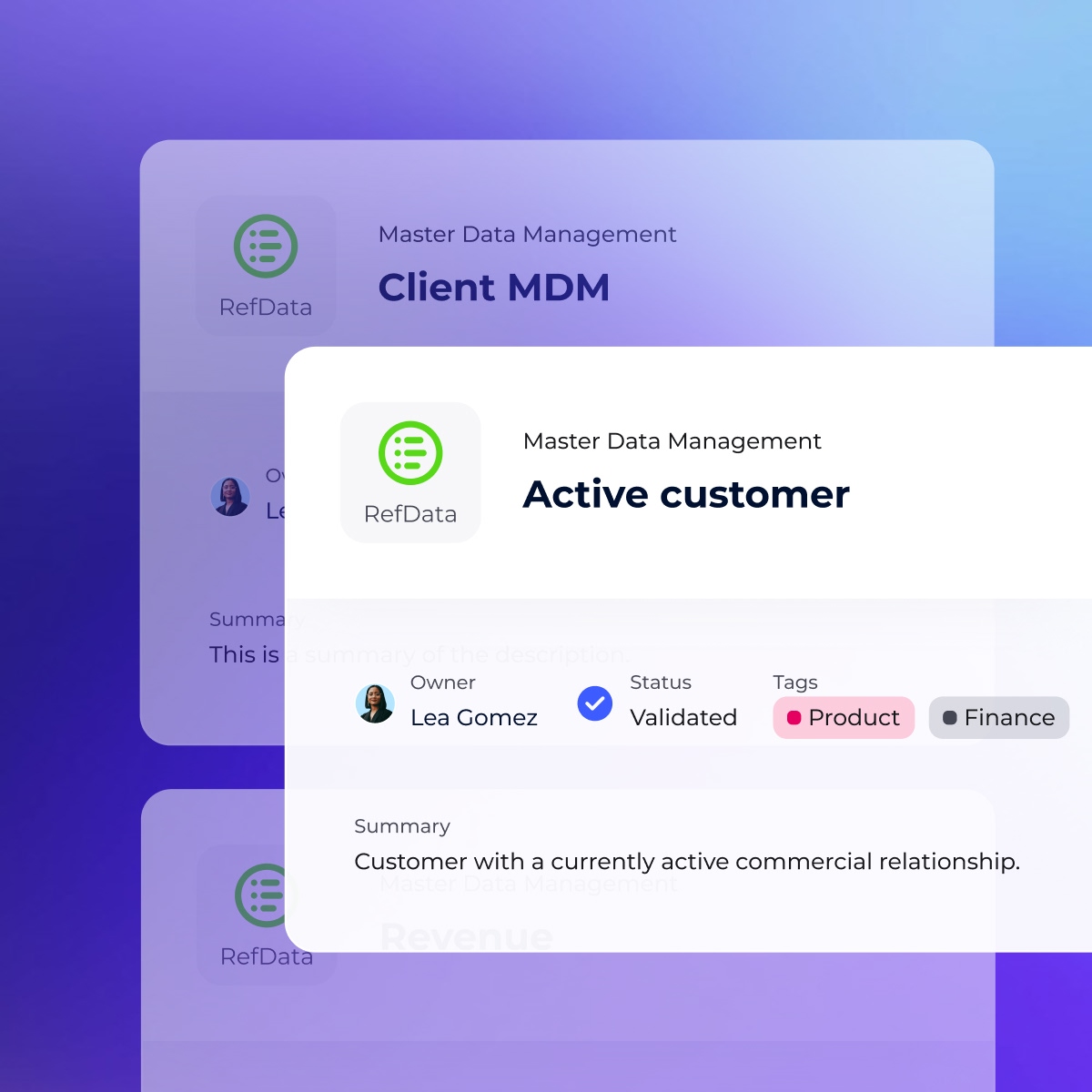
Business Glossary helps teams define, standardize, and govern business terms in a consistent and collaborative way.
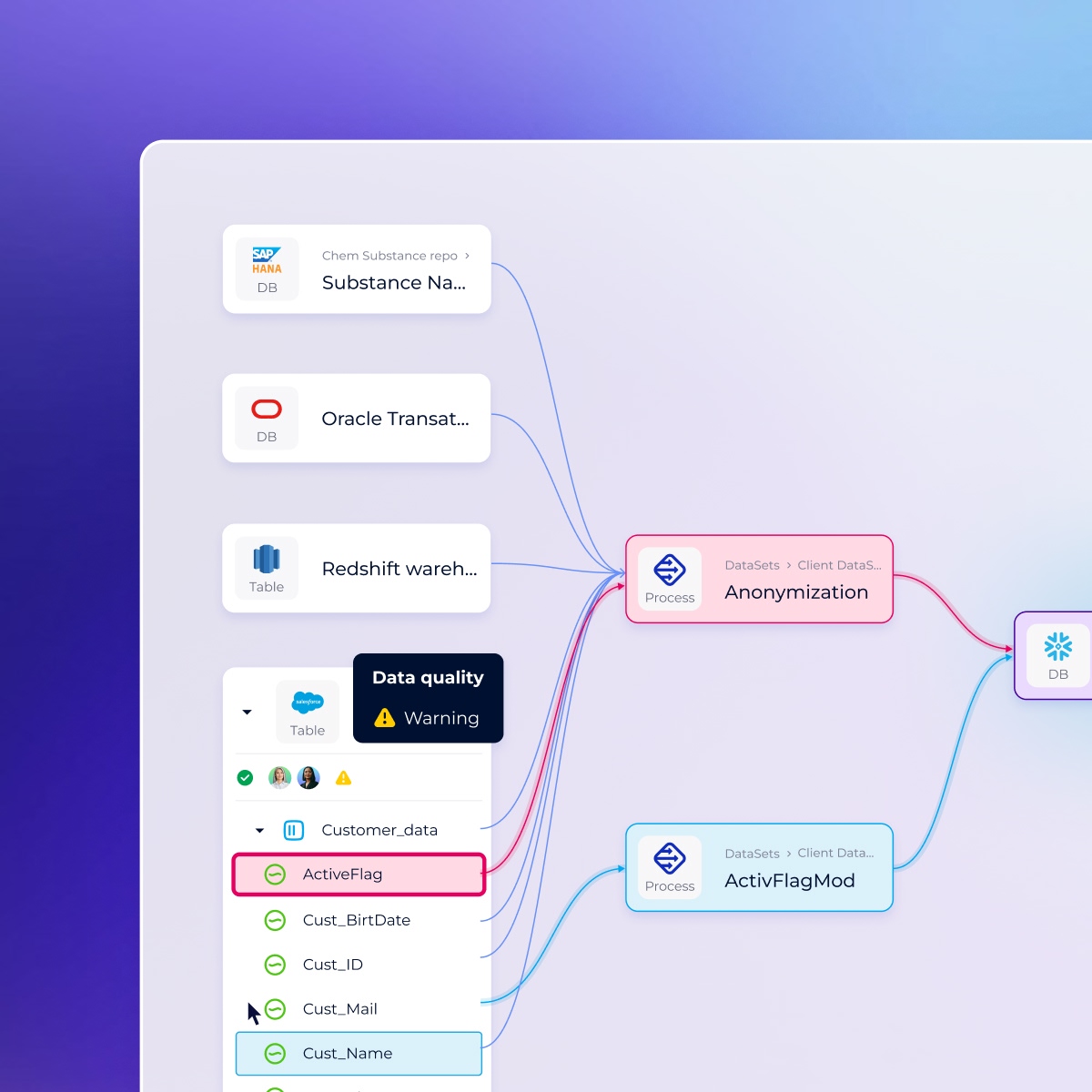
Trace data from source to consumption and give teams clear visibility on transformations, dependencies, and impact analysis to build trust at every step.
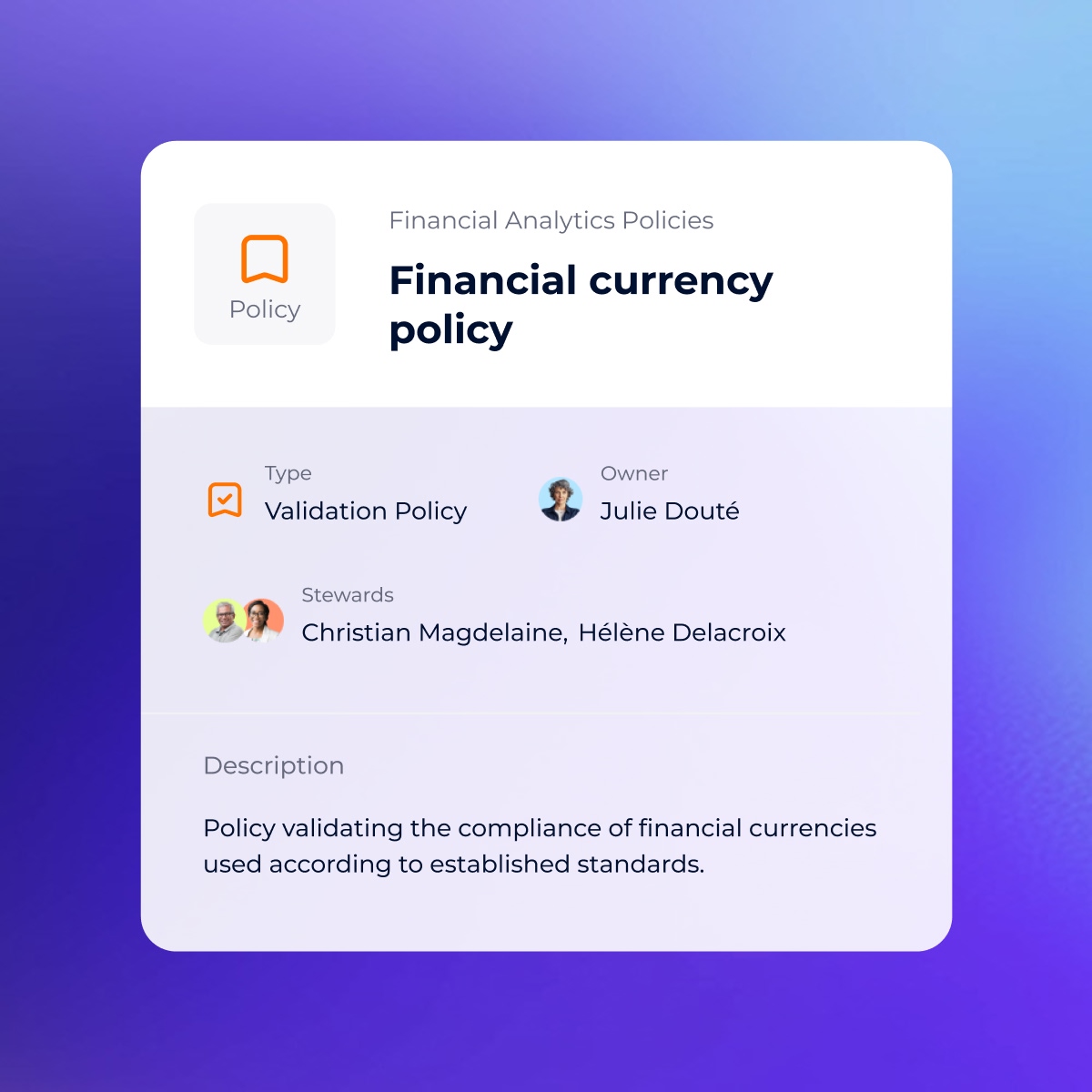
Apply roles, rules, and policies directly on data assets to ensure quality, compliance, and accountability without slowing teams down.
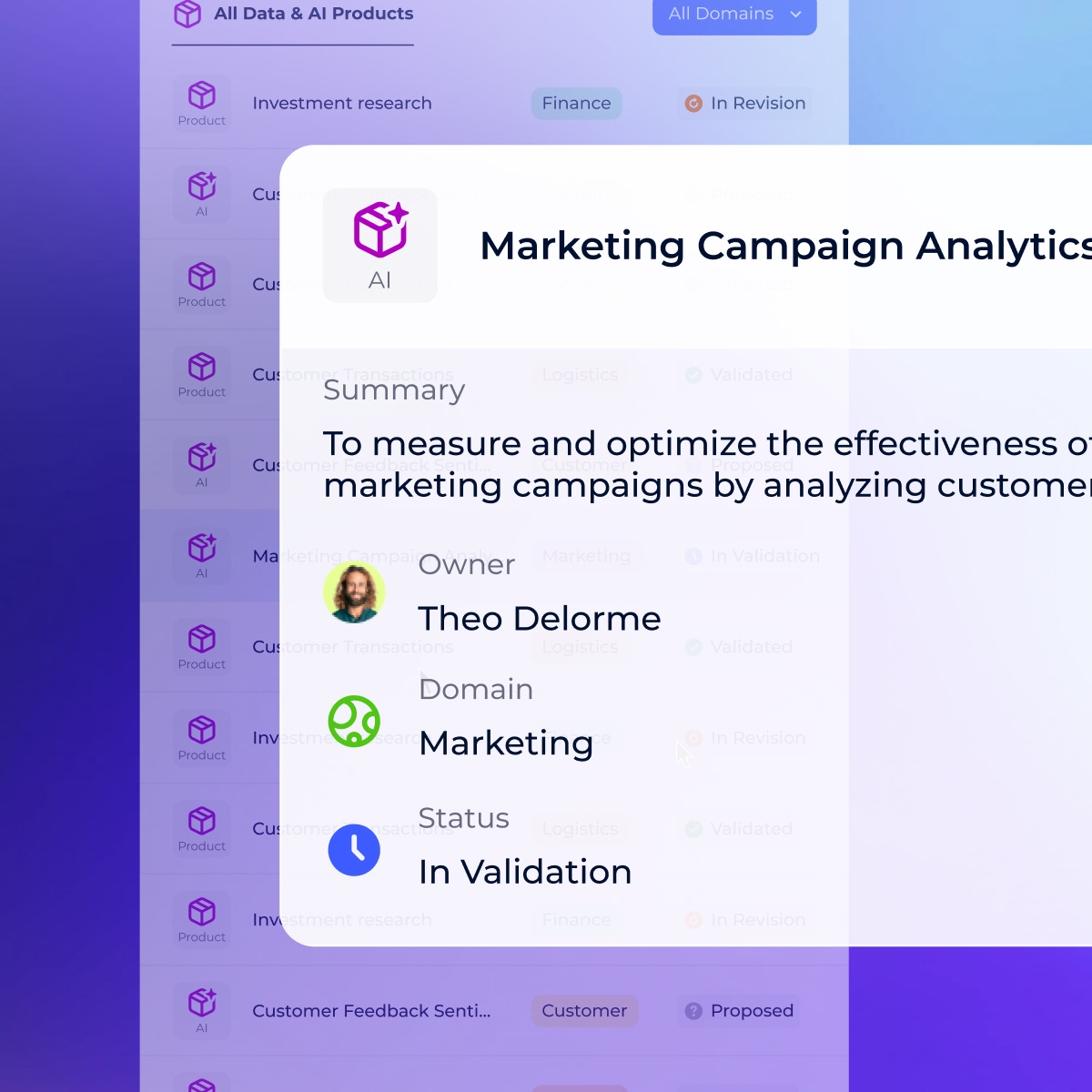
Expose certified, documented data products in a business-friendly Marketplace so teams can explore, understand, and request what they need, with full governance in place.
Integrates with your entire data stack


Who’s using DataGalaxy (spoiler: pretty much everyone)
Data/AI teams
Access a clear view of assets, sources, and dependencies to speed up delivery, improve data quality, and collaborate effectively with business counterparts.
CDOs
Oversee the organization’s data landscape, ensure governance adoption, and provide teams with trusted knowledge and context to make better decisions.
Governance teams
Document, organize, and maintain trusted knowledge. They ensure consistent definitions, ownership, and policies to keep data reliable and compliant across domains.
Business users
Easily discover and understand the data you rely on. Gain the context and confidence needed to make informed decisions without technical friction.
Engineer teams
Build and maintain reliable data pipelines with full visibility into lineage, dependencies, and changes. Simplify troubleshooting, ensure smooth data delivery, and collaborate easily with governance and analytics teams.
Analysts
Find, understand, and trust the data behind every dashboard. Quickly access definitions, lineage, and context to analyze confidently and deliver insights that align with business objectives.
Customer stories
“DataGalaxy enables us to track data changes, ensure quality and regulatory compliance, and gain clear visibility into our cloud data. Its ease of use, powerful features, and dedicated support have elevated our data management journey.”

Why teams stay for more than the lineage
Up and running in weeks
90% of our customers deploy a first use case in less than 2 months.
Integrated diagramming
Built-in Visual Knowledge Studio to visually map lineage, processes, and business flows: no external modeling tools required.
Speak data in every language
Your content is available in multiple languages to support global teams.
Your always-on AI data steward
AI copilot and assistants embedded for search, documentation, and suggestions.
Built for everyone, not just data teams
Unlike many catalogs that stay IT-only, DataGalaxy is designed for intuitive use by non-technical teams, which drives adoption across the enterprise.