Scale data products with clarity and speed
Manage data products in a unified, structured portfolio: Plan, document, assign owners, and track usage across the data lifecycle.

From assets to products with purpose
Give visibility to your work
Reduce repeated requests
Build trust with business teams
Showcase impact on the business
Data & AI products catalog
Centralize and organize all your data and AI products in a structured, searchable catalog.
With DataGalaxy, each data product can be enriched with documentation, usage context, domain ownership, glossary links, and certification status.You can then group and manage products by domain, initiative, team, or strategic objective to make discovery intuitive across technical and business users.
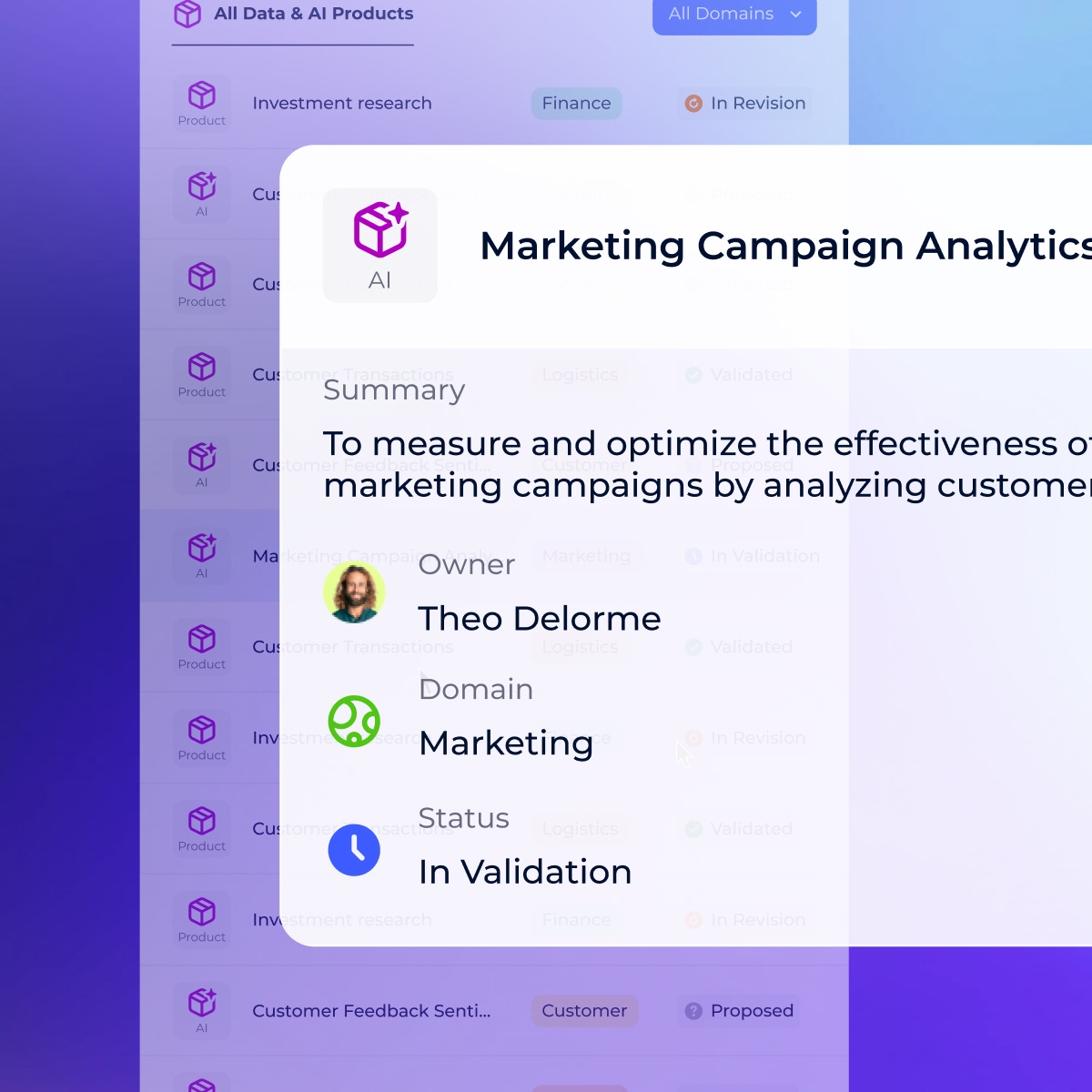
Ownership & roles
Eliminate ambiguity and foster accountability across teams
Assign product owners, stewards, and subject matter experts to each data product. Visual role management helps align cross-functional teams while supporting domain-based governance at scale.

Marketplace publishing
Connect delivery with consumption & build a trusted ecosystem of reusable data
Publish your data products in a business-friendly marketplace complete with descriptions, owners, status, and usage context. Allow users to explore by need—not by tool—and request access or clarification directly within the platform.
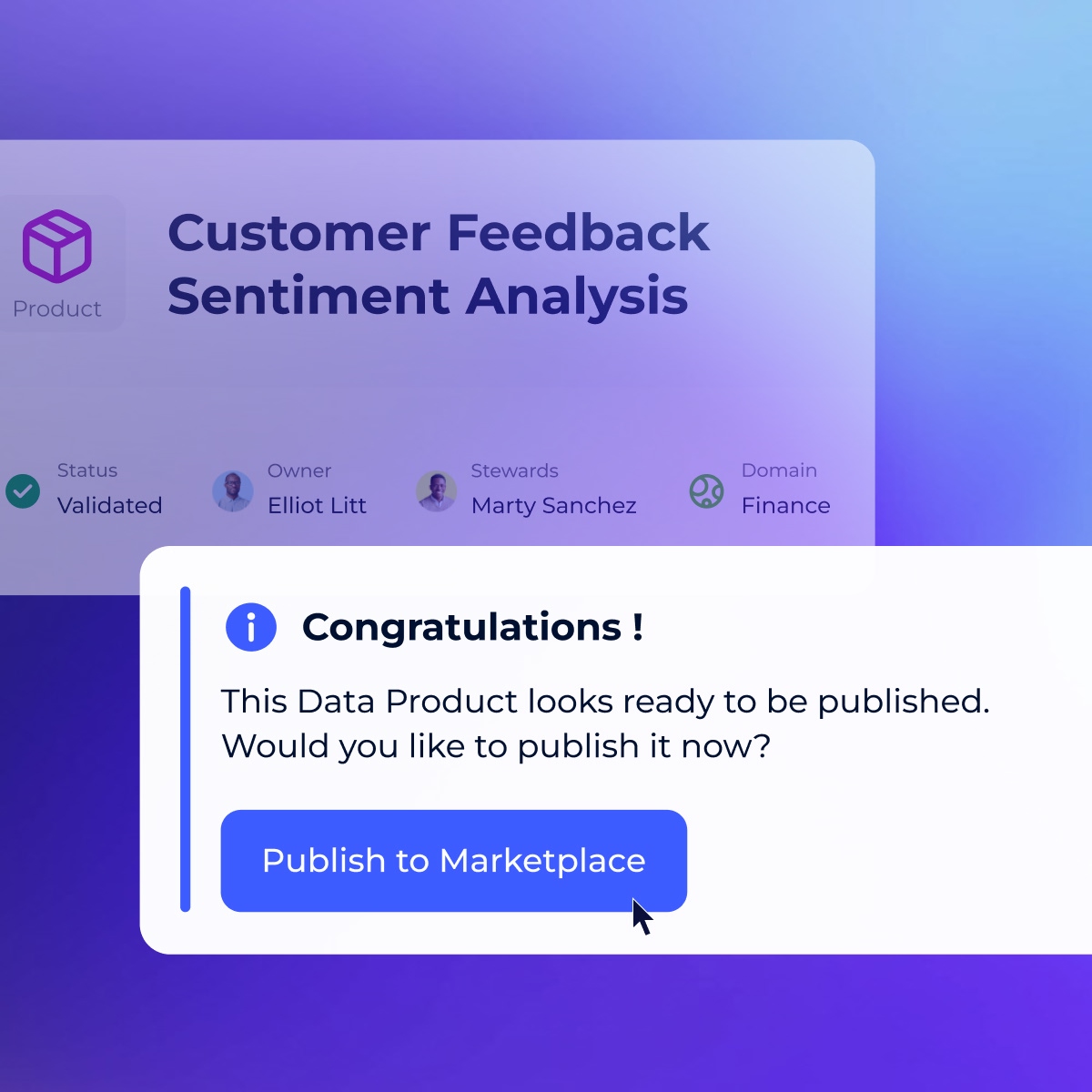
Trusted output ports
Evaluate initiatives by testing expected outcomes, risk levels, and alignment to strategic themes, not just intuition.
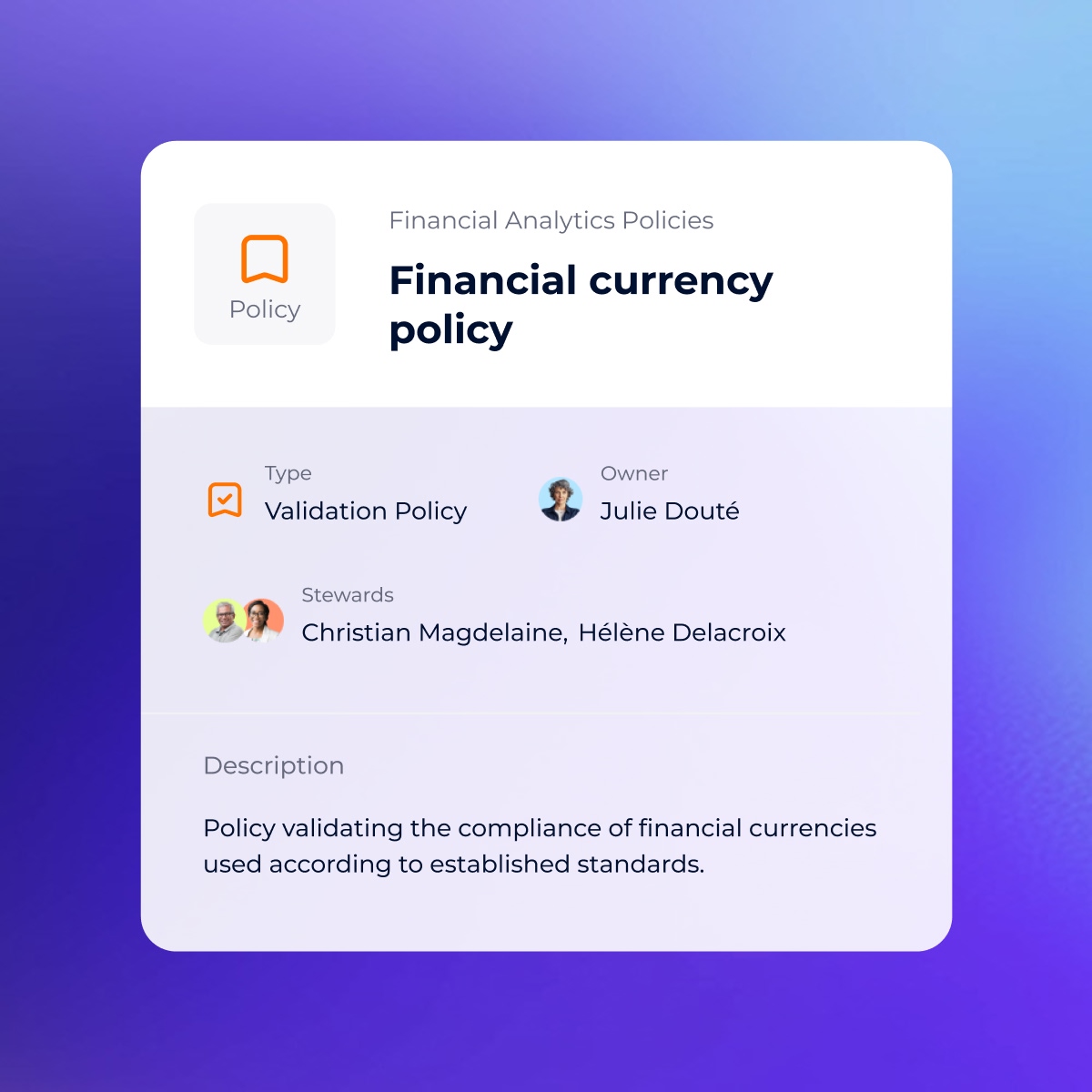
Integrated policies
Manage and enforce integrated policies to ensure consistent governance across data and processes.
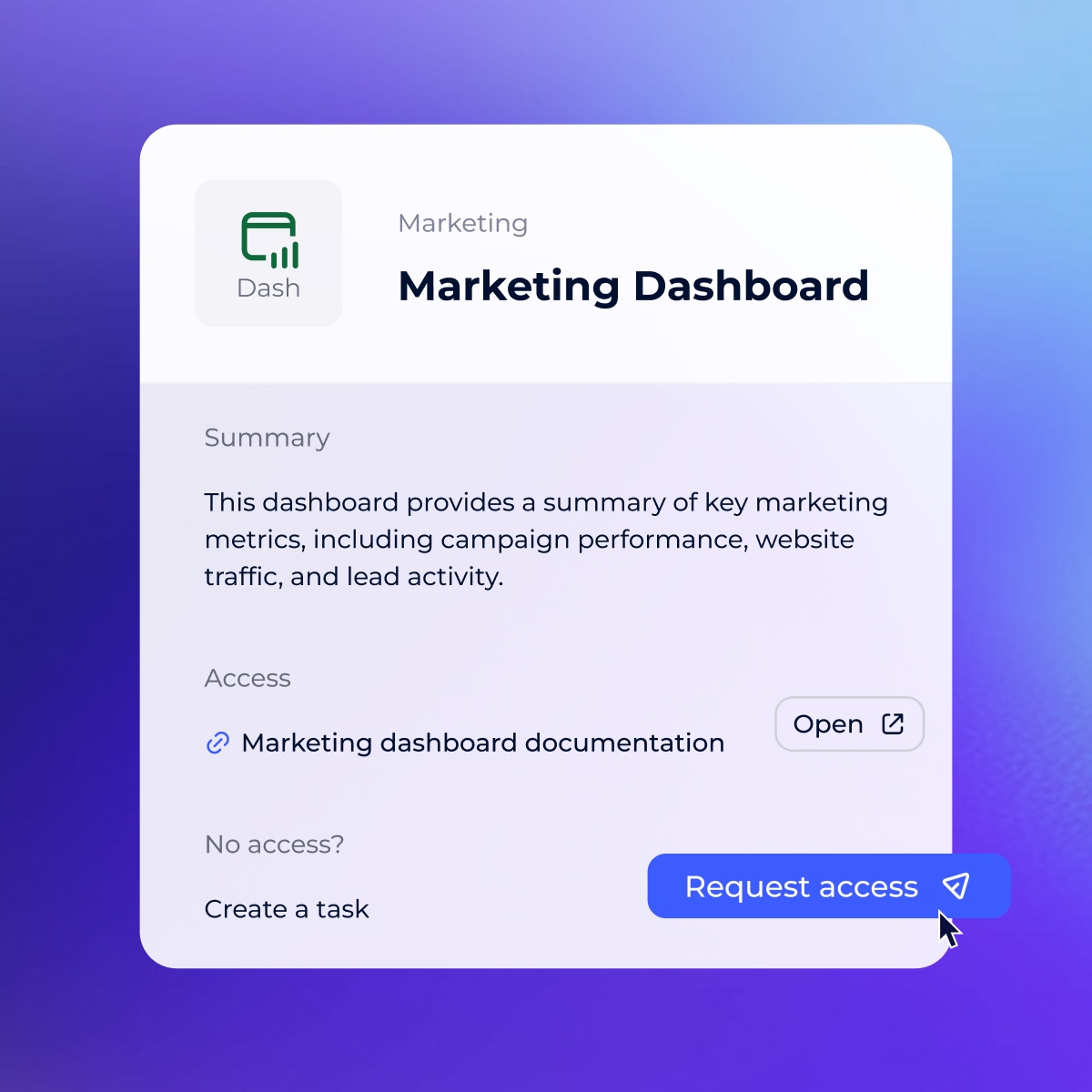
Your products are ready. Here’s how users find them.
Discover the marketplace
Request a demo
Questions we hear a lot about data products
- What is a data product?
-
A data product is a curated, reusable data asset designed to deliver specific value. It encompasses not just raw data, but also the necessary metadata, documentation, quality controls, and interfaces that make it usable and trustworthy. Data products are typically aligned with business objectives and are managed with a product-oriented mindset, ensuring they meet the needs of their consumers effectively.
- What is a data product in this context?
-
A data product is a reusable data asset — like a dataset, dashboard, or model — packaged with context, ownership, and service-level expectations.
- Why are data products important?
-
Data products are crucial because they transform raw data into actionable insights, enabling organizations to make informed decisions. By packaging data in a user-friendly and reliable manner, data products facilitate faster analysis, promote data reuse, and ensure consistency across different departments. This approach enhances data governance, reduces redundancy, and accelerates the time-to-value for data initiatives.
- Who can publish and manage data products in the marketplace?
-
Authorized users, such as data owners and stewards, can publish products with descriptions, ownership, and usage rules.
- How does DataGalaxy help manage data products?
-
You can define, own, govern, and evolve each data product across its lifecycle — with clear responsibilities, lineage, and performance tracking