End-to-end lineage with full business context
DataGalaxy gives you real-time, column-level lineage across systems, pipelines, and dashboards. No delays. No silos. Just complete visibility into how data flows, who owns it, and what it impacts.
Total visibility. Zero guesswork.
Complete visibility across your stack
Faster impact & root cause analysis
Simpler compliance & audits
Shared understanding for every team
Business-aware lineage visibility
See quality scores, access levels, owners, and classifications directly in the lineage view.
Give users immediate clarity on meaning, reliability, and responsibility.
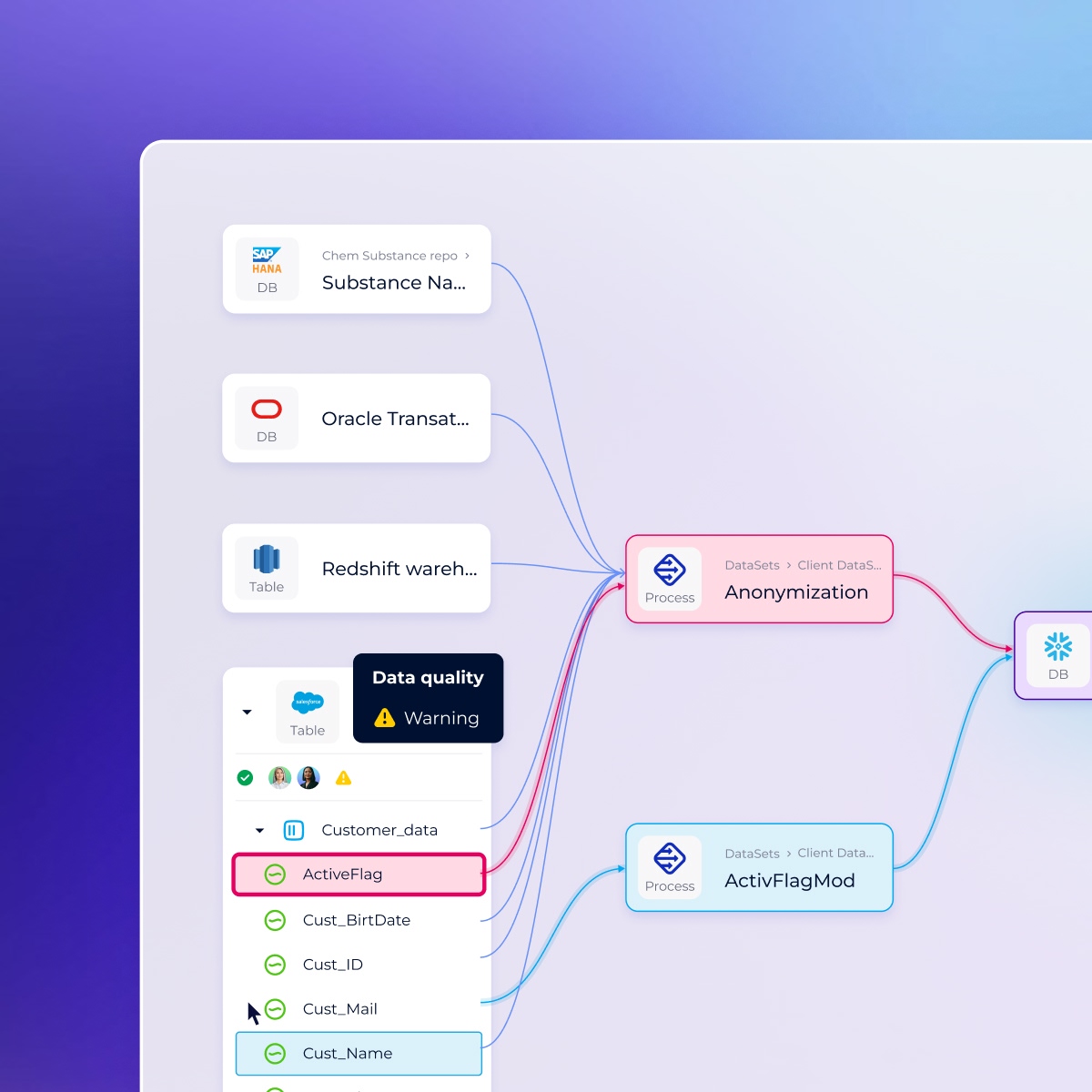
Impact analysis & root cause tracing
Use campaigns to review and certify the definitions that matter most such as KPIs, regulatory metrics, or strategic indicators. Stewards and business owners are guided through targeted validation tasks to confirm accuracy, ownership, and alignment.
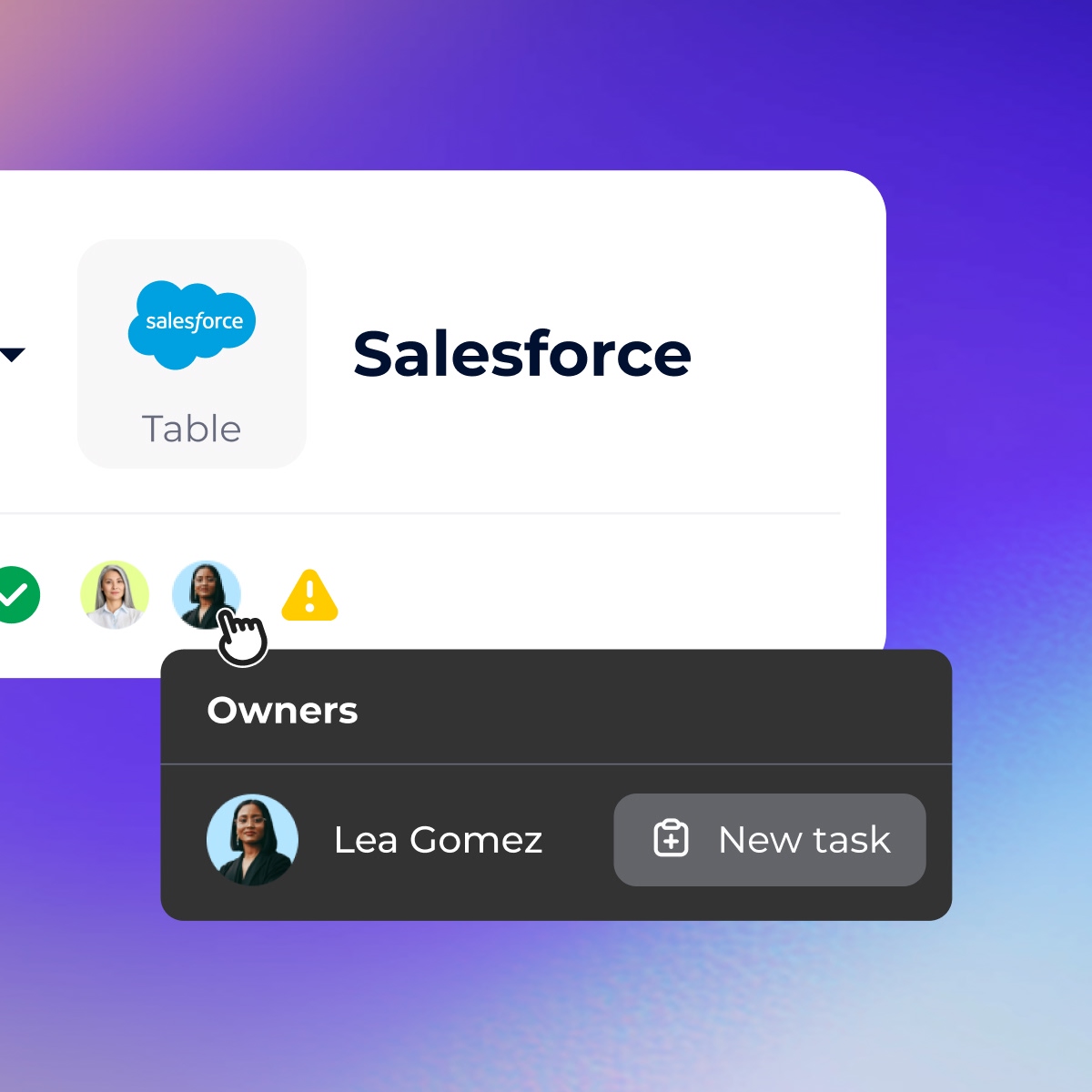
Collaborate directly on data flows
Comment, assign, and flag issues directly in the flow. Notify teams instantly with Slack and Teams integrations.
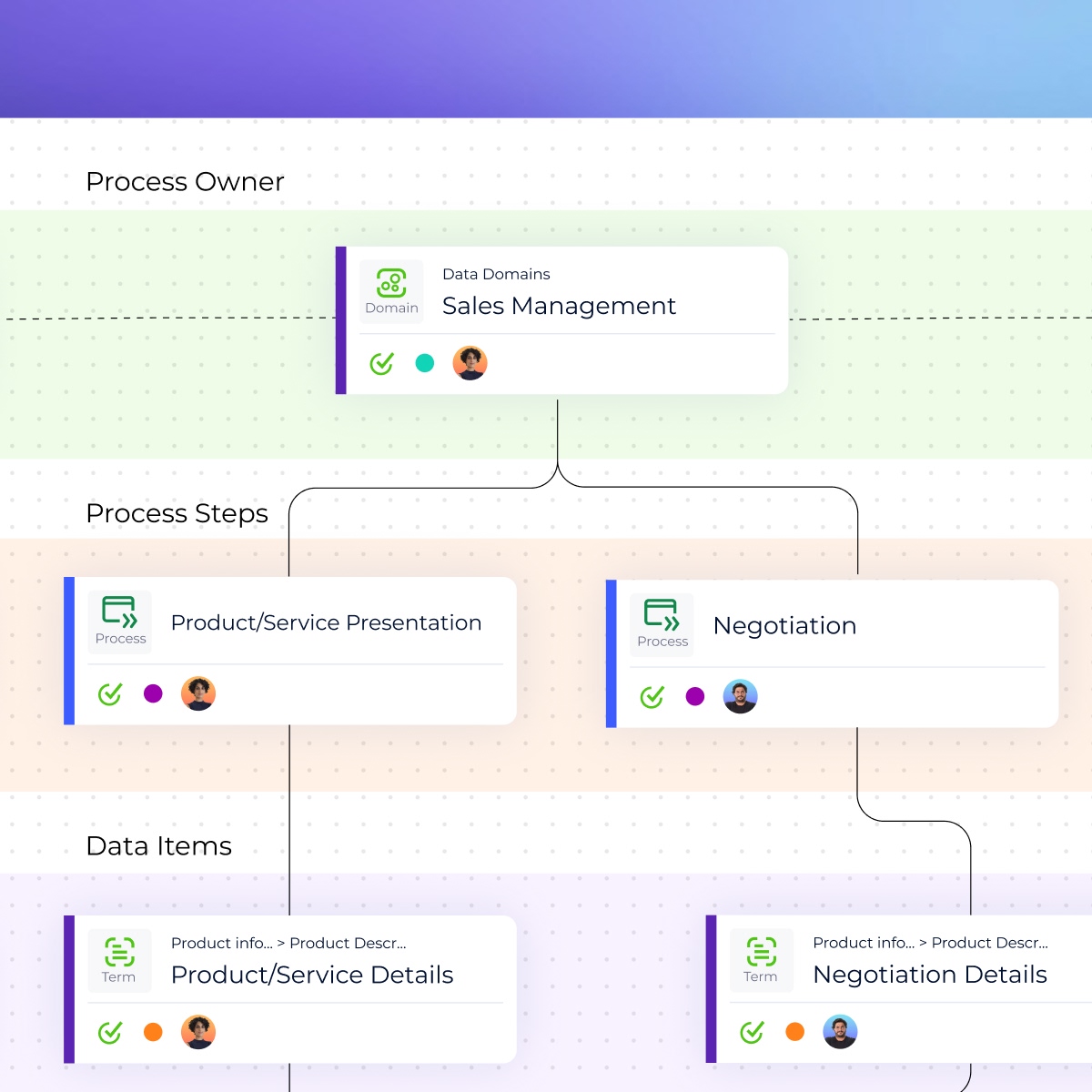
Entity relationship diagrams and semantic modeling
Visualize how your data connects across domains. Clarify ownership and speed up onboarding with a shared structure.
Integrates with your entire data stack



Request a demo
Questions we hear a lot about the data lineage
- What is data lineage?
-
Data lineage traces data’s journey—its origin, movement, and transformations—across systems. It helps track errors, ensure accuracy, and support compliance by providing transparency. This boosts trust, speeds up troubleshooting, and strengthens governance.
- Why is data lineage important?
-
Data lineage is important because it provides visibility into the origin, movement, and transformation of data. It enables regulatory compliance, faster root-cause analysis, improved data quality, and trust in analytics. By mapping data flows, organizations enhance transparency, streamline audits, and support accurate, AI-driven decisions, making it a cornerstone of effective data governance.
- Why do modern data catalogs include lineage and governance?
-
Because documentation alone isn’t enough. Data lineage shows how assets flow and transform. Governance ensures trust, access control, and compliance. Together, they turn a static catalog into an intelligent, collaborative platform.
- What is value lineage and how does DataGalaxy support it?
-
Value lineage shows how strategic objectives translate into use cases, data products, and measurable outcomes. It reveals where impact is created, how initiatives relate to business goals, and where adjustments can improve results.
- Does the connector support end-to-end data lineage?
-
Absolutely. DataGalaxy automatically maps and visualizes the flow of data across your Databricks pipelines, from raw ingestion to transformed datasets and downstream models or dashboards. This end-to-end lineage helps identify dependencies, track changes, and enhance accountability across your data lifecycle.
- Do your integrations support metadata lineage and classification?
-
Yes. DataGalaxy’s integrations go beyond surface-level connectivity. They ingest and map metadata in context, enabling features like data lineage, business glossary links, usage analysis, and automatic classification. This ensures a consistent and transparent view of your entire data ecosystem.
- Can I visualize and analyze lineage across my Snowflake assets?
-
Absolutely. DataGalaxy provides dynamic visual representations of your Snowflake environment, including dual-path tracking for lineage and impact analysis. This allows users to trace data flows, identify root causes, and understand downstream impacts — all from an intuitive diagram interface.