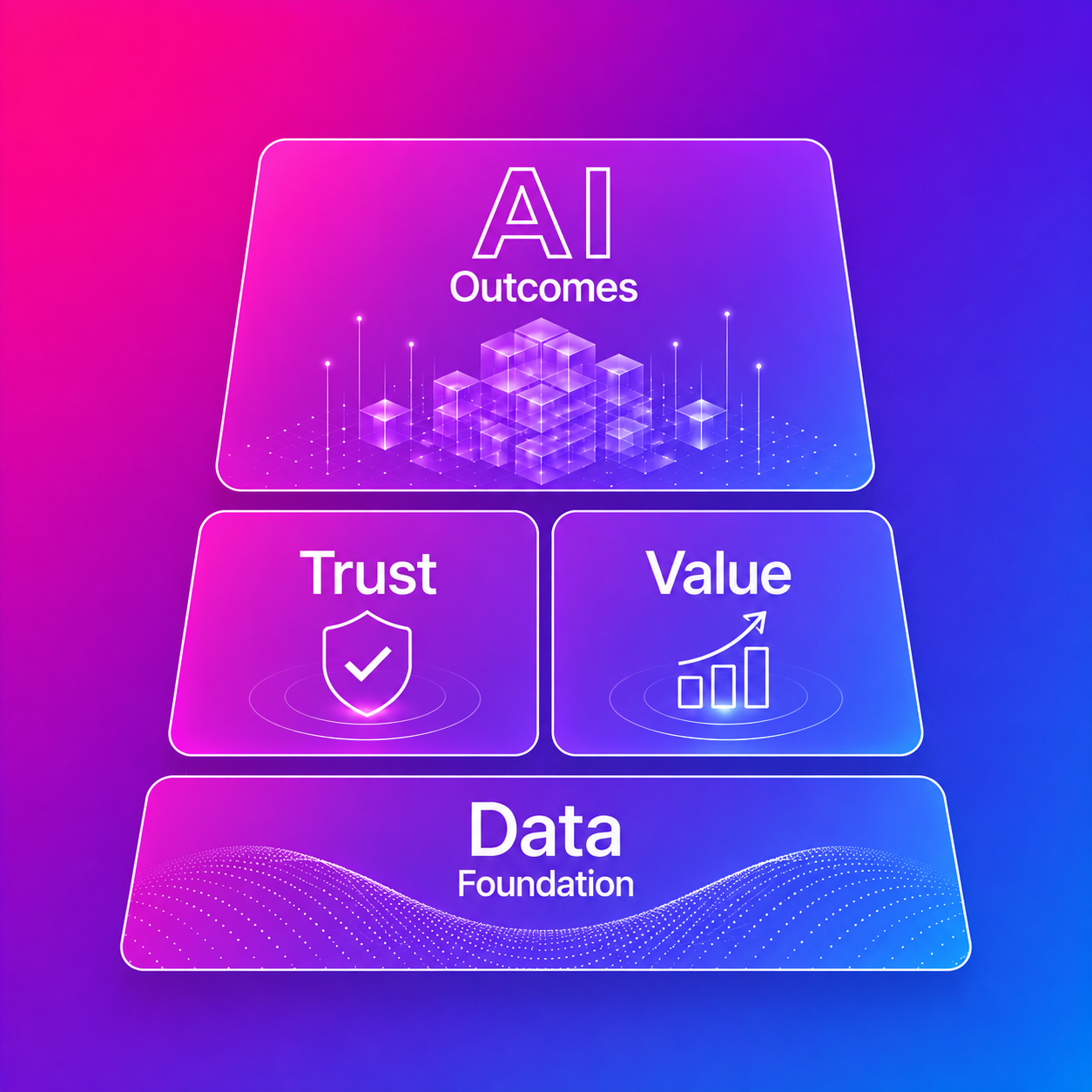
More and more, data and analytics leaders around the world are seeking ways to transform data access and reduce the technical skills barrier using generative AI.
Generative AI is transforming data management activities through natural language interfaces, making data management and analytics more widely accessible.
Integration with metadata management tools will enhance future productivity, optimize costs, and lower the barrier of entry for data management positions.
3 ways generative AI is transforming data management solutions
1. Metadata discovery & documentation
Generative AI and language learning models (LLMs) bring a new approach to extending augmented metadata management capabilities that can help extract semantic meaning and identify context in data usage.
These capabilities for metadata discovery and knowledge-building are emerging for multiple use cases, including:
- Supporting a data catalog
- Data governance
- Increasing data quality
- Enterprise knowledge management
- Participation in a data fabric structure
GenAI can also be used to generate data management code documentation for queries or data pipelines, making it easier to maintain the overall data management landscape, particularly when paired with a well-structured data dictionary that ensures consistent definitions across teams. Data & analytics leaders considering working with generative AI products should remember to always:
- Evaluate the resources and skills supporting human intervention in the process and the ability to leverage specific industry knowledge
- Test documentation generation capabilities as needed and assess their overall impact on your data management teams
2. Data exploration & code generation
LLM code generation capabilities will transform how we interact with data, and software vendors are increasingly fine-tuning these LLMs to support enterprise use cases.
- Human-centric interfaces & self-service data: The main benefit identified of these capabilities is to empower any user to interact with data. When combined with graphic generation and data visualization, these capabilities can transform the entire data analytics process.
- Code generation & correction: GenAI can help data professionals create and identify errors in the coding used to organize data and metadata. This code generation allows a new generation of data engineers to increase productivity and reduce the barrier to entry for data jobs. Of course, standard base code knowledge will be needed to ensure there is no logical error or issue in the code generated over time.
3. Generative AI for administration, optimization, and operational activities
GenAI can be particularly useful in activities that require a more natural language approach to finding and organizing information, including administrative and operational work with everything from data pipelines to system health monitoring.
While users will welcome all of these capabilities regardless of their skill level, they will impact only the user experience and won’t fundamentally change the way data management is operated.
However, over time, it can be expected that, in combination with other AI techniques and code-generation capabilities, much more of the administration and deployment will be automated, leading to self-healing, self-tuning, and cost-optimized systems.
Generative AI rapidly transforms data management by making data access more intuitive and reducing technical barriers for users of all skill levels.
GenAI is reshaping how organizations interact with and manage data, from metadata discovery and documentation to data exploration, code generation, and operational optimization.
While human oversight remains essential to ensure accuracy and efficiency, the integration of GenAI with metadata management tools and automation will drive greater productivity, cost savings, and accessibility.
As AI continues to evolve, data and analytics leaders who embrace these innovations, and establish a solid AI governance framework to guide them, will be well-positioned to leverage the full potential of AI-powered data management.
FAQ
-
What is AI governance?
-
AI governance is the framework of policies, practices, and regulations that guide the responsible development and use of artificial intelligence. It ensures ethical compliance, data transparency, risk management, and accountability—critical for organizations seeking to scale AI securely and align with evolving regulatory standards.
-
Why is AI governance important?
-
AI governance is crucial because it ensures that artificial intelligence systems are developed and deployed responsibly. Without proper governance, AI can perpetuate biases, compromise data privacy, and make opaque decisions that affect individuals and society. Effective AI governance establishes frameworks and policies that promote ethical use, transparency, and accountability in AI applications.
-
What are the key principles of AI governance?
-
Key principles of AI governance include transparency, accountability, fairness, privacy, and security. These principles guide ethical AI development and use, ensuring models are explainable, unbiased, and compliant with regulations. Embedding these pillars strengthens trust, reduces risk, and supports sustainable, value-driven AI strategies aligned with organizational goals and global standards.
-
How do you improve data quality?
-
Improving data quality starts with clear standards for accuracy, completeness, consistency, and timeliness. It involves profiling, fixing anomalies, and setting up controls to prevent future issues. Ongoing collaboration across teams ensures reliable data at scale.
-
How do you build a data product?
-
Building a successful data product begins with a clear business need, trusted data, and user-focused design. DataGalaxy simplifies this process by centralizing data knowledge, fostering collaboration, and ensuring data clarity at every step. To create scalable, value-driven data products with confidence, explore how DataGalaxy can help at www.datagalaxy.com.