Automate your HIPAA compliance
Health data security in the age of connected care
-
The rise of access points and AI data flows: With telemedicine, connected devices, and AI-assisted diagnostics expanding fast, protected health information now moves through increasingly complex data pipelines. Without central visibility, the risk of accidental exposure or leakage becomes critical.
-
The interoperability challenge in healthcare: Data exchanges between electronic health records, labs, care platforms, and cloud environments create blind spots. Tracking the patient data lifecycle across hybrid ecosystems is almost impossible with static documentation methods.
-
The high cost of breaches: Regulatory audits from bodies such as the OCR are increasingly strict. Non-compliance or a security failure can trigger significant penalties and instantly damage trust with patients, providers, and institutional partners.

Benefits for your organization
Calmer regulatory audits
Reduce audit pressure by instantly providing clear evidence, up-to-date data flow maps, and traceability reports that validate your protection measures.
Faster medical R&D
Give research teams access to qualified, governed, and secure data so they can accelerate scientific innovation, analytics projects, and medical AI initiatives.
Proactive breach risk reduction
Identify vulnerabilities, unclear ownership, and inappropriate access paths before they become major data breaches, protecting both reputation and resources.
Trust with healthcare partners
Turn HIPAA compliance into a growth advantage by proving that health information is handled with transparency, accountability, and security across its lifecycle.
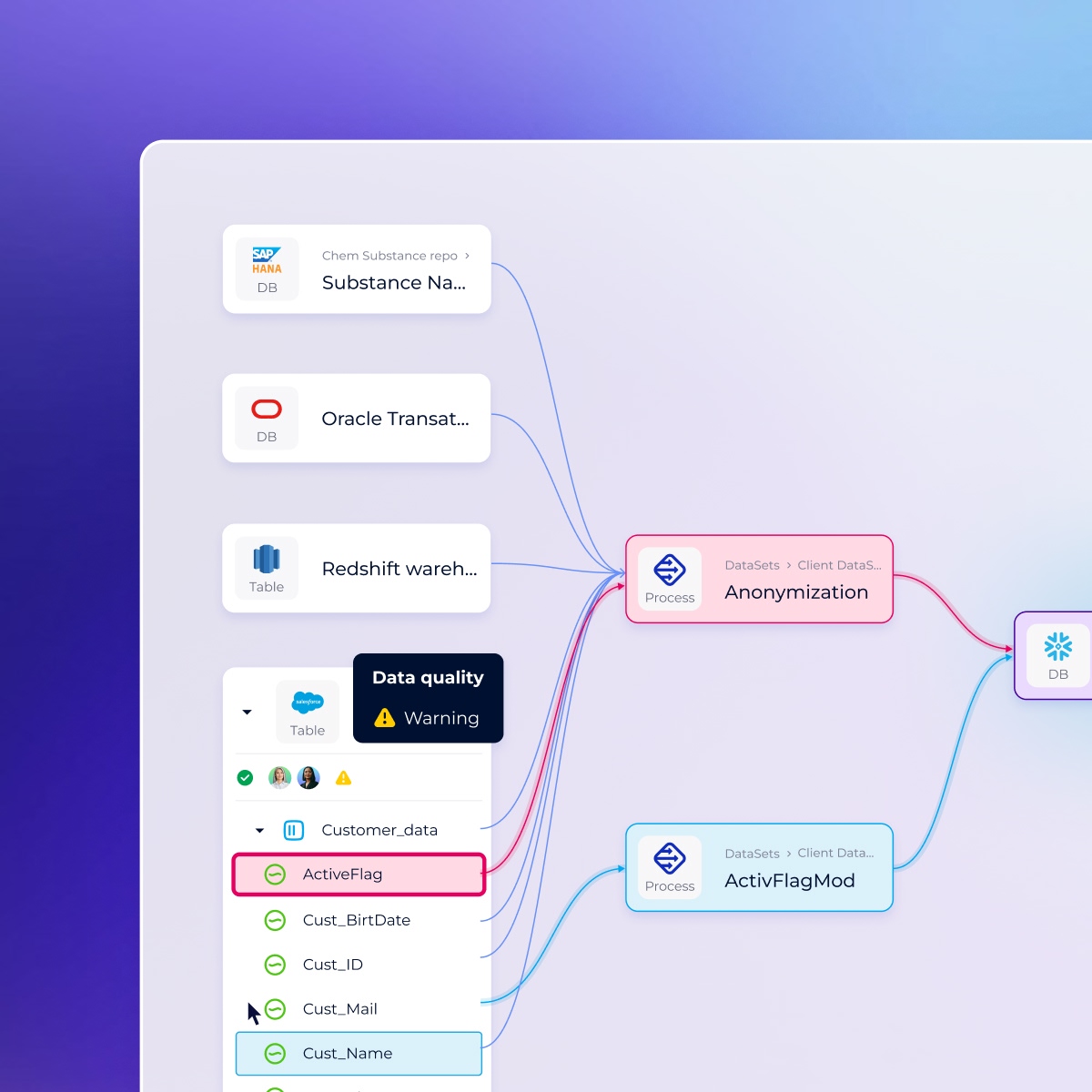
Automated lineage for electronic health data
Our technology captures movements and transformations across your ePHI flows. It provides a map showing how clinical data is extracted, shared, transformed, and stored. When a pipeline or care application needs to be changed, teams can identify the compliance impact across their environments.
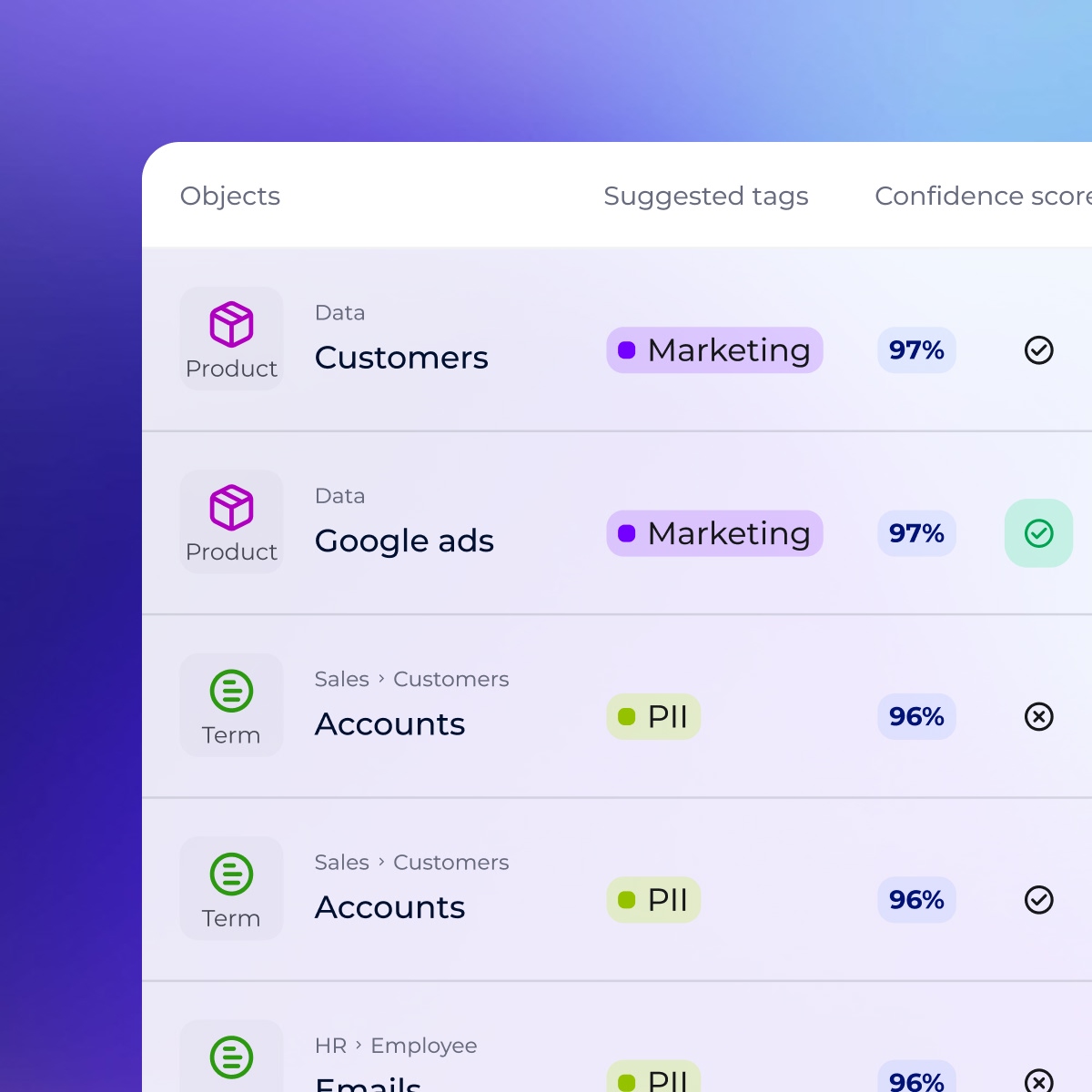
Smart detection and classification of patient information
Our suggestion center helps scan your databases and identify critical identifiers such as Social Security numbers, medical history, diagnostic codes, and other health data markers. This classification reduces shadow data by locating files and systems that contain insufficiently protected health information.
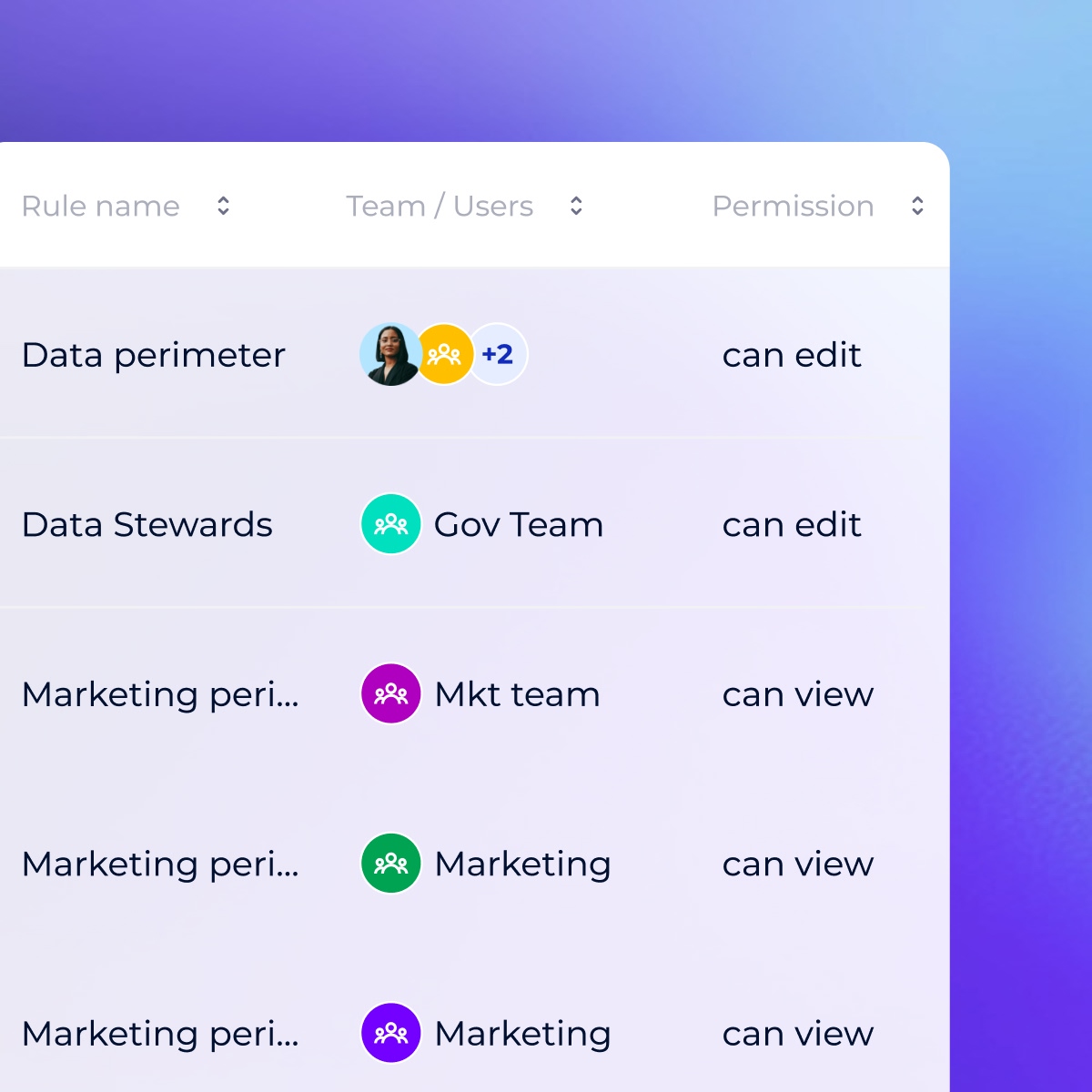
Metadata aligned with HIPAA security requirements
Connect your technical infrastructure with HIPAA Privacy and Security Rule requirements. The platform helps associate clear access policies with each data asset, ensuring that only authorized roles can interact with tables and systems containing sensitive health information.
Documentation for de-identification and anonymization processes
DataGalaxy helps healthcare organizations document and govern data de-identification processes, ensuring datasets used for AI and analytics are stripped of sensitive identifiers before use.

Request a demo
FAQs
- What role does data governance play in HIPAA compliance?
-
Data governance helps healthcare organizations understand where protected health information is stored, how it is used, who is responsible for it, and how it moves between systems. This supports the administrative and technical processes surrounding privacy, security, risk management, and accountability. Under the HIPAA Security Rule, regulated entities must protect electronic protected health information through appropriate administrative, physical, and technical safeguards.
- How does data lineage support HIPAA risk analysis and audits?
-
Data lineage helps teams understand where sensitive health data comes from, where it is transferred, how it is transformed, and which reports or applications use it. This visibility can help identify affected assets during risk assessments, system changes, or incident investigations. It also gives compliance teams documented evidence of data dependencies and flows, while HIPAA risk analysis remains a broader process covering risks and vulnerabilities to ePHI.
- How does DataGalaxy support HIPAA-aligned data governance?
-
DataGalaxy helps healthcare organizations document sensitive data, assign owners, centralize policies, and trace data flows across systems such as electronic health records, data warehouses, and business intelligence platforms. Compliance teams can connect privacy and security requirements to the data assets they govern, making it easier to identify responsibilities, assess impact, and assemble evidence for internal reviews or audits.
- Does using DataGalaxy guarantee HIPAA compliance?
-
No. HIPAA compliance depends on an organization’s policies, risk analysis, workforce practices, contracts, physical safeguards, technical security controls, and ongoing monitoring. DataGalaxy supports the governance and documentation layer by improving visibility, ownership, policy mapping, and traceability. It does not replace cybersecurity systems, access controls, legal advice, or the complete HIPAA compliance program required of covered entities and business associates.