Automate your GDPR compliance

The 2026 challenge: why traditional methods are no longer enough
-
The rise of shadow data and AI: With the rapid adoption of generative AI, personal data and PII can move across systems with limited control. Without visibility into the data flows feeding your models, exposure risk increases fast.
-
Real-time audits: Regulators now expect instant evidence of traceability and accountability. Static annual reports are no longer enough to demonstrate compliance with confidence.
-
The limits of Excel: Manually documenting processing activities is time-consuming, error-prone, and exposes your business to financial penalties as well as a loss of customer trust.

Benefits for your organization
Audit-ready confidence
40% productivity gain
Faster innovation
Trust and competitive edge
Data lineage and complete traceability
Visualize how personal data moves across your systems, from source applications to analytics and AI use cases.
Lineage helps teams quickly identify impacts, dependencies, and transformations applied to sensitive data.
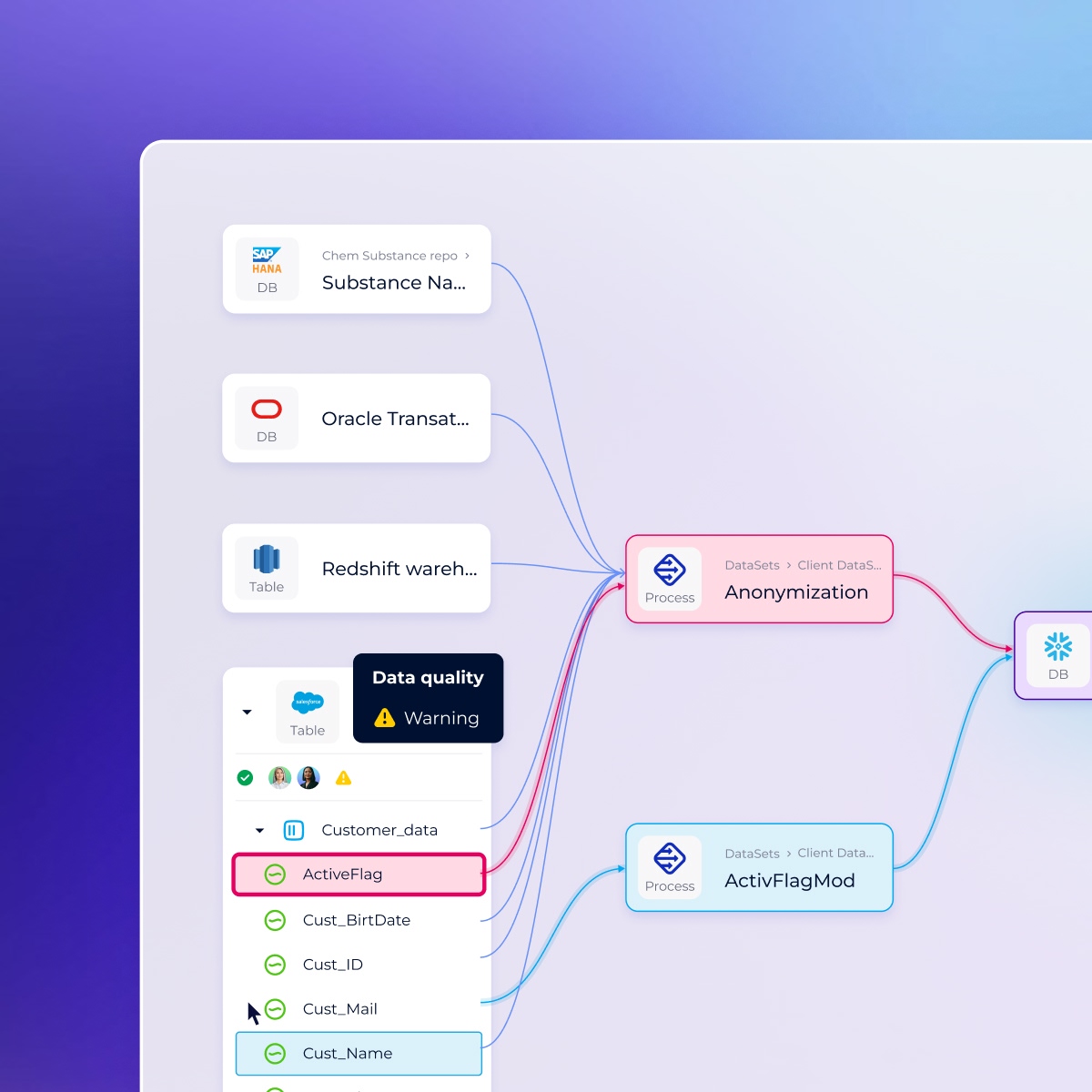
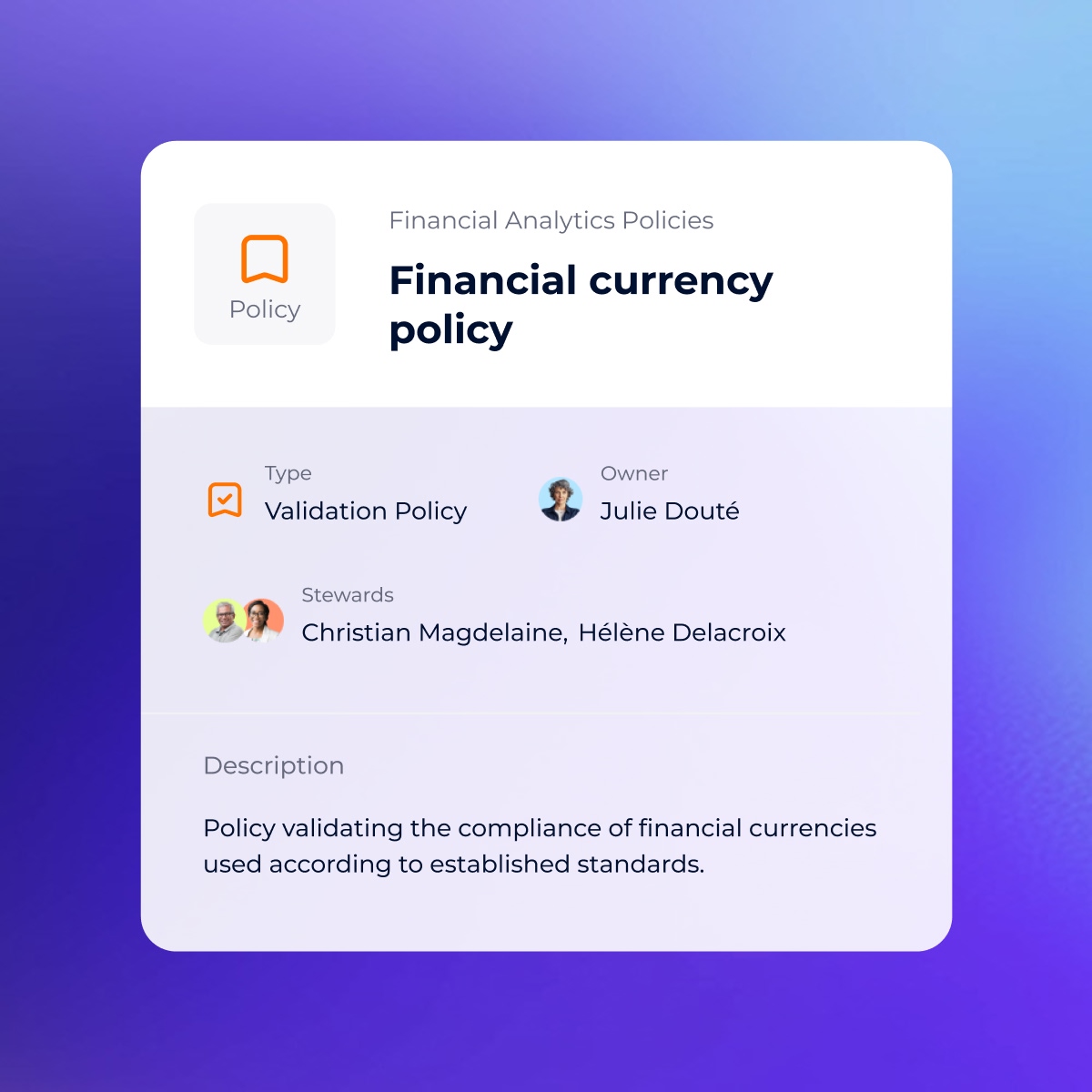
Governed data catalog
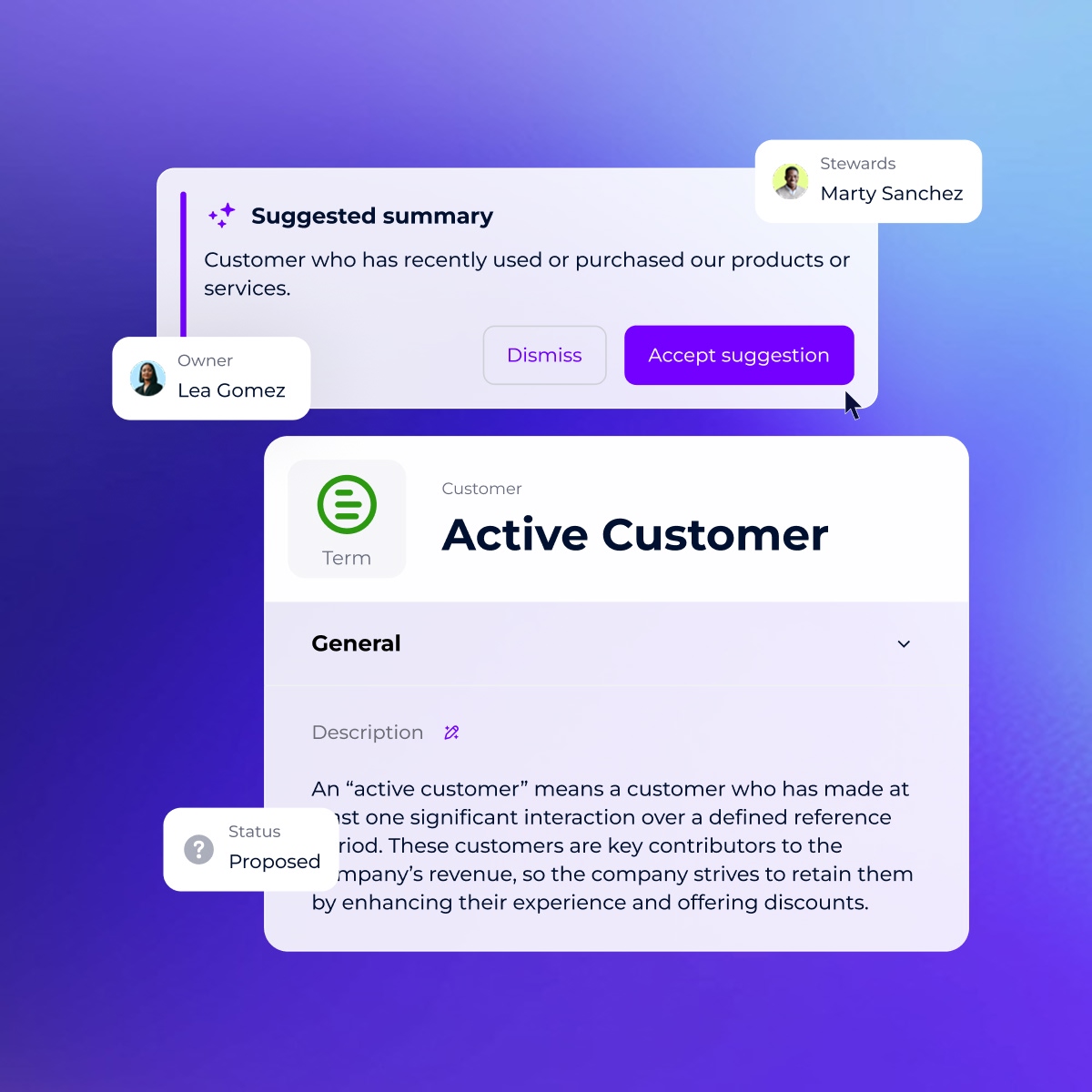
Centralize business definitions, classifications, governance rules, and ownership in a collaborative catalog.
Teams can quickly access data that is documented, approved, and enriched with the right business context.
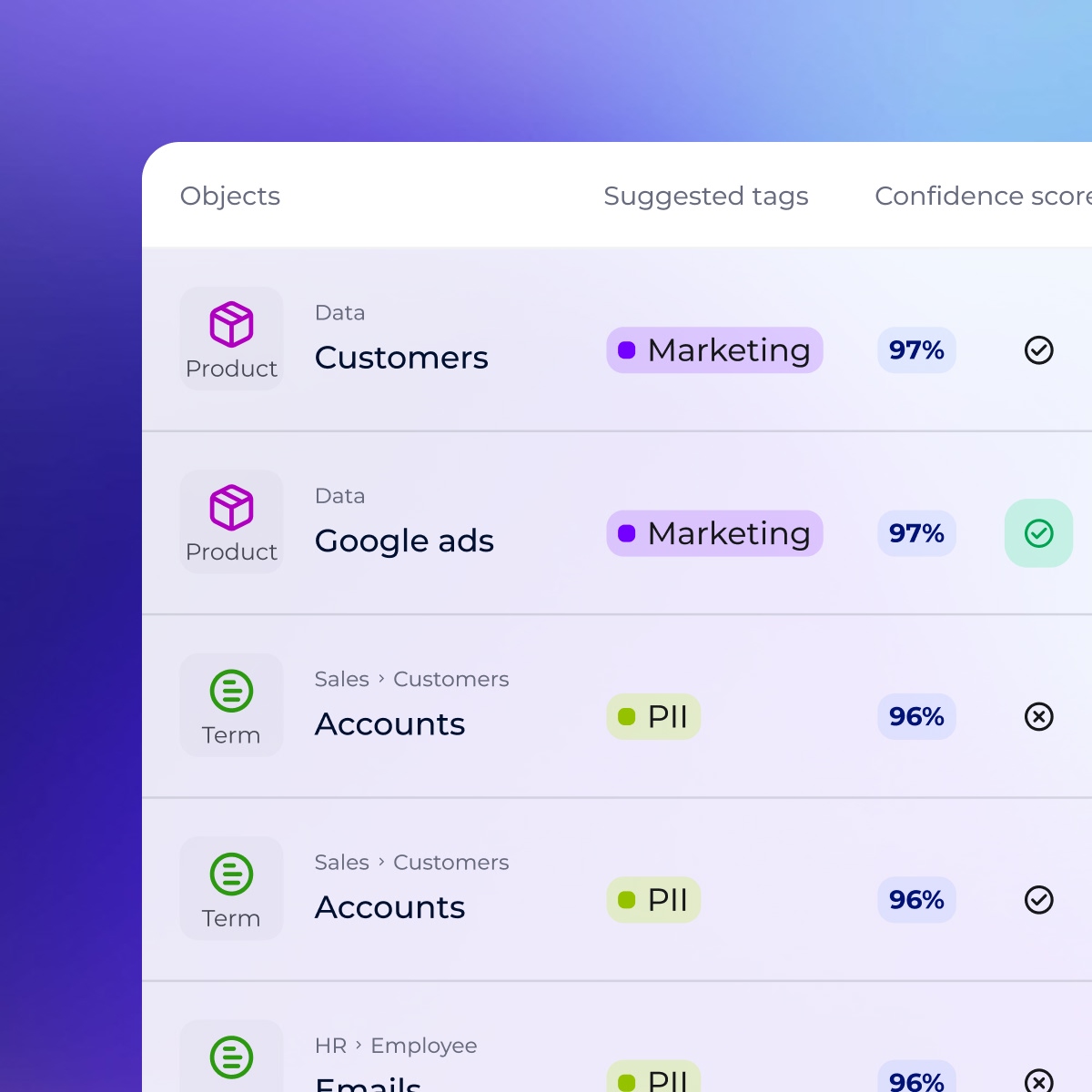
Sensitive data classification and detection
Our rules engine scans your environments to identify and automatically tag personal data. Smart classification helps reduce shadow data by locating local copies, forgotten databases, and critical information that may be insufficiently secured.
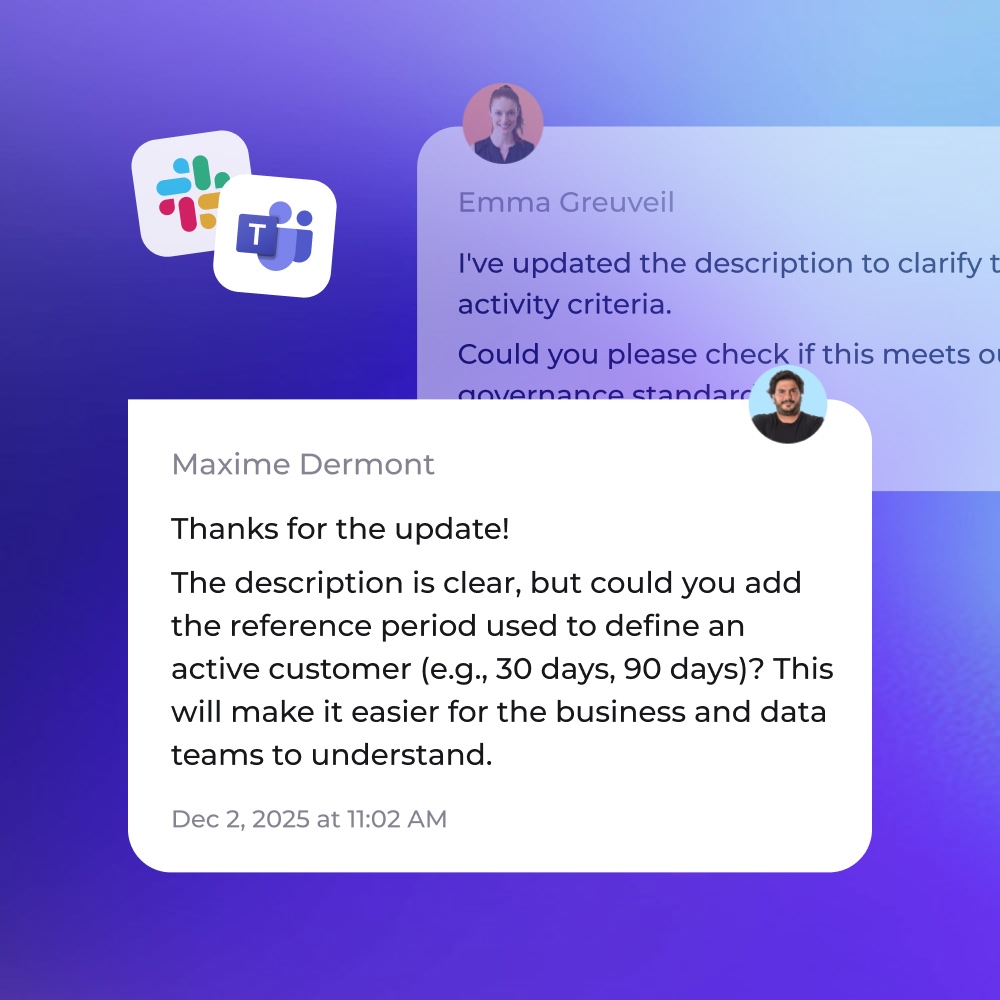
A collaborative workspace for DPO and tech teams
Create a shared language between legal definitions and the technical tables and columns managed by IT. With built-in validation workflows, you can control access to sensitive data and empower Data Stewards through clearly defined governance roles.
Automated documentation
Reduce manual work by automating metadata collection and data asset documentation.
Governance stays aligned with real changes across your information system, so your compliance evidence remains current and reliable.

Request a demo
FAQs
- What is BCBS 239?
-
BCBS 239 is a set of principles issued by the Basel Committee on Banking Supervision to strengthen banks’ risk data aggregation and risk reporting capabilities. The principles address governance, data architecture, accuracy, integrity, completeness, timeliness, adaptability, reporting, and supervisory review. They were initially directed at systemically important banks, although supervisors may apply similar expectations more broadly.
- How can a business glossary support BCBS 239?
-
A business glossary creates shared definitions for risk measures, entities, products, exposures, and reporting concepts. DataGalaxy connects these definitions to physical data fields, calculations, owners, and reports. This helps reduce interpretation gaps between risk, finance, business, and IT teams. It also supports the BCBS 239 expectation that banks establish integrated taxonomies, metadata, identifiers, and clear ownership responsibilities.
- How does DataGalaxy support BCBS 239 compliance?
-
DataGalaxy provides a shared metadata foundation for documenting risk data, definitions, ownership, policies, quality information, and technical dependencies. Banks can use the platform to connect risk concepts with their source systems, transformations, calculations, and reports. This improves transparency across risk, finance, business, and IT teams and helps produce traceability evidence for internal validation, audits, and supervisory reviews.
- Is a data catalog enough to achieve BCBS 239 compliance?
-
A data catalog alone is not enough. BCBS 239 requires strong governance, suitable architecture, reliable aggregation processes, effective reporting practices, validation, and management oversight. DataGalaxy supports these efforts by centralizing metadata, lineage, definitions, ownership, policies, and quality context. Banks must combine these capabilities with appropriate technology, controls, operating models, and supervisory remediation processes.
- How does data lineage help meet BCBS 239 requirements?
-
Data lineage shows how risk data moves from operational systems through transformations and aggregation processes into management or regulatory reports. It allows teams to trace reported figures back to their source, investigate anomalies, and assess the impact of changes. These capabilities support BCBS 239 expectations around accurate, reliable, and documented risk data aggregation, particularly across complex banking architectures.