Certify your Solvency II data
The challenge: insurance data integrity under pressure
-
Increasing complexity of actuarial models: The integration of forward-looking variables such as climate risks and ESG criteria makes technical provision calculations increasingly difficult to document and justify.
-
Pillar 3 reporting pressure: Producing QRT, RSR, and SFCR reports requires extremely short reporting cycles. Manual reconciliation between underwriting and Fast Close systems increases operational risk and reporting errors.
-
Dependency on spreadsheets and opaque formulas: Pricing and reserving algorithms scattered across local files create traceability gaps frequently highlighted during regulatory inspections.

Benefits for your organization
Accelerated financial and regulatory reporting
Optimize your reporting production cycle. Automated documentation removes operational bottlenecks and allows actuarial teams to focus on strategic analysis instead of manual data investigations.
Optimized economic capital management
Demonstrate full control and trustworthiness of your insurance data to regulators and reduce excessive prudential margins, freeing capital to support business growth.
Confidence during regulatory audits
Approach every regulatory inspection with confidence. Instantly provide up-to-date data lineage and governance documentation to reduce compliance risk and audit findings.
Better insurance product performance
Turn regulatory compliance into a performance driver. Better governed and documented data improves underwriting strategies, risk pricing, and portfolio profitability.
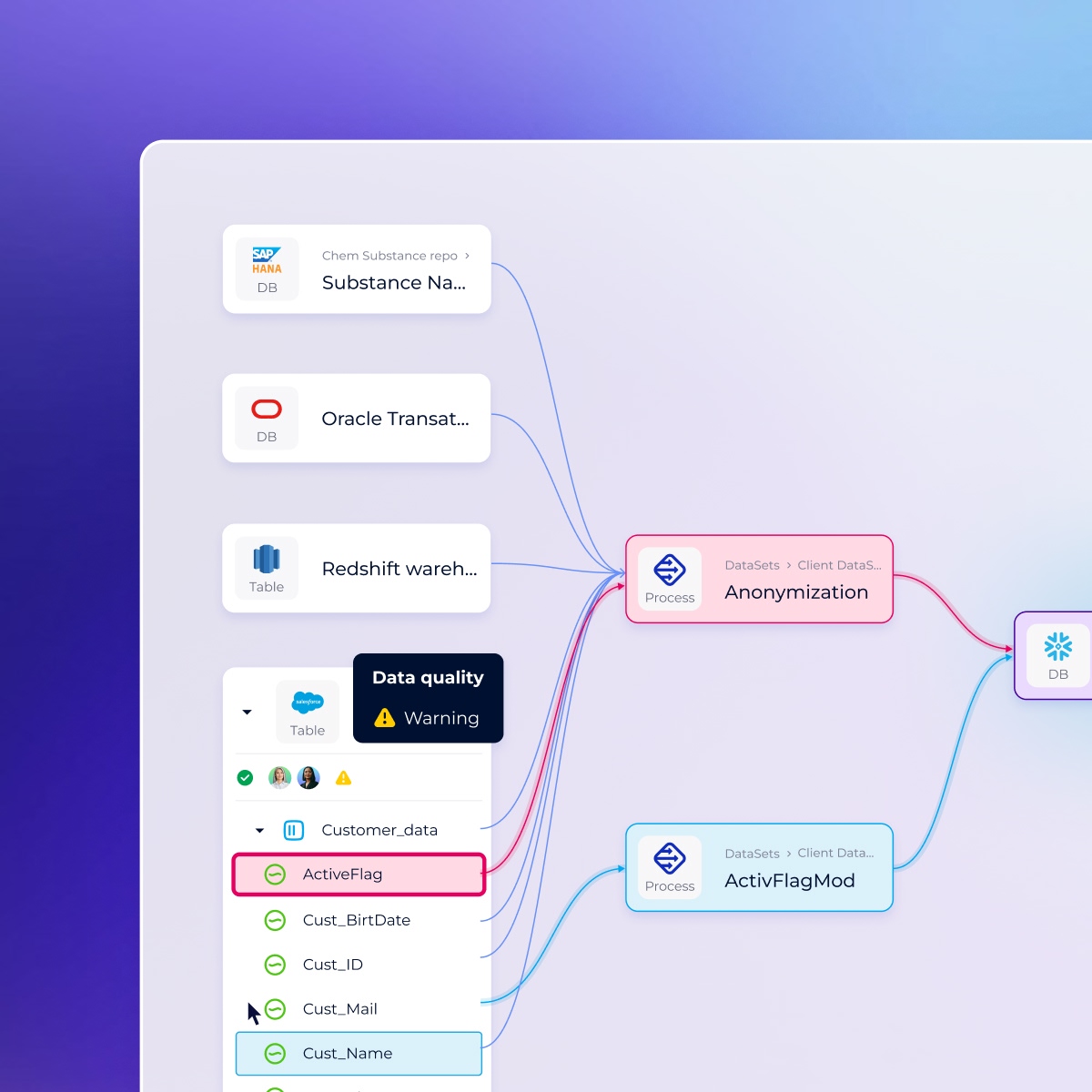
Automated lineage for regulatory reporting flows
Our technology automatically maps the full lifecycle of your insurance data. From core insurance and claims systems to final regulatory reports, every transformation and aggregation is visually documented. Auditors can instantly verify the origin of any financial or actuarial metric.
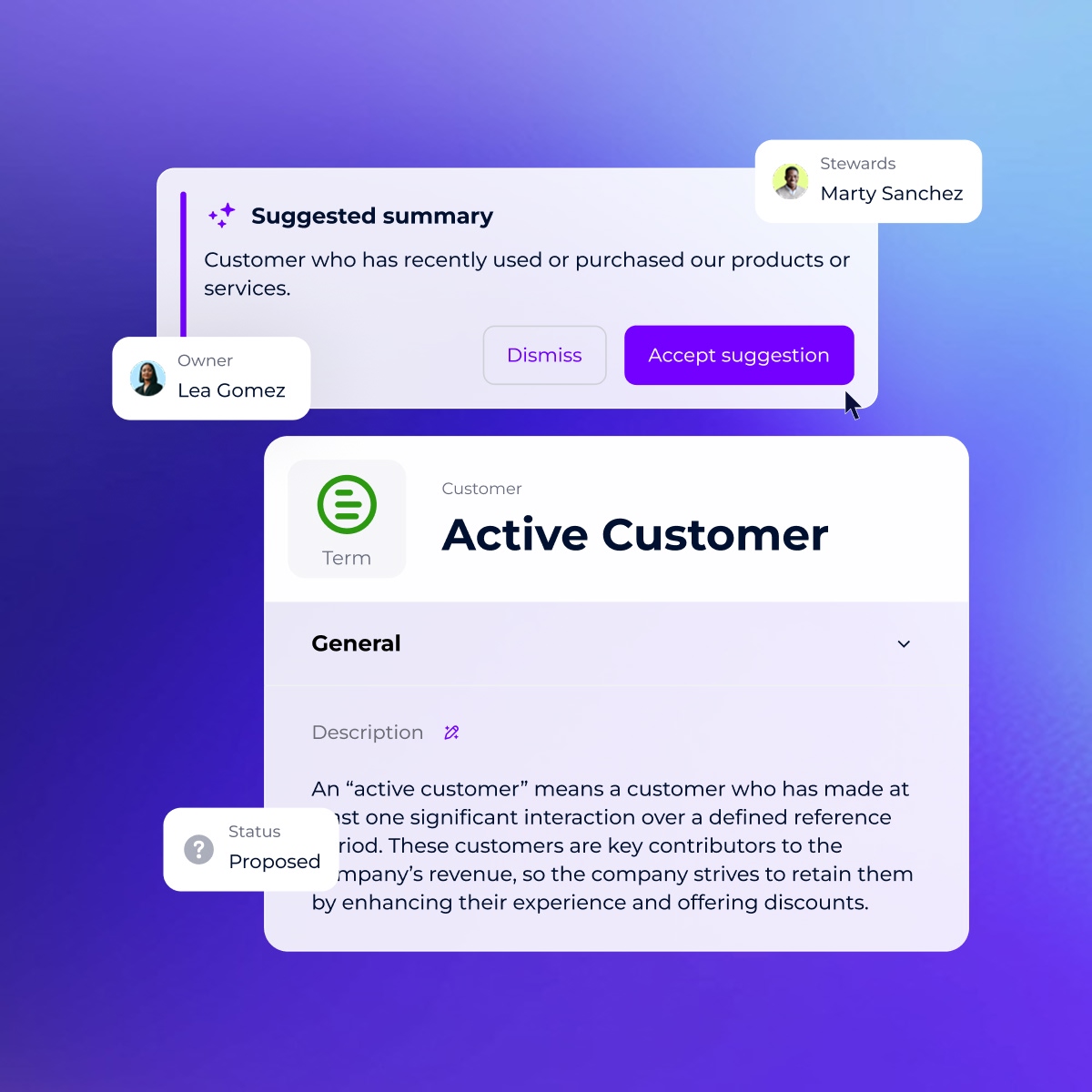
Unified actuarial glossary and business dictionary
Bridge the gap between technical IT terminology and actuarial business expertise. Centralize business rules, pricing formulas, and risk definitions in one collaborative platform directly connected to your physical data assets.
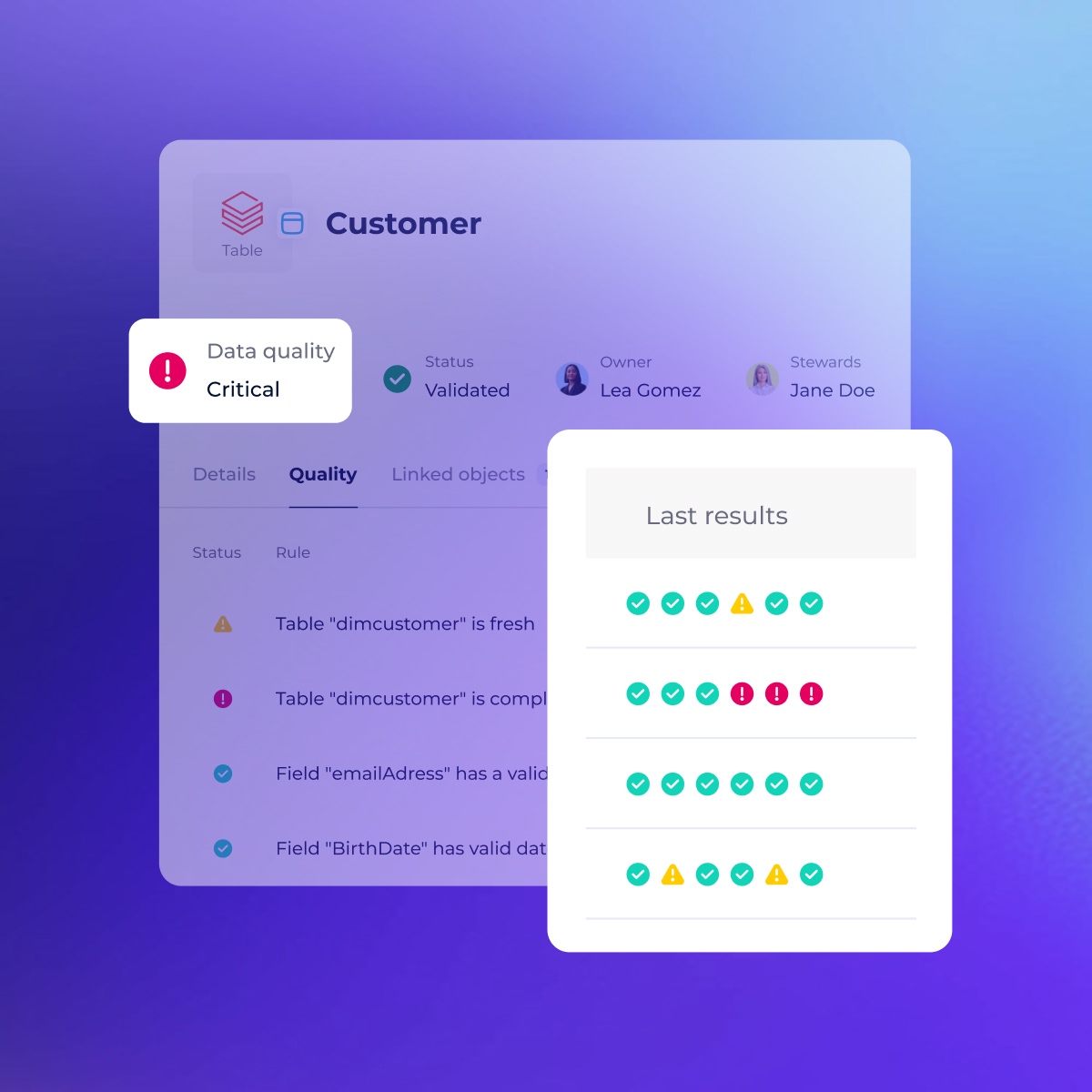
Continuous solvency data quality control
Ensure your SCR and MCR calculations rely on trusted and certified data foundations. Our platform integrates freshness, reliability, and completeness indicators directly into your critical data assets. Risk management teams are instantly alerted when anomalies are detected across reporting pipelines.
Mapping emerging risks and AI-driven models
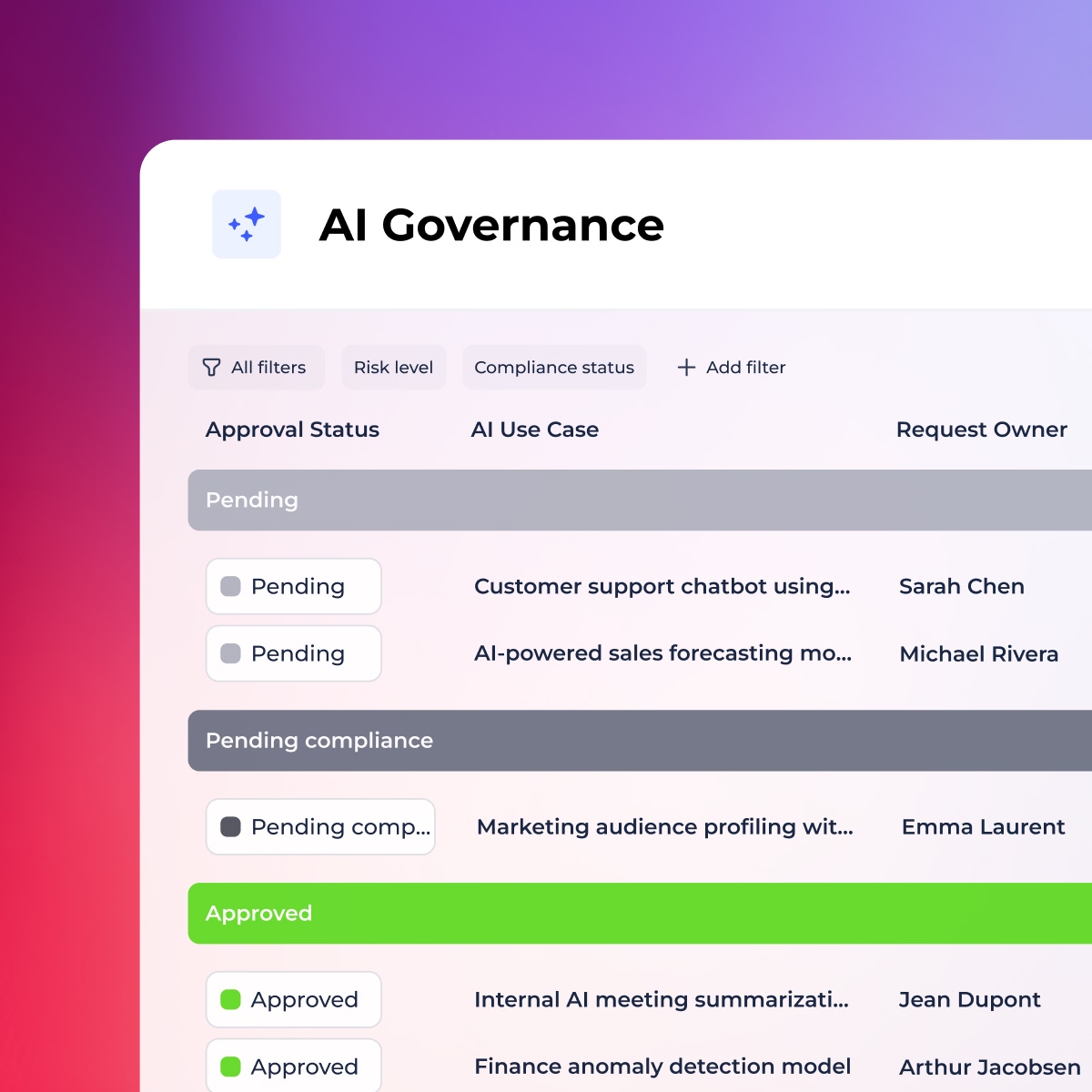
Document the integration of climate-related criteria and predictive algorithms used for underwriting, scoring, or claims management. The platform removes the black-box effect by exposing the data sources and governance layers powering your ORSA and forward-looking risk assessments.

Request a demo
FAQs
- Why is data governance important for Solvency II compliance?
-
Solvency II reporting depends on data that is accurate, complete, appropriate, consistent, and available when required. Data governance establishes the definitions, ownership, policies, quality controls, and traceability needed to manage that information across actuarial, finance, risk, and IT teams. It also helps insurers explain how regulatory figures were calculated and demonstrate that their reporting processes are controlled.
- How does DataGalaxy support Solvency II compliance?
-
DataGalaxy helps insurers document the data foundation behind Solvency II calculations and reports. The platform connects business definitions, actuarial rules, data owners, quality indicators, policies, and technical assets in one shared environment. Compliance and risk teams can trace information from source systems through transformations to regulatory outputs, improving transparency and reducing the manual effort required to prepare audit evidence.
- How can data lineage improve Solvency II reporting?
-
Data lineage creates a visual record of how insurance and financial data travels from source systems through calculations, aggregations, and reporting layers. This helps teams investigate inconsistencies, understand the impact of data changes, and explain how figures in regulatory reports were produced. DataGalaxy can document this lifecycle across systems, supporting more reliable reporting and faster responses to audit or supervisory questions.
- Does DataGalaxy replace Solvency II calculation or reporting software?
-
No. DataGalaxy is not an actuarial calculation engine or a regulatory submission tool. It complements these systems by documenting the data, definitions, rules, ownership, transformations, and quality controls behind their outputs. This governance layer helps actuarial, risk, compliance, and IT teams understand and defend the information used in Solvency II calculations and regulatory reporting.
- Can DataGalaxy help manage Solvency II data quality?
-
DataGalaxy connects governance metadata with data quality indicators, rules, and scores from an organization’s existing quality tools. Compliance teams can see which critical data assets support SCR, MCR, ORSA, and regulatory reporting processes, who owns them, and whether their quality status meets internal expectations. This links data quality issues to their business and regulatory impact instead of treating them as isolated technical incidents.