Build a trusted, shared language for your entire organization
DataGalaxy Business Glossary helps teams define, standardize, and govern business terms in a consistent and collaborative way. Create clarity, reduce ambiguity, and ensure everyone uses the same definitions across analytics, AI, and reporting.

One place to align on meaning across the entire data landscape.
Align business and technical understanding
Accelerate decision-making and adoption
Strengthen governance and compliance
Enable AI and automation with context
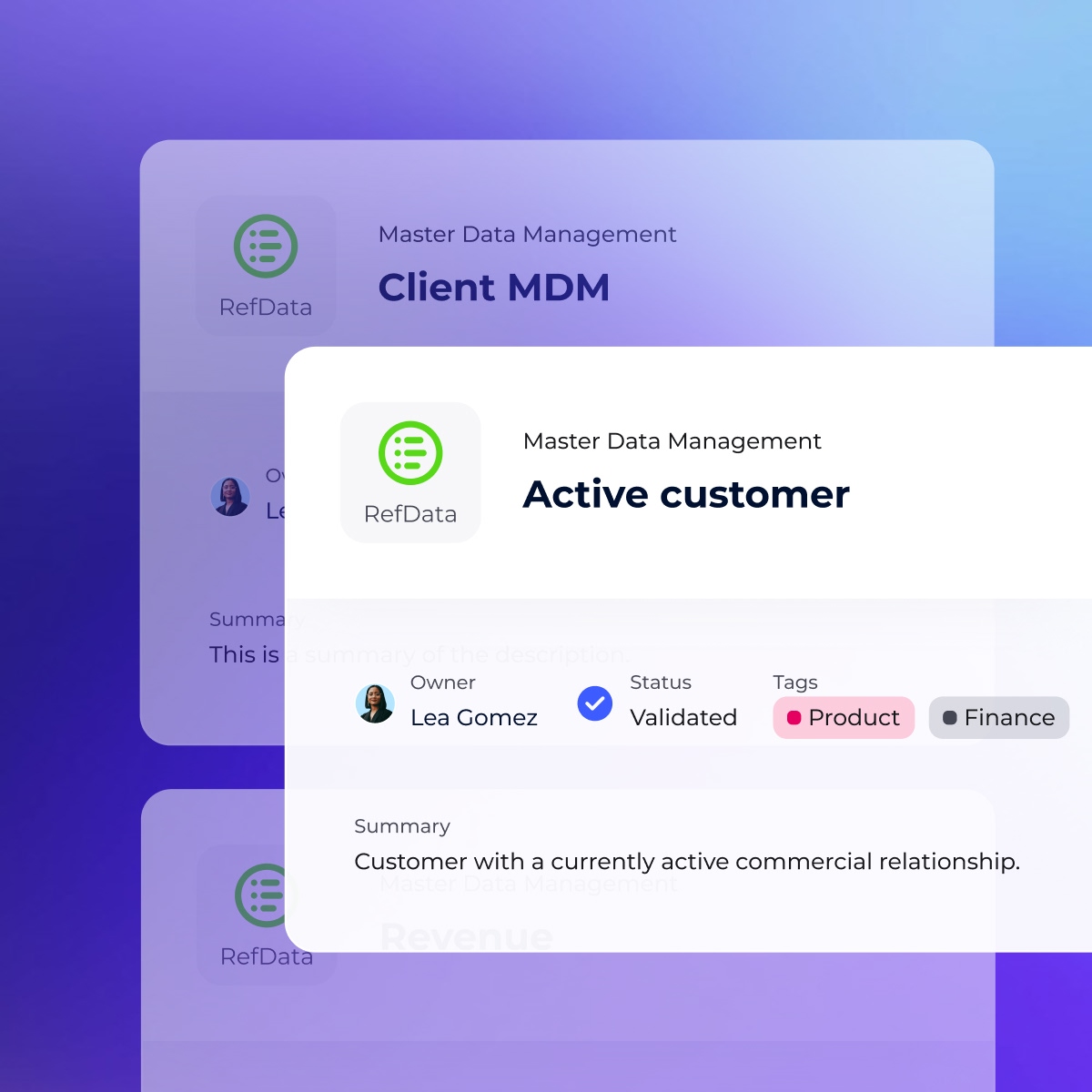
Define and manage key business concepts
Create, organize, and maintain your glossary of business terms, metrics, and classifications. Each definition includes ownership, classification, related policies, and linked objects to ensure consistency across systems.
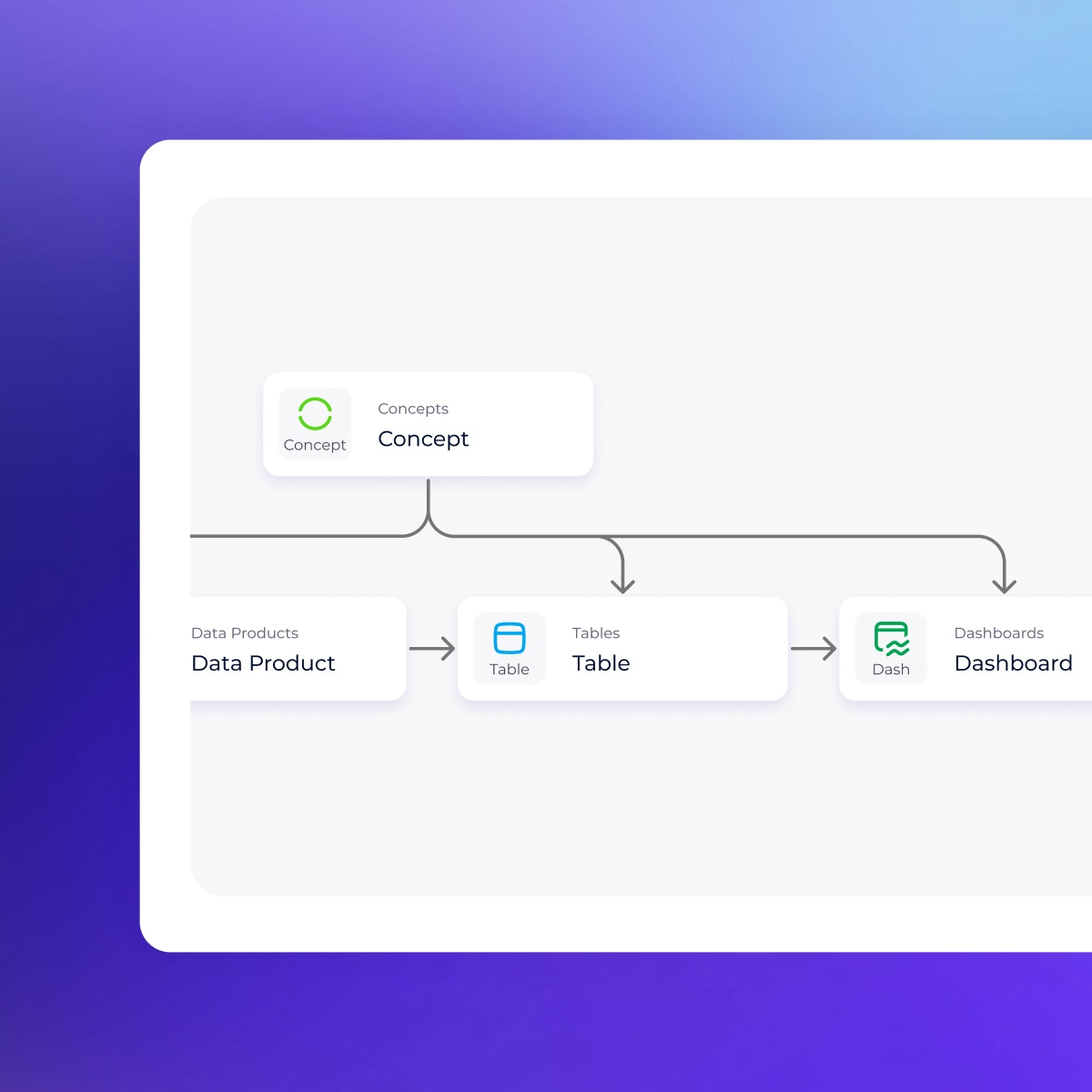
Connect glossary terms to data assets
Link definitions directly to datasets, reports, and dashboards in your catalog. Users can instantly understand what a field or metric represents and where it is used. This connection bridges the gap between business language and technical metadata, making data more approachable.
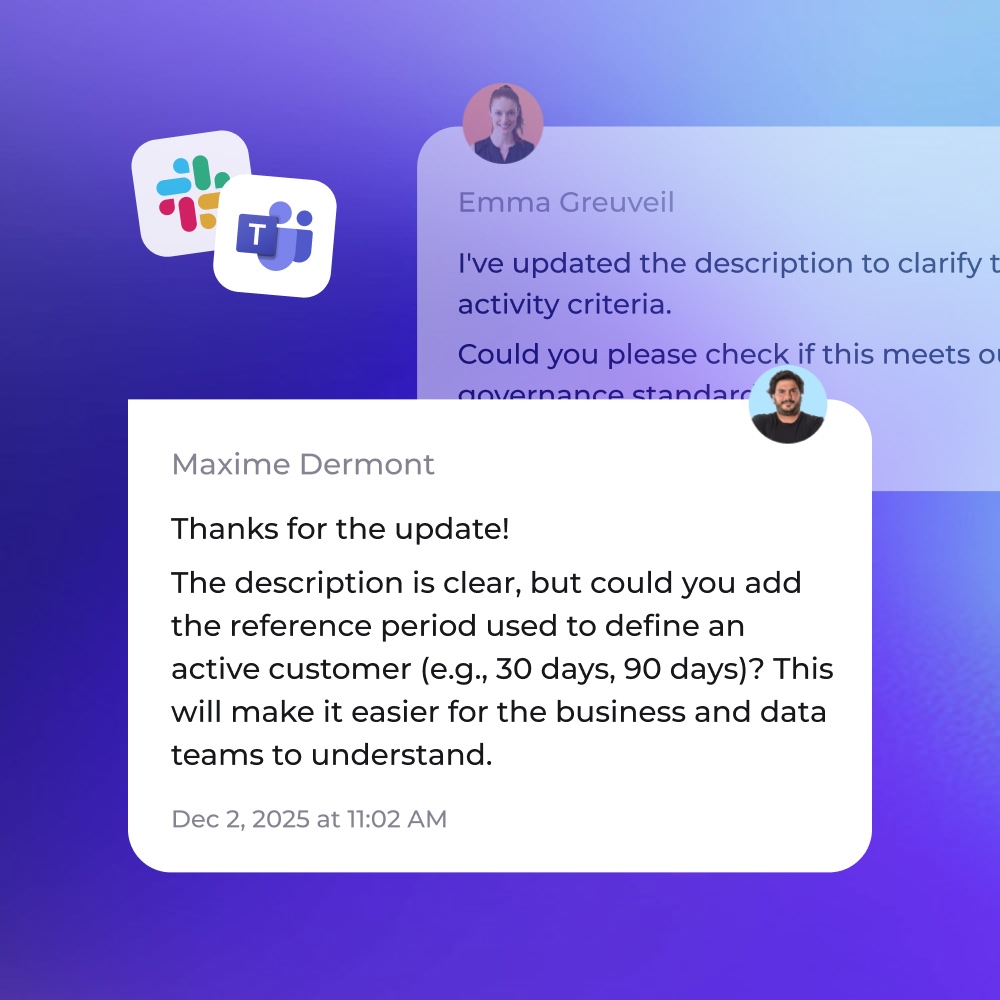
Collaborate to build a living vocabulary
Empower business experts, data stewards, and analysts to co-create and validate definitions. Review and comment features encourage discussion, while validation workflows ensure alignment before publication. The glossary evolves with your organization, always reflecting current understanding and priorities. Stop relying on tribal knowledge and start relying on trusted context.
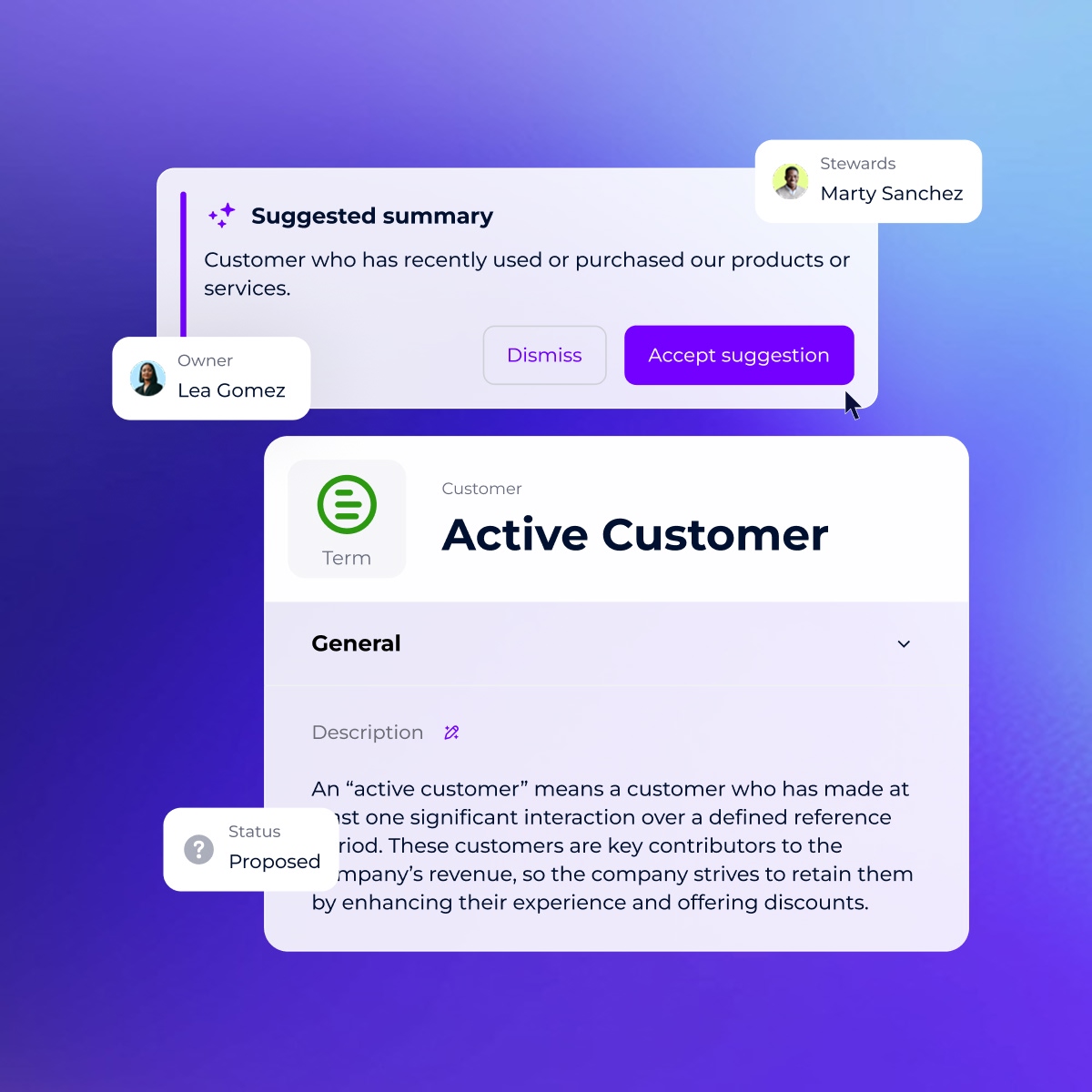
Generate your glossary automatically
Save weeks of manual work by generating your glossary directly from existing data sources such as BI tools, and data warehouses. AI instantly suggests and completes definitions, detects relationships between terms, and can generate thousands of accurate descriptions at scale. Stewards review and validate suggestions, turning automation into a faster, smarter governance process.
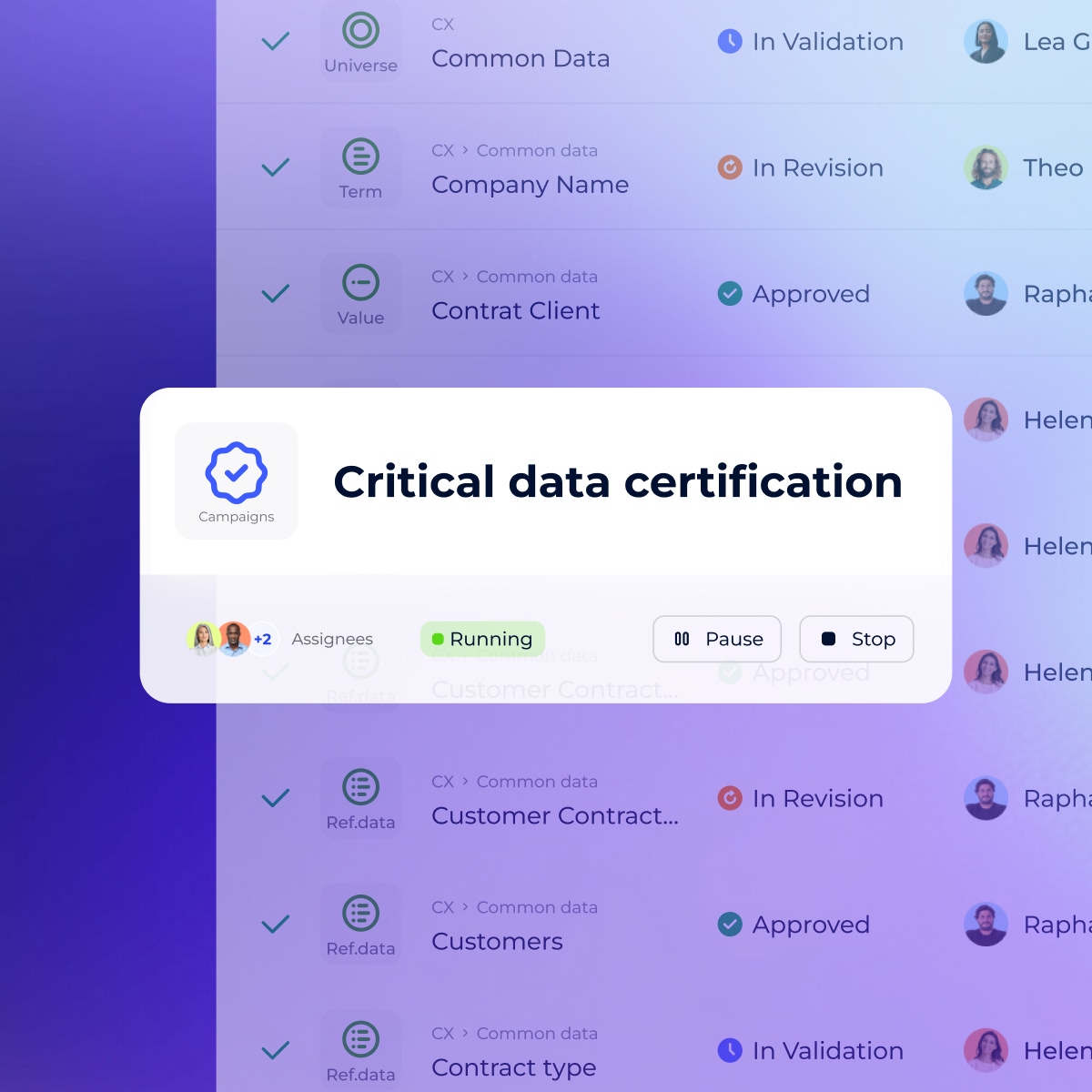
Run certification campaigns for critical terms
Use campaigns to review and certify the definitions that matter most such as KPIs, regulatory metrics, or strategic indicators. Stewards and business owners are guided through targeted validation tasks to confirm accuracy, ownership, and alignment.
One source of truth for every term
Start defining termsIntegrates with your entire data stack



Request a demo
Questions we hear a lot about the business glossary
- What is a business glossary?
-
A business glossary is a centralized repository of standardized terms and definitions used across an organization. It ensures consistent language, improves communication, and aligns teams on data meaning. Essential for data governance and compliance, a business glossary boosts data quality, reduces ambiguity, and accelerates AI and analytics initiatives with trusted, shared understanding.
- What is a business glossary in DataGalaxy?
-
A business glossary is a centralized collection of validated business terms, definitions, and rules. DataGalaxy provides workflows, relationships, automation, and governance tools to keep terminology consistent across the organization.
- Can I link glossary terms to datasets, KPIs, and reports?
-
Yes. DataGalaxy lets you connect each term to the data assets, reports, models, and processes that use it. This helps users understand meaning, context, and origin instantly.
- Does DataGalaxy support glossary automation?
-
Yes. DataGalaxy provides AI assisted term discovery, suggested definitions, and automated relationships. These features reduce manual work and accelerate glossary creation.
- How is a data catalog different from a data glossary?
-
A business glossary defines terms and ensures shared understanding. A data catalog documents the technical assets (tables, fields, reports) and connects them to the glossary. Both are essential — and should be linked.
? Want to go deeper? Check out:
https://www.datagalaxy.com/en/blog/data-catalog-vs-glossary-dictionary