About the author: Max Faivre
Product Marketing Manager

Data & AI teams are under pressure to move faster, make trusted information easier to access, and give AI the right context to work with.
Our latest DataGalaxy updates are designed around exactly that: helping teams find the right information faster, keep lineage more complete, improve AI answers, and scale data governance with less manual effort.
Here are the latest improvements and what they mean for your teams.
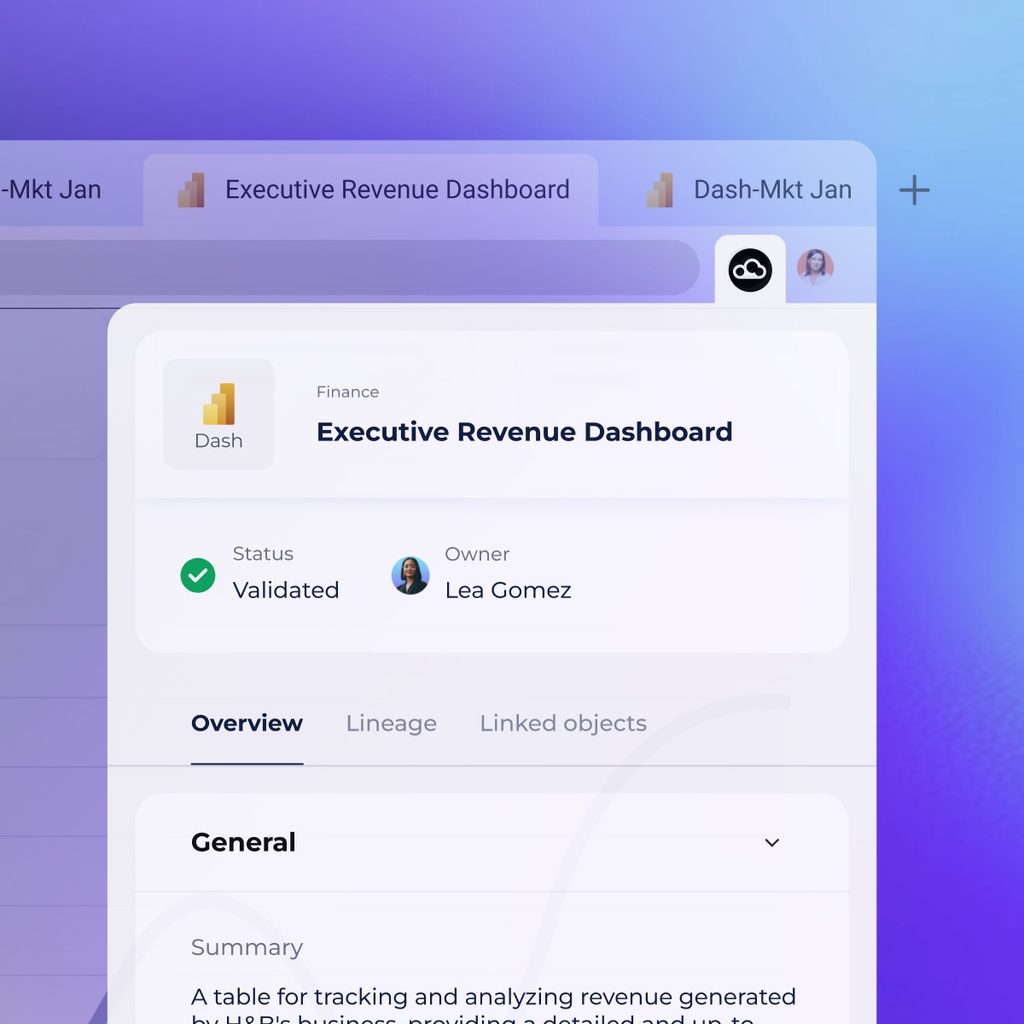
For business users, one of the biggest challenges is often not accessing data, but understanding what they are looking at.
The DataGalaxy Browser Extension can now automatically identify the catalog object associated with a Power BI report.
If several matches are available, users can select the right one from a results list. They can also pause automatic matching when they want to keep one object open while comparing it with other reports.
The result is faster access to definitions, ownership, lineage, and other trusted context without constantly switching between tools.
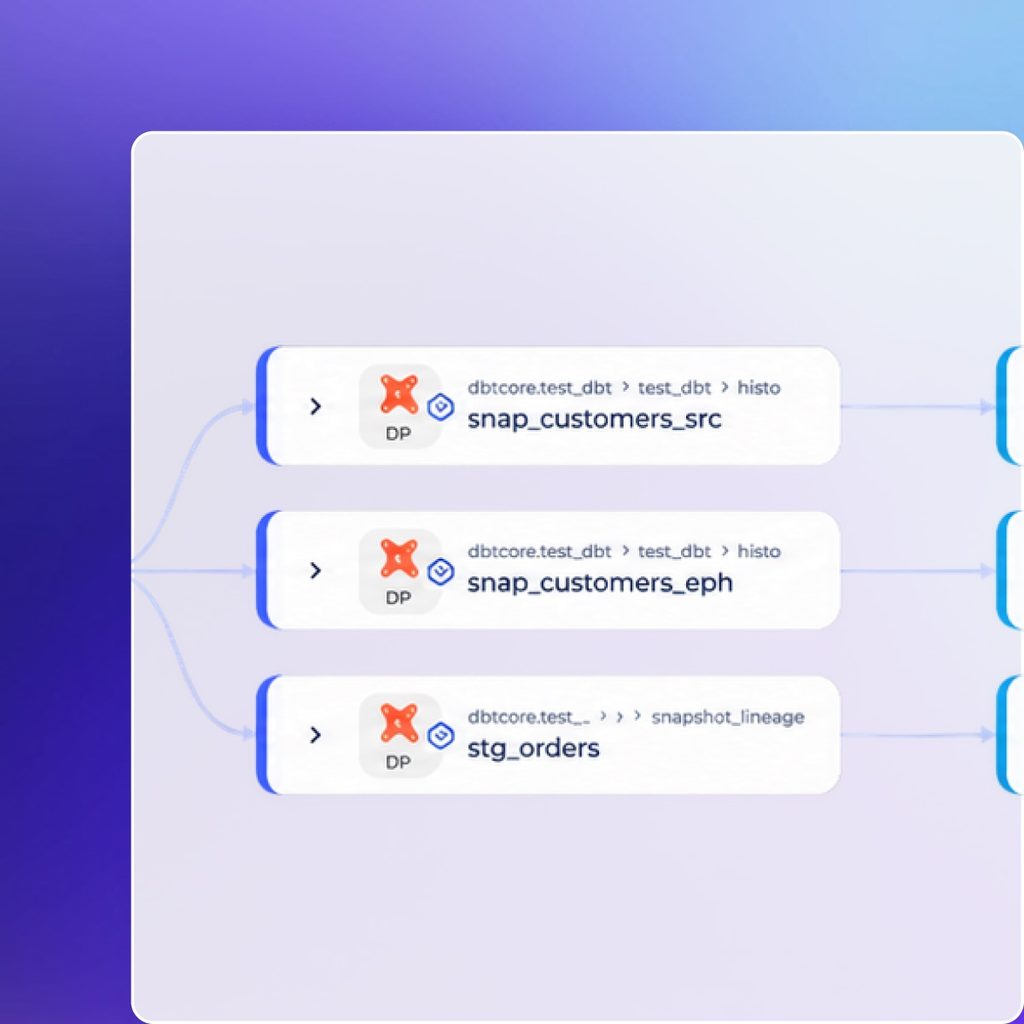
Data lineage is only useful when it reflects how data actually moves through your environment.
The DataGalaxy dbt connector now supports dbt Snapshots and represents them as they are materialized in the underlying data platform, including BigQuery.
This means teams using Snapshots can maintain a more complete view of their transformations and dependencies across the data stack.
The capability is available in URN mode for both DataGalaxy Desktop and Online.
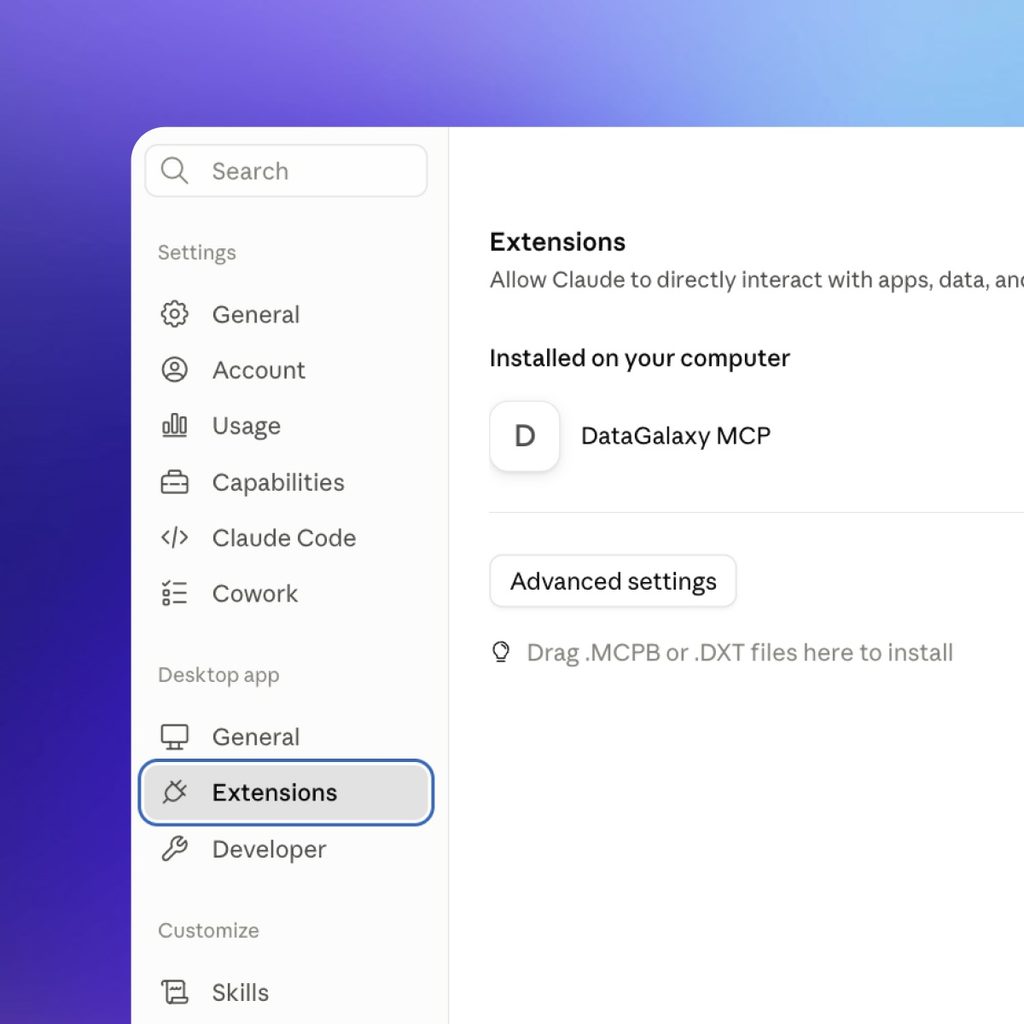
AI assistants become much more useful when they understand the language, structure, and governance of your organization.
The DataGalaxy MCP Server is now available as a ready-to-install Claude Desktop Extension, making it easier to bring governed DataGalaxy context into AI workflows.
Once connected and authenticated, Claude can access live context from DataGalaxy, including catalog objects, glossaries, lineage, data sources, stewards, tasks, and more.
Users can ask questions directly in Claude, while AI agents can also use this context to ground their reasoning and interactions with other tools.
This helps move AI from generic answers toward responses that reflect the actual data environment of the organization.
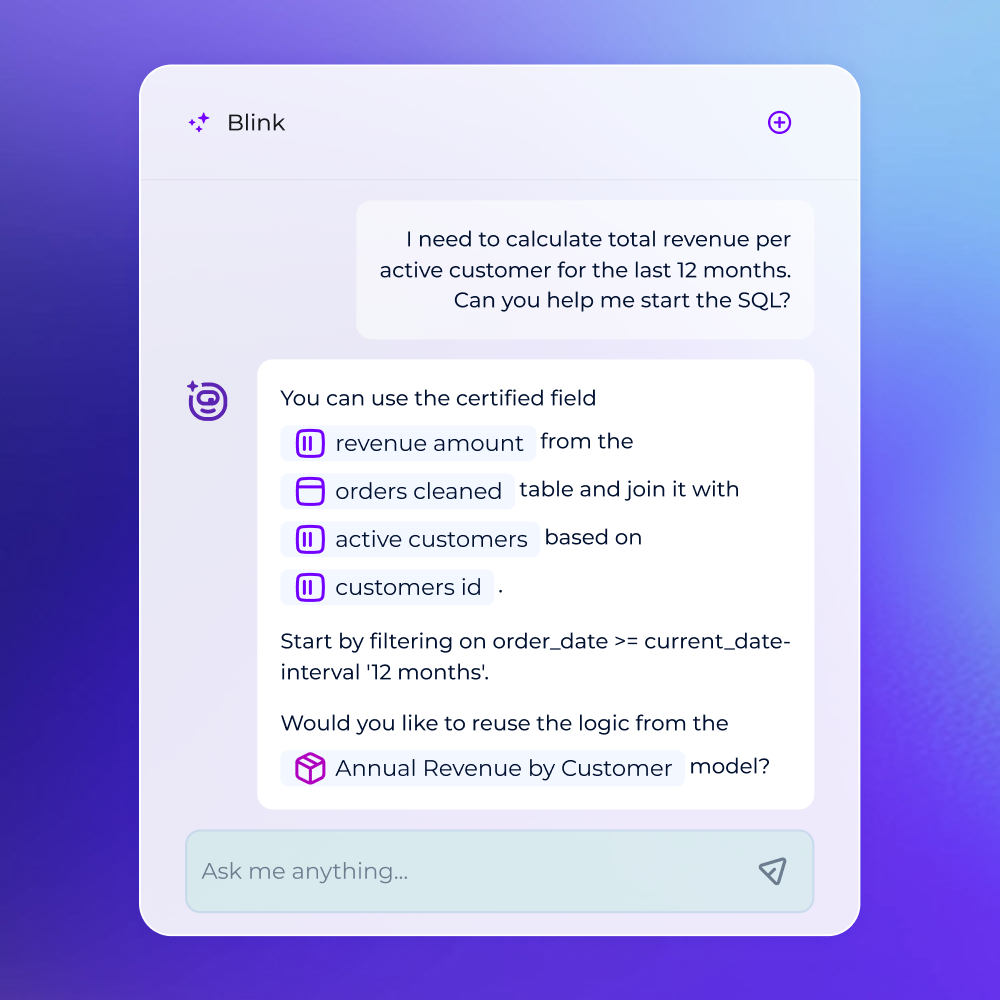
Reliable AI starts with reliable context.
Blink now prioritizes catalog descriptions and custom fields when answering questions such as “What is X?”
If an object does not contain enough information, Blink makes that clearer and separates any additional general context it provides.
This makes it easier for users to understand which part of an answer comes directly from governed catalog knowledge and where additional AI-generated context has been added.
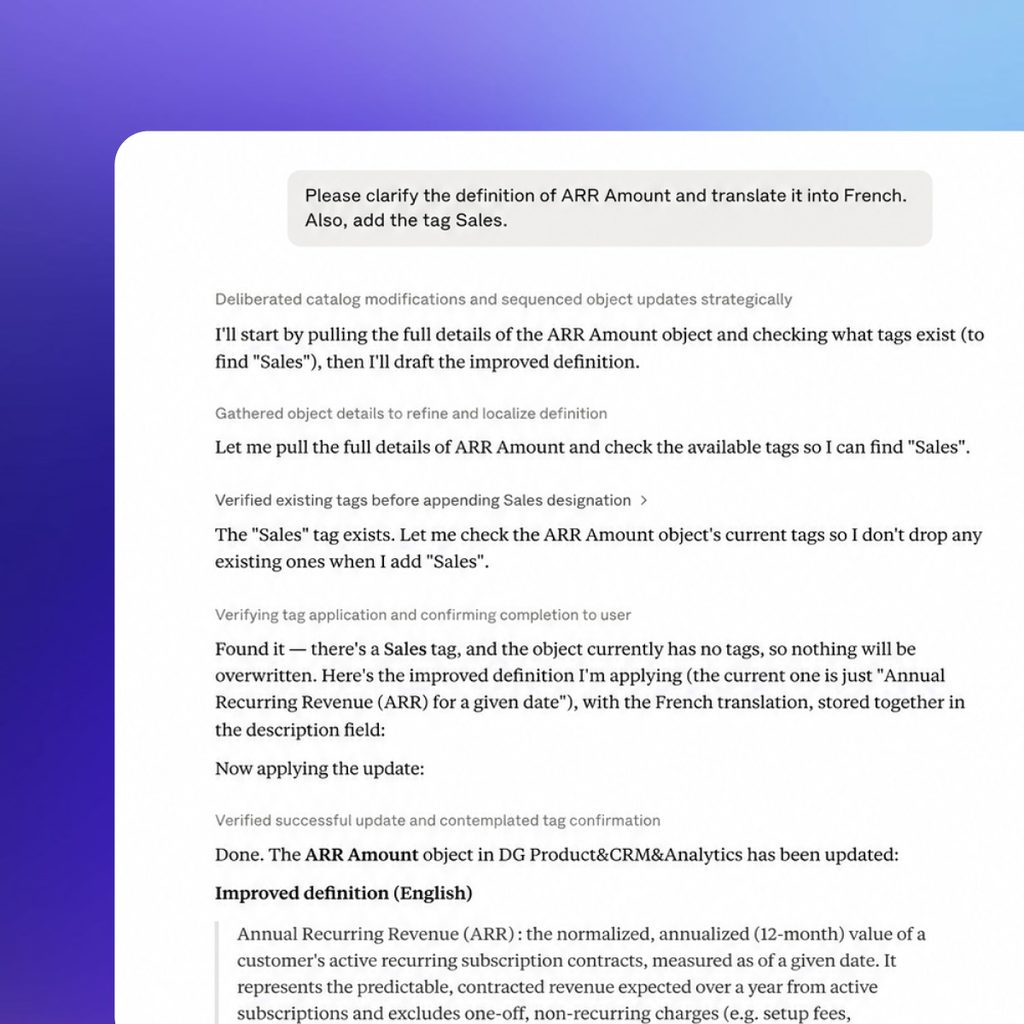
The DataGalaxy MCP Server now provides clearer information about the fields available on catalog objects, including which fields can be edited and which values are accepted.
Object updates also use a simpler field structure, making it easier for AI tools and agents to interact with catalog content.
Improved object counting also provides more reliable totals when AI tools need to analyze larger sets of catalog assets or produce analytics.
AI workflows often need to go beyond a small sample of results.
Blink and the DataGalaxy MCP Server now support pagination, allowing users and AI agents to continue retrieving matching objects across larger result sets.
This gives AI applications a broader view of the catalog and makes it easier to support use cases involving larger data estates.
Microsoft Fabric is becoming an increasingly important part of modern data environments, and DataGalaxy is expanding its connectivity accordingly.
The first capabilities of the DataGalaxy Microsoft Fabric connector are coming soon.
We are currently inviting customers and interested teams to join the Early Access Program, test the first capabilities, and share feedback that will help shape the connector.
Large metadata environments need ingestion processes that can keep up.
Backend optimizations are expected to improve URN import performance by up to 15%, helping organizations process large metadata volumes more efficiently.
For teams managing complex or fast-growing environments, this means smoother imports and less friction when keeping the catalog up to date.
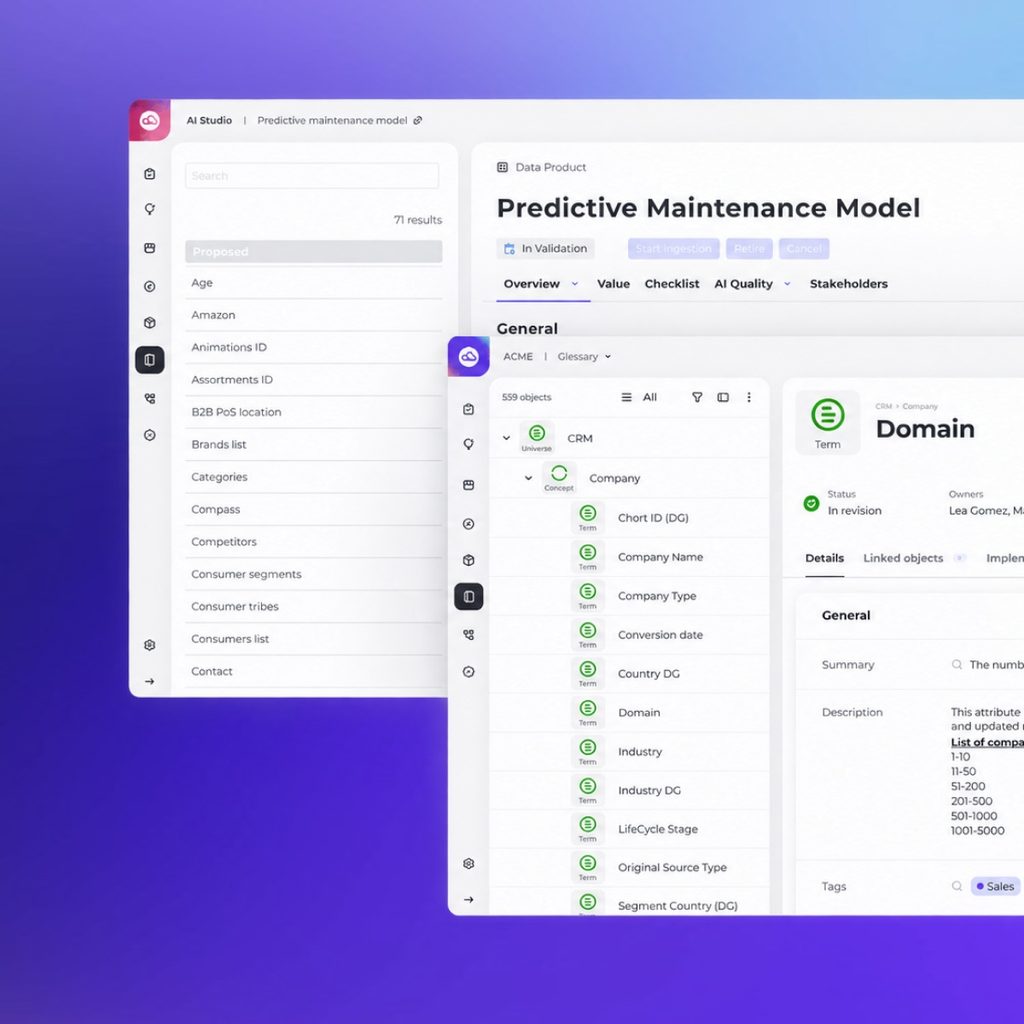
Data governance should not feel harder than the data itself.
Recent interface improvements make DataGalaxy easier to navigate, with clearer visual cues, more prominent actions, and closer alignment between Catalog and Portfolio.
The goal is a more consistent experience across the platform, helping users move between discovery, governance, and value management more naturally.
Across these updates, the direction is consistent: make trusted data context easier to access, easier to use, and easier to bring into the tools where people and AI already work.
From Power BI and dbt to Claude and Microsoft Fabric, DataGalaxy helps organizations connect technical metadata, business knowledge, governance, and AI so teams can move from scattered information to confident action.
Want to see how DataGalaxy can bring trusted context to your data and AI workflows? Book a demo.
Product Marketing Manager