Strengthen your FISMA compliance

The challenge: proving control across complex federal data environments
-
Fragmented system inventories: Federal agencies and contractors often manage data across legacy systems, cloud platforms, and mission applications. Without a unified inventory, proving where sensitive information lives becomes slow and risky.
-
Continuous monitoring pressure: FISMA requires more than point-in-time documentation. Security and compliance teams need current evidence of ownership, classification, access, and data flows.
-
Audit evidence scattered across teams: When controls, data assets, policies, and system documentation live in separate tools, preparing for audits becomes manual, repetitive, and vulnerable to gaps.

Benefits for your organization
Audit-ready evidence
Centralize data documentation, ownership, classifications, and lineage so compliance teams can quickly provide reliable evidence during FISMA assessments.
Stronger risk visibility
Connect sensitive data, systems, policies, and owners to understand risk exposure faster and support stronger security decision-making.
Continuous documentation
Keep governance evidence aligned with real changes across systems, metadata, and data flows instead of relying on static spreadsheets.
Faster remediation
Identify impacted assets, owners, and dependencies quickly when a control gap or sensitive data exposure requires action.
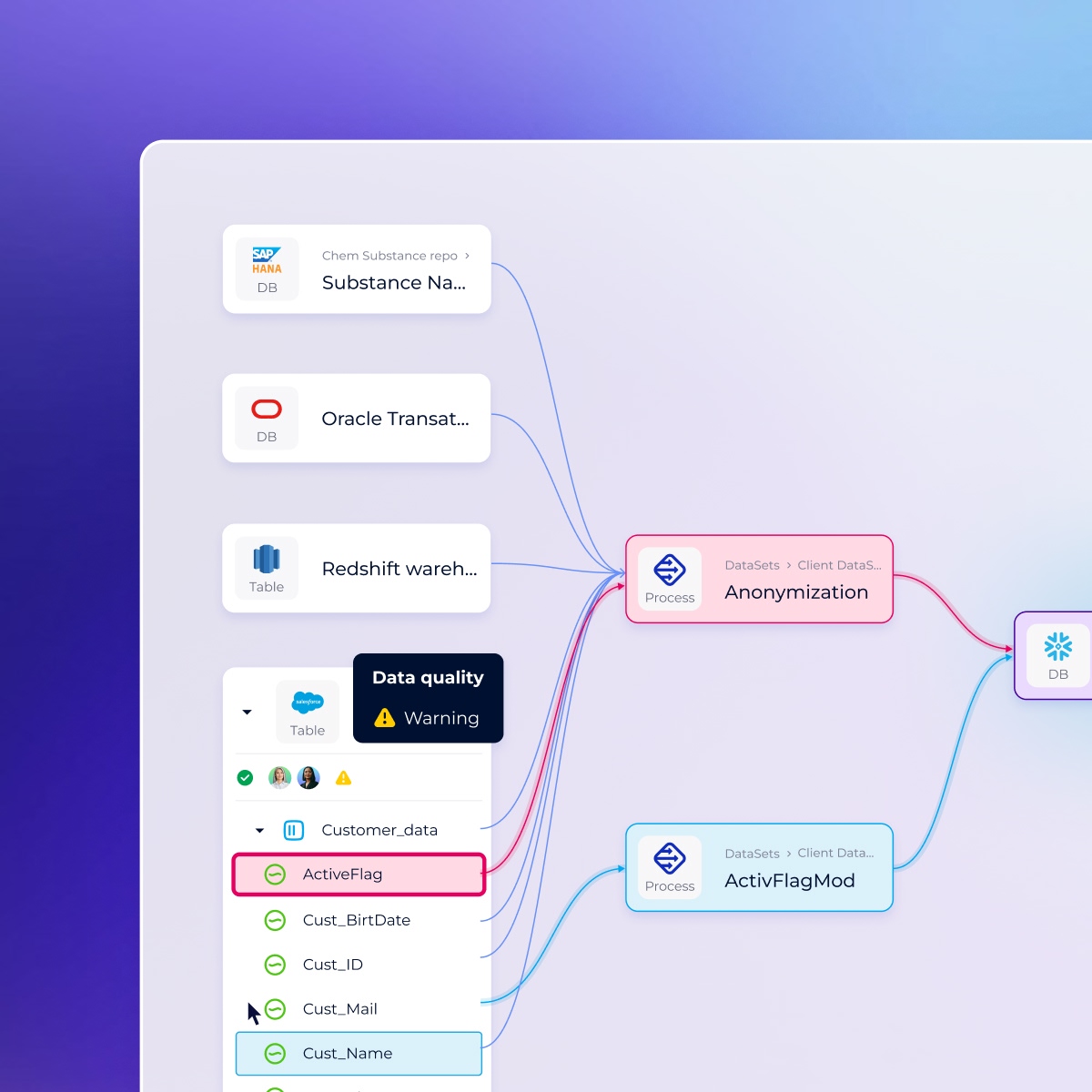
End-to-end lineage for sensitive information flows
Map how regulated, mission-critical, and sensitive information moves across applications, databases, analytics platforms, and cloud environments. Data lineage gives teams a clear view of transformations, dependencies, and downstream impact, making FISMA evidence faster to produce and easier to trust.
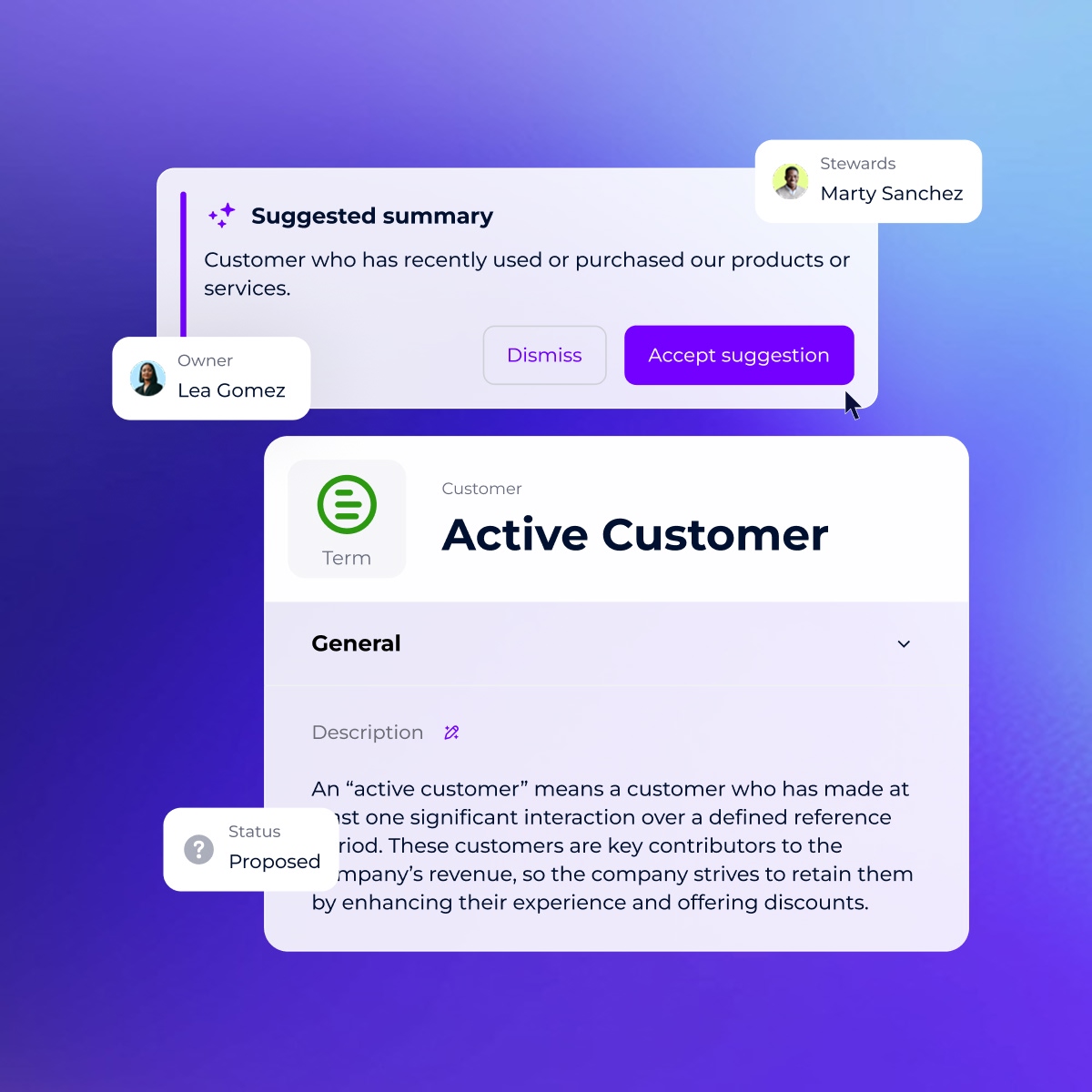
A shared dictionary for security and data governance
Align security, compliance, IT, and data teams around consistent definitions for systems, data categories, controls, owners, and critical assets. DataGalaxy connects business context to technical metadata, reducing ambiguity during control reviews and audit preparation.
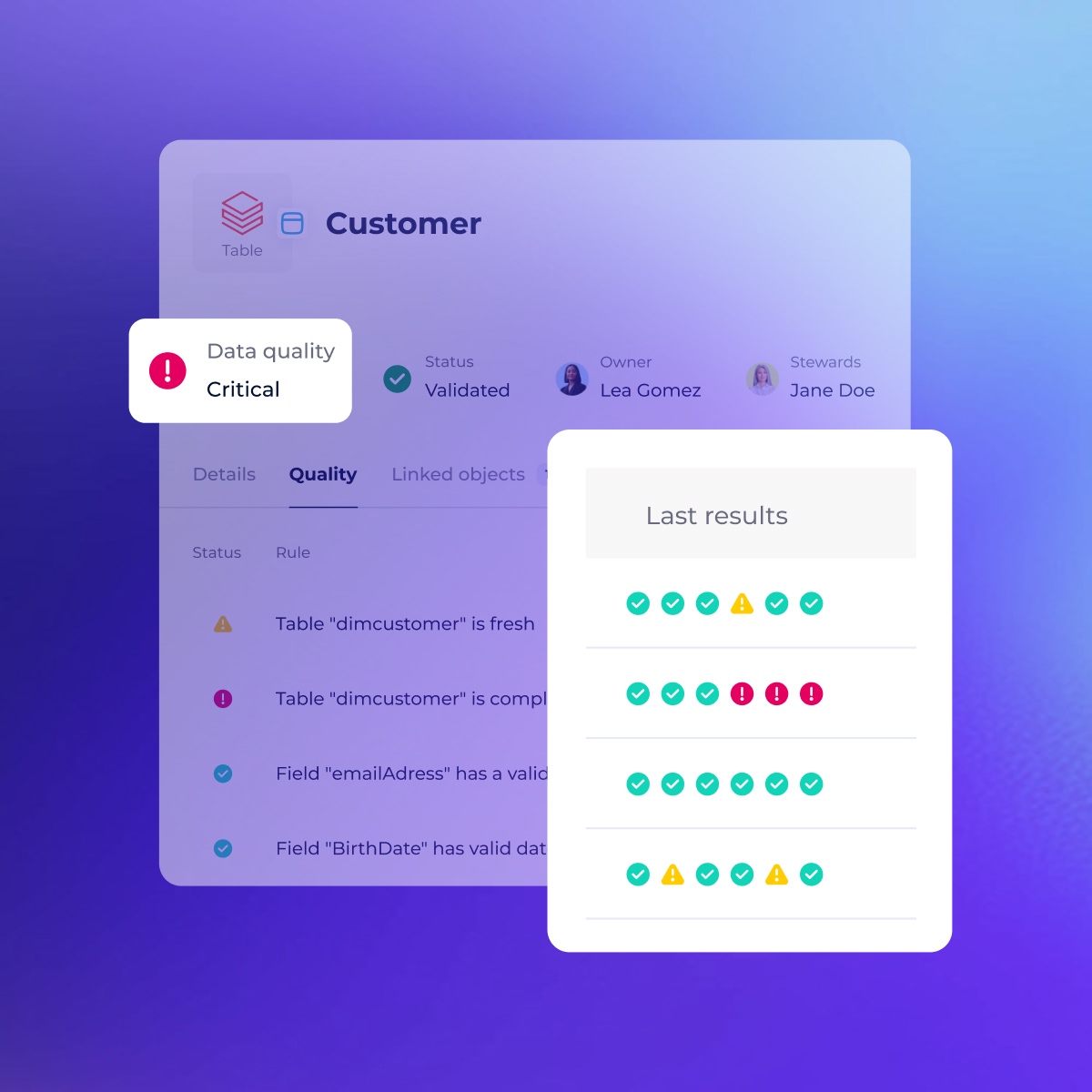
Embedded controls and data quality indicators
Attach indicators such as ownership, classification, freshness, completeness, and trust level directly to data assets. Security and compliance teams can identify weak points before they become audit findings or operational risks.
FISMA compliance starts with knowing where critical data lives
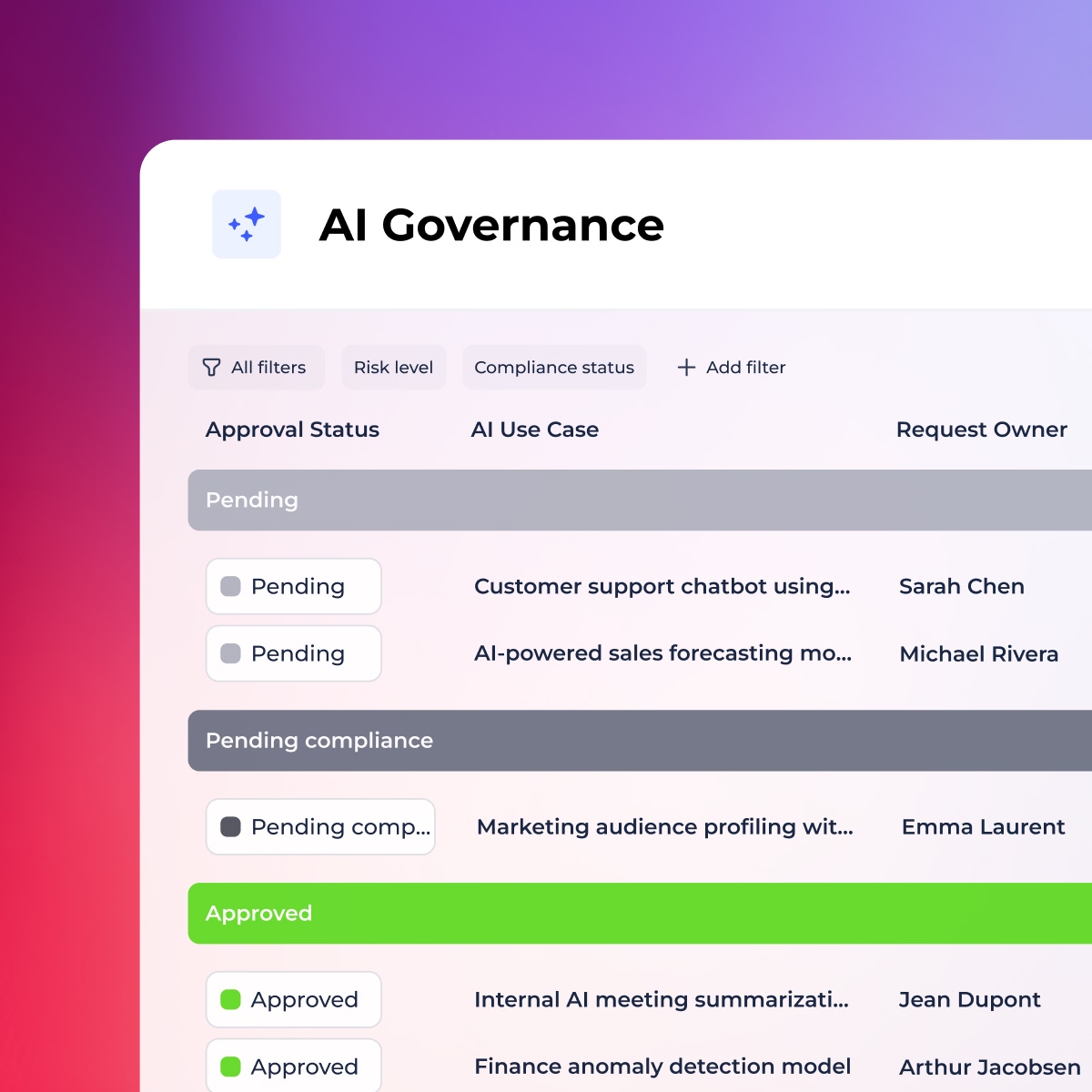
See how DataGalaxy can helpTransparency across AI, analytics, and mission systems
Document the origin, purpose, ownership, and sensitivity of data used in analytics, automation, and AI-enabled workflows. By connecting models to trusted data context, teams can better manage exposure, support accountability, and strengthen control evidence across the information lifecycle.

Request a demo
FAQs
- How do healthcare organizations ensure data compliance while unlocking clinical value?
-
Healthcare teams handle vast, sensitive datasets — from EHRs and PHI to genomics and clinical trials. DataGalaxy supports HIPAA-aligned governance through glossary-driven documentation, metadata controls, and traceability across systems, while enabling compliant reuse of real-world evidence (RWE).
See how Malakoff Humanis built scalable governance across regulated healthcare and insurance data systems.
👉 Want to see how this applies to your organization? Contact us for a tailored walkthrough. - Is data governance just about compliance?
-
No — while compliance is critical, governance also improves data quality, team collaboration, trust in reports, and decision-making. It’s about creating a foundation for value creation, not just risk reduction.
? Want to go deeper? Check out:
https://www.datagalaxy.com/en/blog/data-governance-for-new-eu-ai-act-compliance/ - How can I ensure compliance with data regulations like GDPR, HIPAA, or ESG?
-
When regulations tighten, your metadata better be ready.
Think GDPR, ESG, HIPAA, BCBS 239 — every compliance standard demands clarity on where sensitive data lives, how it flows, and who’s responsible for it.
DataGalaxy gives governance teams the metadata backbone to support audits, regulatory reporting, and privacy-by-design at scale.
👉 – Map sensitive data and tag it with classifications like PII
👉 – Track lineage and movement of regulated assets
👉 – Enforce policy through ownership, documentation, and rules
👉 Facing this challenge? Explore the solution
👉 Want to see it live? Book a tailored demo - How does the catalog support governance and compliance?
-
It includes lineage, impact analysis, ownership tracking, and policy management — all mapped to your data assets. That means better traceability, audit readiness, and confidence in data-driven decisions.